
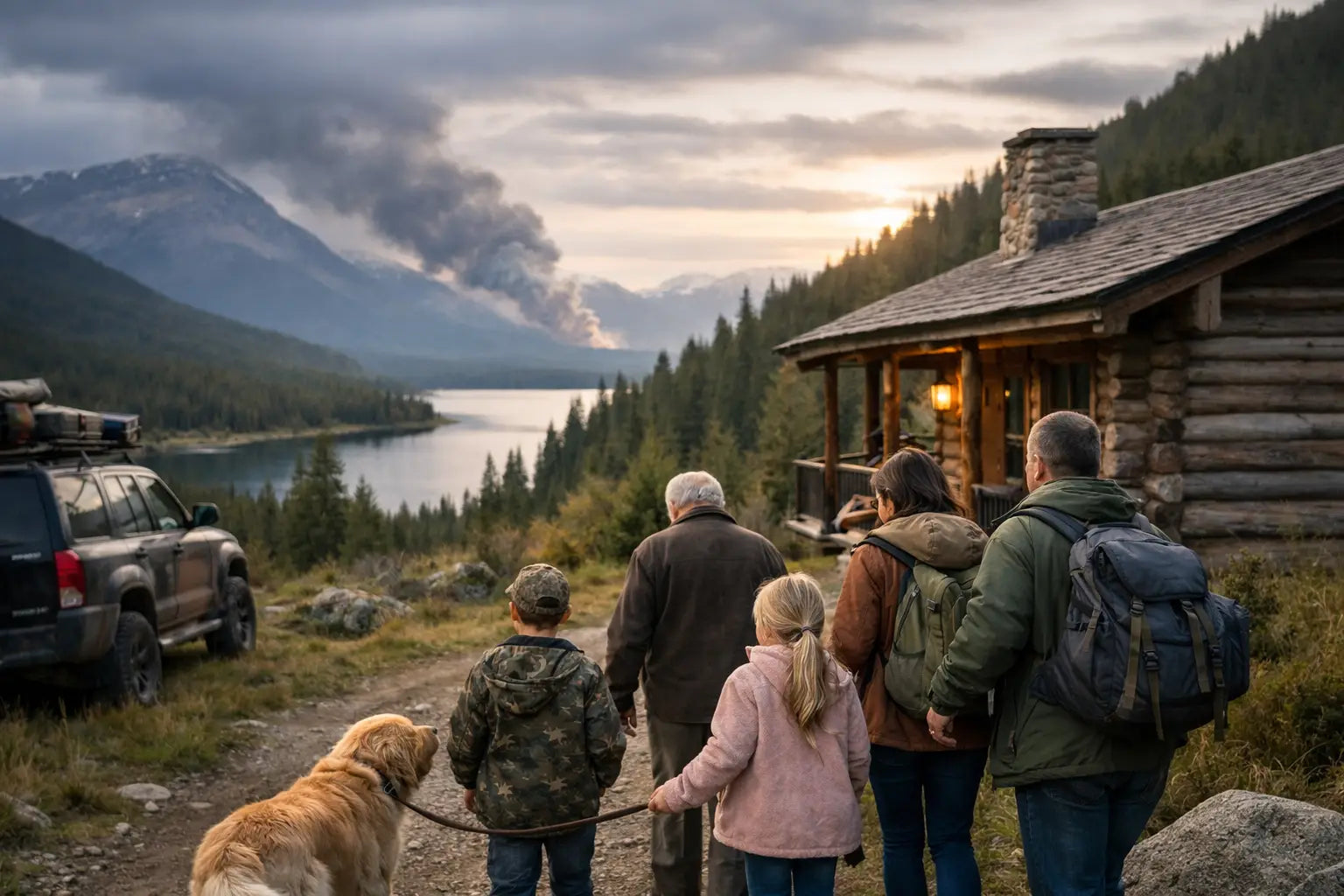
A wildfire warning, a rising river, or a hurricane forecast can turn a normal Tuesday into a fast decision: should we stay or leave? If you are asking where to go when SHTF, the most useful answer is not a remote cabin or a dramatic escape route. It is a short, written plan built around the hazards your family is most likely to face.
For most households, the safest place in an emergency is either home, a designated public shelter, or the home of a trusted person outside the affected area. The right choice depends on the threat, the condition of your home, your family’s medical needs, and whether local officials have issued an evacuation order.
Start With the Question: Is Home Still Safe?
Leaving too early has costs. You may end up in traffic, spend money on lodging, or be separated from supplies that would make a short outage manageable. Leaving too late can be far more dangerous. The goal is not to flee at the first sign of trouble. The goal is to recognize when your home is no longer a safe place to remain.
Sheltering at home usually makes sense during a short power outage, winter storm, supply disruption, or local civil disturbance that is not directly affecting your neighborhood. It can also be the better option during a pandemic or severe weather event when travel adds risk. This is why stored water, shelf-stable food, backup lighting, safe indoor warmth, medications, and a way to cook without grid power matter so much.
Evacuate when officials order it, when fire, floodwater, storm surge, structural damage, or hazardous air threatens your area, or when you cannot safely care for someone in your household. Do not wait for conditions to feel dramatic. A road that is clear at 9 a.m. may be blocked, flooded, or jammed by noon.
If you live in a wildfire, hurricane, flood, or coastal storm-surge zone, treat an evacuation order as a decision already made. Your job is to leave early and calmly, not to debate it from the driveway.
Where to Go When SHTF: Choose Three Destinations
A family evacuation plan works best when it has layers. Pick three possible destinations now, before anyone is stressed, tired, or trying to make calls on a failing cell network.
Your first destination is a nearby safe location. This might be a community center, public library, hotel, church, or the home of a friend on the other side of town. It is useful when your house is temporarily unsafe but the broader area is still functioning. Think of a gas leak, a house fire, a burst pipe, or a neighborhood-level evacuation.
Your second destination is an out-of-area home. Choose a relative or close friend who lives far enough away to avoid the same hazard but close enough to reach without an all-day drive. For a hurricane-prone family, this could be 75 to 150 miles inland. For a wildfire zone, it may be a community in a different fire corridor. Ask permission in advance. Confirm how many people and pets they can realistically host.
Your third destination is an official shelter or lodging option. Public shelters are not glamorous, but they can be lifesaving when you have nowhere else to go. Learn which facilities in your county typically open during storms, whether they accept pets, and what accessibility or medical support they provide. Keep the names, addresses, and phone numbers on paper, not just in your phone.
A hotel can be a practical backup if roads are open and you can afford it. Reserve early when a major storm is forecast, and choose one outside the likely impact area. Do not count on finding a room after an evacuation order is announced.
What Makes a Good Evacuation Destination?
A good destination is not simply far away. It should be outside the hazard zone, reachable by more than one route, and equipped for the people who are coming with you. A beautiful cabin with one mountain road is not a reliable choice during a fire or winter storm. Neither is a friend’s house that has no space for your elderly parent, child with sensory needs, or 80-pound dog.
Consider water, power, heat or air conditioning, medical access, pet rules, and the length of stay the host can manage. If your family relies on refrigerated medication, oxygen equipment, mobility aids, or regular treatment, those needs should shape the destination decision from the start.
For grandparents, the plan should also account for grandchildren. Keep child-sized clothing, comfort items, snacks, and any needed car seats in mind. A destination that works for two adults may not work for a family of six after three sleepless nights.
Set Clear Triggers Before the Emergency
Vague plans create last-minute arguments. Agree on the conditions that mean your family will leave.
For example, you might decide to evacuate immediately for any mandatory order, a wildfire within a set distance, a forecasted storm surge affecting your evacuation zone, or a prolonged outage when a household member depends on powered medical equipment. You may decide to leave voluntarily if school closes, roads are still open, and a major hurricane is expected within 48 hours.
Write down who has the authority to make the call if one adult is away. This matters when parents work in different locations, cell service is unreliable, or a grandparent is caring for children. A simple statement such as, “If an evacuation order is issued for our zone, either parent may begin the plan,” removes uncertainty.
Follow local emergency alerts, weather service warnings, and county evacuation instructions. Social media can help you hear from neighbors, but it should not be your primary source for road closures or evacuation boundaries.
Plan Two Routes, Not One
Every evacuation destination needs a primary route and a backup route. Print a local and regional map. Mark major roads, alternate roads, gas stations, hospitals, and likely choke points. Phone maps are helpful until the battery dies, the network slows down, or a route sends you toward a closure it has not yet recognized.
Practice the first 15 minutes of the trip. That is where many plans fail. Decide which vehicle you will take, where the evacuation bags are stored, who loads medications and documents, who handles pets, and who contacts the out-of-area host.
Keep your vehicle maintained and avoid letting the fuel level fall below half a tank during high-risk seasons. In an evacuation, gas stations may lose power, run dry, or have long lines. If you own an electric vehicle, have a plan for charging early rather than waiting for an emergency alert.
Do not rely on driving into the wilderness as a general emergency plan. Remote areas can lack fuel, medical care, cell service, sanitation, and safe shelter. They may also be directly affected by the same wildfire, storm, or extreme weather that forced you out. For most families, a confirmed destination with people, services, and a roof is safer than isolation.
Build an Evacuation Bag That Supports the Plan
An evacuation bag is not meant to replace your home supplies. It is designed to get your family safely through the first 72 hours away from home. Store one for each person where it can be grabbed quickly, and adjust it for age, health, weather, and pets.
Include copies of identification, insurance information, prescriptions, key phone numbers, cash in small bills, chargers, basic first aid supplies, water, ready-to-eat food, weather-appropriate clothing, hygiene items, and a flashlight. Add a battery bank and car charging cord. For children, include a familiar activity or comfort item. For pets, pack food, a leash, medication, vaccination records, and a carrier if needed.
Keep essential documents in a waterproof folder, and save digital copies on a secure device as a backup. Take photos of every room in your home before disaster season. That small task can make insurance claims far easier later.
SHTF Prepper Club encourages families to build these systems in stages. Start with water, food, light, first aid, and a realistic evacuation bag. Then improve your home backup capability as budget and space allow.
Make Communication Work When Phones Do Not
Choose one out-of-area contact who can serve as your family’s check-in person. During a regional emergency, local calls may fail while a message to someone in another state goes through. Each family member should know that person’s name and phone number from memory or a printed card.
Set two meeting points: one close to home for a sudden local event, and one outside your neighborhood if returning home is impossible. Older children should understand where to go if they are at school, practice, work, or a friend’s house when conditions change.
Text when possible. Text messages often require less network capacity than calls. Keep messages short: where you are, where you are headed, and whether everyone is safe.
The best place to go is the place you chose before the pressure began. Pick your destinations this week, make the calls, print the map, and place the bags by the door. That is not fear. It is a practical way to give your family a calmer next step when life gets unexpectedly hard.