
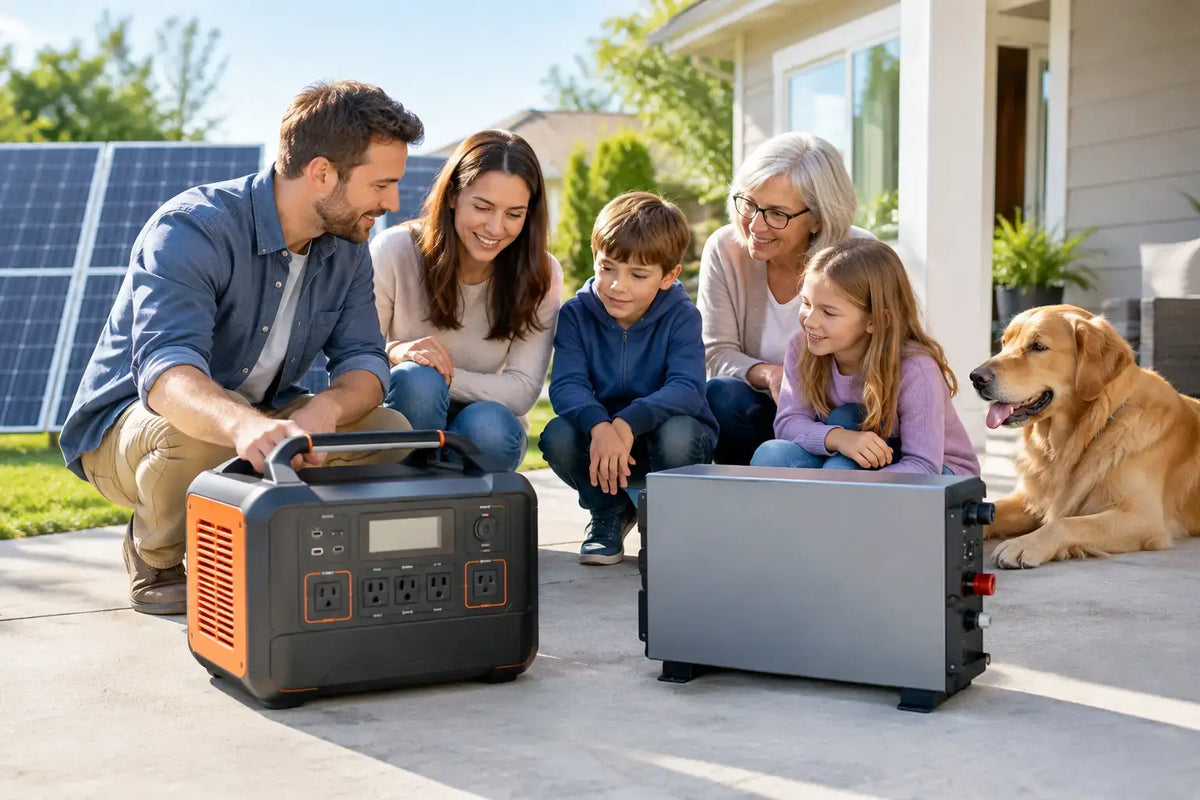
A refrigerator full of groceries, a phone at 12 percent, and a storm forecast that keeps getting worse can make power backup feel urgent fast. The solar generator versus inverter question matters because these two tools solve different parts of the same problem. Choose the right one, and your family has quiet, usable power for the essentials. Choose the wrong one, and you may have an expensive box that cannot run what you need.
For most households starting their preparedness plan, a solar generator is the simpler answer. An inverter can be a smart choice too, especially for vehicle-based power or a larger home battery project. The best option depends on what you want to keep running, how long you need power, and how hands-on you want the setup to be.
Solar Generator Versus Inverter: The Basic Difference
A solar generator is a portable power station, not a fuel-burning generator. It usually combines a rechargeable battery, an inverter, charging electronics, outlets, and a display in one ready-to-use unit. Add compatible solar panels, and it can recharge from the sun. It can also charge from a wall outlet or, in many cases, a vehicle outlet before or during an emergency.
An inverter is one component. It changes direct-current power from a battery into the alternating-current power used by standard household plugs. A standalone inverter needs a battery source, appropriate cables, and usually a way to recharge that battery. It does not store energy on its own.
That distinction is easy to miss when shopping. A 1,000-watt inverter may sound like a 1,000-watt solar generator, but it is not. The inverter tells you how much power it can deliver at one moment. It says nothing about how long it can do so. Runtime comes from the battery connected to it.
There is one more source of confusion: an inverter generator is a gas or propane generator with electronics that produce cleaner, more stable power. It is a useful outage tool, but it is neither a battery solar generator nor a standalone inverter. It needs fuel, produces exhaust, and must always run outdoors.
What a Solar Generator Does Well
A solar generator is built for families who want power without assembling an electrical system from separate parts. Charge it in advance, store it indoors, and move it where it is needed. During an outage, it can quietly run phones, lights, a Wi-Fi router, a CPAP machine, fans, a laptop, and many small kitchen or medical essentials.
This is especially helpful at night. There is no engine noise to wake children, no fuel to rotate, and no carbon monoxide risk from operating the unit indoors. The solar panels stay outside in daylight while the power station remains indoors with your family.
The trade-off is capacity. Most portable solar generators are designed for essential loads, not for powering every circuit in a house. A small unit may keep phones and lights going beautifully but will not run a central air conditioner, electric water heater, clothes dryer, or electric range. Larger power stations can support more, but the price, weight, panel area, and recharge time all rise with capacity.
For a practical first step, think in terms of keeping life functional rather than keeping life unchanged. Refrigeration, communication, basic lighting, medical devices, and a way to recharge batteries are usually the priorities.
When an Inverter Makes More Sense
A standalone inverter is often the better value when you already have a dependable 12-volt battery bank. That might be a properly maintained deep-cycle battery in an RV, a travel trailer, a boat, or a vehicle-based emergency setup. It can turn that stored battery power into usable household-style AC power.
An inverter also makes sense for homeowners building a more permanent backup system. A larger battery bank, solar charge controller, inverter, panels, fuses, disconnects, and possibly a professionally installed transfer switch can create a capable system. It is scalable and can be tailored to a home’s needs.
But the setup has more moving parts. Battery chemistry matters. Cable size matters. Fuse placement matters. Ventilation may matter, depending on the battery type. Incorrect connections can damage equipment or create a fire risk. For many families, especially those who want a dependable solution before the next storm season, an all-in-one power station is easier to use correctly.
A vehicle inverter deserves extra caution. Plug-in inverters that use a cigarette-lighter-style outlet are useful for a laptop or small charger, but not for high-power appliances. Larger inverters connected directly to a vehicle battery can drain it quickly. A dead vehicle is a poor outcome during an evacuation, winter storm, or wildfire-related outage.
Compare the Numbers That Actually Matter
Do not buy based on the word “generator” alone. Compare continuous wattage, surge wattage, battery capacity, charging input, and outlet types.
Continuous wattage is the amount of power a unit can supply steadily. Surge wattage is the brief extra power available when a motor starts. Refrigerators, freezers, pumps, and some power tools can draw several times their running power for a few seconds. If the surge capacity is too low, the appliance may fail to start even when its label shows modest running watts.
Battery capacity is measured in watt-hours, usually written as Wh. This is the number that helps estimate runtime. A 1,000 Wh power station can theoretically run a 100-watt load for about 10 hours. In real use, expect less because inverters consume some energy and appliances cycle on and off.
A simple estimate is:
Battery watt-hours × 0.85 ÷ appliance watts = approximate runtime in hours
For example, a 1,000 Wh unit running a 60-watt CPAP may provide roughly 14 hours under favorable conditions. Humidifiers and heated tubing increase the CPAP’s draw, so test your actual equipment before an emergency. A refrigerator is harder to estimate because its compressor cycles, room temperature changes, and the door may be opened frequently.
Solar input tells you how quickly sunlight can recharge the unit. A large panel array can help, but sunlight is not a wall outlet. Cloud cover, winter sun, panel angle, shade, and short daylight hours all reduce production. Solar is excellent for extending an outage plan over several days. It should not be your only plan for the first night.
Start With Your Family’s Essential Loads
Walk through your home and identify what truly needs power during the first 24 to 72 hours. Write down each item’s running watts, startup watts when relevant, and how many hours per day you expect to use it. The answer may be smaller and more manageable than you think.
A phone, lantern, router, small fan, and laptop use relatively little power. A refrigerator, chest freezer, sump pump, space heater, window air conditioner, or well pump changes the equation quickly. Electric heat is particularly demanding. A typical space heater can consume 1,500 watts continuously, which can empty a modest power station in well under an hour. For winter readiness, prioritize layered clothing, blankets, safe indoor shelter strategies, and non-electric cooking where appropriate rather than expecting a battery unit to heat the house.
Medical needs come first. If someone in your household relies on a CPAP, oxygen concentrator, refrigerated medication, mobility equipment, or another powered device, confirm the manufacturer’s power requirements and build extra capacity into your plan. Discuss backup needs with the equipment provider or medical professional before relying on any battery system.
A Realistic Backup Plan for Most Homes
For many suburban households, a two-layer approach works best. Keep a portable solar generator for quiet indoor essentials and short outages. Pair it with solar panels for multi-day disruptions and a safe, outdoor fuel-powered generator only if your household needs to support larger loads such as a refrigerator, freezer, well pump, or selected home circuits.
The portable unit is the one you reach for at 2 a.m. when the lights go out. It is easy to carry to a bedroom for medical equipment or to the kitchen for refrigeration support. A larger generator, if you choose one, belongs outdoors and should be operated well away from doors, windows, and vents. Never run a fuel-powered generator in a garage, even with the door open.
If you want to connect backup power to home wiring, use a qualified electrician and approved equipment. Never backfeed a home through a dryer outlet or another improvised connection. It can seriously injure utility workers and damage your home.
The Best Choice Is the One You Will Maintain
A solar generator needs occasional attention. Check its charge level every few months, follow the manufacturer’s storage guidance, inspect cables, and practice running your important devices. Set up the panels once on a clear day so you are not learning in wind and rain.
An inverter system needs more routine inspection because it includes separate batteries and connections. Check battery condition, corrosion, cable security, fuses, and recharge equipment. If the system supports equipment your family depends on, testing is not optional.
At SHTF Prepper Club, we encourage families to start with the outage that is most likely where they live, then add capacity as their plan becomes clearer. A well-chosen power station that keeps your family connected and protects essential food or medical needs is a meaningful step forward. The goal is not to own the biggest system. It is to know exactly what your power plan can do before you need it.