
Table of Contents
- Quick Comparison: Top Emergency Kits for Seniors
- Emergency Medication Management for Seniors
- How to Store Insulin During a Power Outage
- Essential Medical Supplies and Assistive Devices
- Emergency Communication Plan for Seniors
- Documents, Food, Water, and Sanitation Supplies
- Psychological First Aid and Pet-Inclusive Planning
- Maintenance Schedules and Kit Rotation
- Frequently Asked Questions
Last Updated: September 25, 2026
Quick Comparison: Top Emergency Kits for Seniors
The best emergency kits for seniors managing a chronic condition are built around medication continuity, backup power for medical devices, and documents a caregiver can grab in seconds. This guide from SHTF Prepper Club covers what belongs in that kit, from insulin storage to pet-inclusive planning.
| Kit Type | Core Strength | Chronic-Condition Gap | Best For |
|---|---|---|---|
| SHTF Prepper Club curated kits | Vetted food, water, power, safety gear | Add medications separately | Households wanting a guided start |
| Adventure Medical Sportsman 400 | Trauma and wound care depth | No food, water, or power | Home sheltering with medical needs |
| Medical Gear Outfitters Home Care | Bulk medical essentials | No food or water | Bulk supply restocking |
| Safety Kits Plus 72-Hour Family | FEMA-aligned basics | No condition-specific medical | Foundational coverage |
| Keystone Health Senior Essentials | Mobility and hygiene focus | Requires assembly | Custom mobility-centered kits |
Emergency Medication Management for Seniors
Emergency medication management for seniors means keeping a minimum seven-day supply of every prescription, a written dosage schedule, and a way to keep temperature-sensitive drugs viable when the power fails. That standard looks different depending on which chronic condition you manage.
Organizing Prescriptions and Dosage Schedules
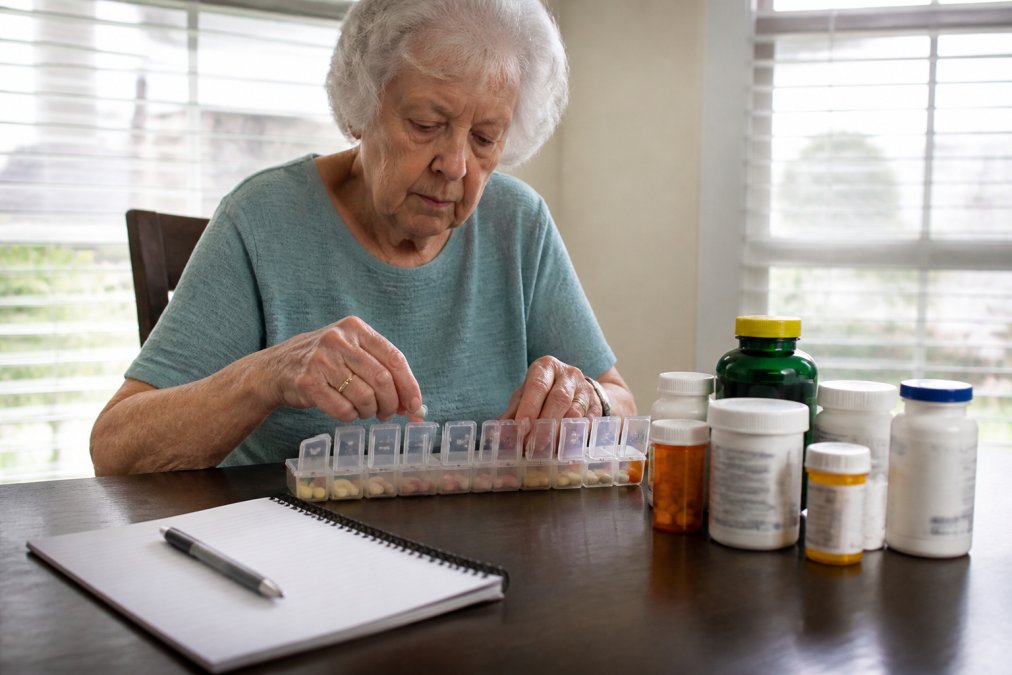
Refill timing is the weak point: most insurance plans will not authorize an early refill, so a rotating buffer takes weeks to build. Request a 90-day supply where allowed, then set a reminder to rotate the oldest stock into daily use. If capped at 30 days, ask the prescriber to write each next fill a few days early, small overlaps compound into a real buffer.
Condition-Specific Medication Sub-Checklists
A generic seven-day supply is not enough when the condition dictates what "enough" means. Build the buffer around the diagnosis:
- Cardiac (heart failure, hypertension, arrhythmia): Do not skip doses during an evacuation, abrupt stops on beta blockers or antiarrhythmics can trigger rebound events. Pack a blood pressure cuff and a current list of daily readings. Diuretics raise dehydration risk in a shelter with limited water, so pair them with extra hydration supplies.
- Diabetes: Insulin, syringes or pen needles, a glucose meter with spare batteries and test strips, and a fast-acting glucose source (glucose tablets or gel, not candy that melts). Include a glucagon kit if prescribed. Test strips expire, so rotate them on the same schedule as the medication.
- Respiratory (COPD, asthma): Rescue inhalers plus a spacer, and a backup inhaler if the prescriber will write one. Note the remaining dose counter on each inhaler, an inhaler that reads empty mid-evacuation is a crisis.
- Anticoagulant therapy: Never interrupt warfarin or a direct oral anticoagulant without clinician direction. Pack the most recent INR result if you take warfarin, and carry a medical alert card noting the drug and dose in case of injury.
- Cognitive conditions: Pre-fill a labeled pill organizer for the evacuation window and keep a caregiver-written schedule, since the senior may not be able to reconstruct the regimen under stress.
Backup Power for Medical Devices
Oxygen concentrators, CPAP machines, and blood glucose meters all fail quietly when the outlet dies. A portable power station sized to your device's draw is the practical answer, with a car adapter covering the gap while you relocate. Note each device's wattage before buying.
Refill and Rotation Mechanics
A buffer only works if it stays current. Set two reminders: rotate the oldest stock into daily use, and reorder before the buffer dips below seven days. Keep an index card in the go-bag listing each medication's expiration and next refill date.
How to Store Insulin During a Power Outage
Insulin storage during a power outage comes down to temperature stability, not refrigeration. Unopened insulin keeps best cold, but a sealed cooler with a gel pack holds safe temperatures for a day or more if you resist opening it. Follow the manufacturer's storage guidance for your product exactly.
Essential Medical Supplies and Assistive Devices
Medical supplies and assistive devices are the second half of the kit, where generic preparedness lists stop being useful. A senior with arthritis needs a different grab-and-go setup than one with a heart condition.
First Aid Kit Essentials for Chronic Conditions
The American Red Cross first aid guidance covers the basics, but chronic conditions add specific items: a contactless thermometer, a blood pressure cuff if it is used daily, spare hearing aid batteries, and wound care supplies sized for fragile skin. Adhesive bandages that work on thin skin matter more than most people expect.
Mobility Aids and Durable Medical Equipment
Canes, walkers, and shower chairs are durable medical equipment people forget to plan around. Keep a spare cane by the door and a folding walker in the vehicle, if the primary aid breaks during an evacuation, a backup prevents a fall, the most common injury in a disrupted household.
Emergency Communication Plan for Seniors
An emergency communication plan for seniors is a one-page document listing three contacts, their numbers, and the order to call them, kept in the go-bag and on the refrigerator. Paper beats a phone that may be dead.
Documents, Food, Water, and Sanitation Supplies
Documents, food, water, and sanitation are the foundation layer, and for a chronic condition they need adjustment rather than replacement. Standard kits assume a healthy adult, so plan the swaps now.
Digital Emergency Records and Advance Directives
Digital emergency records are scanned copies of medication lists, insurance cards, physician contacts, and advance directives stored on a phone and a USB drive in the go-bag. Print a paper set too. A caregiver who can hand over a complete record at a shelter saves hours of intake.
Include these documents in the set:
- Current medication and allergy list
- Insurance cards (front and back)
- Physician and specialist contact list
- Advance directive and healthcare power of attorney
- A signed caregiver authorization if someone else manages care
- Immunization record, which some shelters request
Non-Perishable Food and Hydration for Chronic Conditions
Non-perishable food must match the diet, not just the calorie count. Standard emergency rations are often too salty for a low-sodium diet; meal replacement shakes, unsweetened canned goods, and low-sodium soups work better, and hydration matters more for anyone on diuretics.
Sanitation and Hygiene for Limited Mobility
Sanitation is where limited mobility changes the kit. Standard supplies assume a person who can use a toilet and manage their own hygiene. For a senior with mobility limits, add:
- Disposable bed pads and adult briefs sized correctly
- No-rinse bathing wipes, which replace a shower when water is scarce
- A bedside commode or urinal if the bathroom is unreachable
- Hand sanitizer and gloves for the caregiver
- A sealable waste bag system, since a shelter may not have capacity for medical waste
| Supply Category | Chronic-Condition Adjustment | Rotation Interval |
|---|---|---|
| Non-perishable food | Low-sodium, diabetic-friendly, soft-texture options | Every 12 months |
| Water | Extra for medication swallowing and diuretic use | Every 6 months |
| Sanitation supplies | Incontinence and no-rinse hygiene for limited mobility | Every 12 months |
| Batteries | Sized for glucose meters and hearing aids | Every 6 months |
Psychological First Aid and Pet-Inclusive Planning
Two angles most preparedness lists skip: the emotional side of a disaster for an older adult, and the pet that will not be left behind.
Psychological First Aid for Seniors
Psychological first aid for seniors means reducing confusion first. Familiar objects, a written routine, and calm, short instructions do more than any checklist. Disorientation in an unfamiliar shelter is a real risk for someone with mild cognitive decline, and a familiar blanket or photo can anchor them.
Pet-Inclusive Emergency Planning
Pet-inclusive planning means packing pet food, a leash, vaccination records, and a carrier in the same go-bag, since many shelters will not accept animals. Decide now whether the plan is a pet-friendly shelter, boarding, or a caregiver who takes the pet.
Maintenance Schedules and Kit Rotation
A kit is only as good as its last inspection. Build a twice-yearly review tied to daylight saving time changes, easy dates to remember.
- Check medication expiration dates and rotate the buffer supply
- Test the portable power station and recharge it fully
- Replace batteries in glucose meters, hearing aids, and flashlights
- Confirm the communication list numbers are still current
- Review food and water dates and swap anything expiring within six months
- Update digital records after any medication change
Frequently Asked Questions
What should be included in an emergency kit for a senior with chronic health conditions?
A kit should include at least a 7-day supply of all medications, a list of dosages and physician contact information, backup power for medical devices like oxygen concentrators or CPAP machines, a first aid kit with wound care supplies, non-perishable food that meets dietary needs (e.g., low-sodium), water, sanitation supplies, and copies of medical records and advance directives. Include assistive devices such as hearing aid batteries and mobility aids.
How do you store medications safely in an emergency kit?
Store medications in a cool, dry place, ideally in a waterproof container. Keep them in original packaging with labels intact. Rotate your supply every 6 months to avoid expiration. For temperature-sensitive drugs like insulin, use a cooler with ice packs or a portable power source. Maintain a current medication list with dosages and physician contact information in the kit.
What is the recommended duration of supplies for a senior's emergency kit?
FEMA and the National Institute on Aging recommend at least a 72-hour supply of food, water, and medications. For seniors with chronic conditions, extend that to 7 to 14 days because they may need to shelter in place longer or face delays in resupply. Include extra batteries, backup power, and a rotating stock of non-perishable food and water.
How can seniors with limited mobility prepare for an emergency?
Seniors with limited mobility should plan for evacuation with a caregiver or emergency contact. Keep a go-bag with mobility aids (cane, walker, wheelchair), backup batteries for hearing aids, and a list of medications. Practice evacuation routes and ensure someone can assist. Include a communication plan with a designated contact and a medical alert device if possible.
Building a kit for a chronic condition is less about buying the right box and more about matching supplies to a specific person's daily reality. SHTF Prepper Club simplifies that process with expert-vetted food, water, power, and safety gear, long-term food storage built for a 25-year shelf life, and preparedness guides that walk you through each step rather than handing you a box and wishing you luck. Get started with SHTF Prepper Club and build a kit your household can actually rely on.