
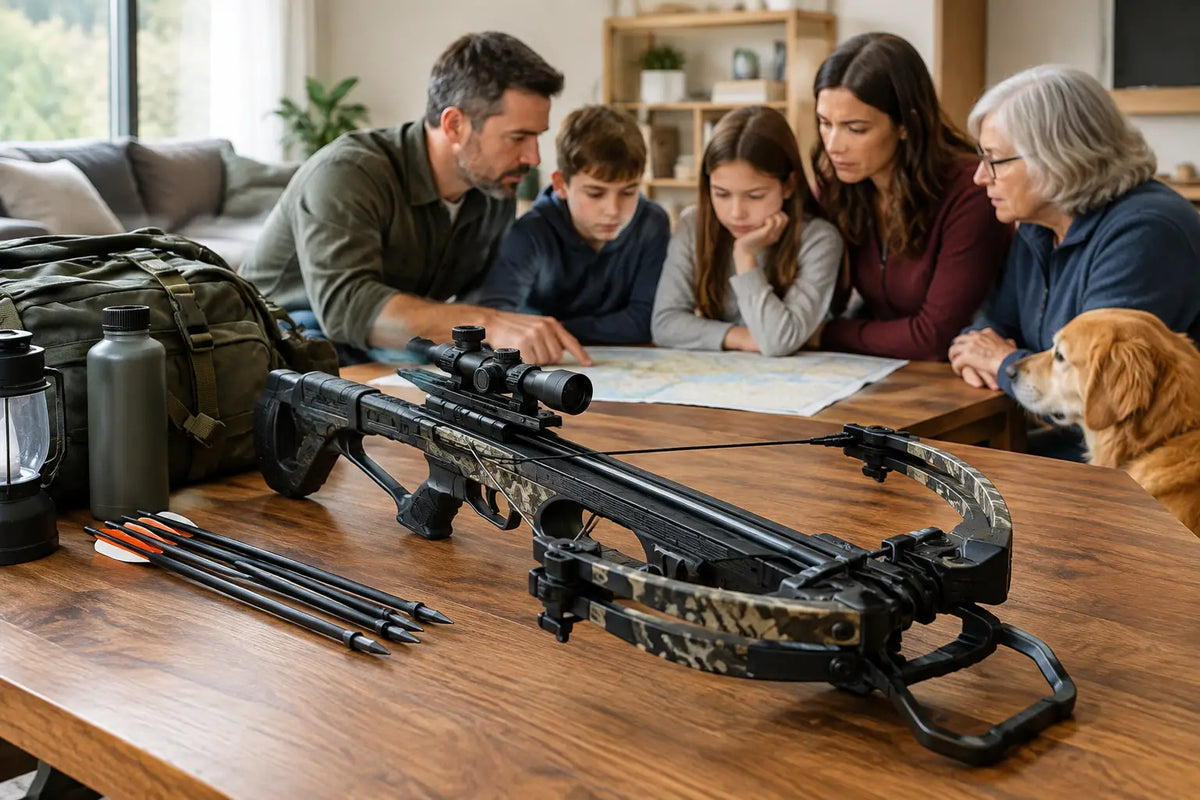
A crossbow can seem like a sensible addition to an emergency plan, especially for rural households, hunters, and families thinking about long disruptions. But it is not a substitute for water, food, power, medical supplies, communication, or a well-practiced evacuation plan. For most households, it belongs near the outer edge of preparedness - considered carefully after the basics are covered.
That is not a dismissal. It is a practical way to prioritize. A family can get through a three-day outage with stored water, shelf-stable meals, light, warmth, medications, and a way to charge a phone. A crossbow does none of those jobs. If it has a place in your home, it should be treated as specialized sporting or hunting equipment that carries real legal, safety, and storage responsibilities.
Start With the Emergencies You Actually Face
Preparedness works best when it begins with likely problems, not dramatic possibilities. Think about the last disruption your area experienced. Was it a hurricane that closed roads? A winter storm that cut power? Wildfire smoke that kept everyone indoors? A local water advisory? Those events point directly to the supplies that will reduce stress for your family.
For a typical suburban household, the first priorities are simple: enough drinking water, food your family will eat, reliable lighting, backup power for essential devices, first aid supplies, sanitation items, and a way to receive emergency updates. Families with young children, older relatives, pets, or medical equipment may have additional needs.
A crossbow may be more relevant if your household already hunts legally, lives in a rural area where hunting is a normal part of life, and has a realistic long-term food independence plan. Even then, it is one small part of a much larger system. A stocked pantry and stored water will matter immediately. Hunting, where lawful and appropriate, is uncertain, seasonal, physically demanding, and rarely a dependable answer to a short-term regional emergency.
What a Crossbow Can and Cannot Do
A crossbow has a narrow role. For a trained, lawful owner, it may be hunting equipment used to pursue game where regulations allow. It can also be a sport item. That is the honest scope of it.
It cannot purify water, keep insulin cold, heat a room, replace a first aid kit, or create a safe place for children during an evacuation. It also should not be viewed as a simple home-security solution. Emergencies are confusing enough without introducing equipment that can cause severe injury when handled carelessly, accessed by a child, or used in panic.
There are trade-offs beyond the initial purchase. Crossbows require secure storage, regular inspection, appropriate accessories, and careful attention to manufacturer instructions. They can be heavy and awkward to transport. They also require practice and judgment that cannot be improvised during a crisis. If you are not already a responsible hunter or target shooter, buying one solely because an emergency might happen is usually not the best use of your preparedness budget.
Build the Foundation Before Buying Specialty Gear
If you have a set amount to spend this month, put it toward the items your family will use in almost any disruption. A good foundation is not glamorous, but it is what keeps a difficult week manageable.
Start by storing at least several days of water, then work toward a longer supply based on the number of people and pets in your home. Add familiar shelf-stable food, a manual way to cook safely, dependable flashlights, batteries or rechargeable power, a weather radio, and a first aid kit sized for your household. Keep critical prescriptions and copies of key documents organized. If you live where evacuation is possible, prepare bags for each family member and plan where you would go.
These purchases serve you whether the emergency lasts four hours or four weeks. They also make everyday problems easier: a burst pipe, a car breakdown, a canceled school day, or a storm that knocks out the neighborhood grid.
For families ready to expand beyond the basics, practical upgrades include water filtration, larger food storage, a portable power station, safe indoor-outdoor cooking options appropriate to your situation, and backup heat or cooling plans. SHTF Prepper Club focuses on these useful layers of readiness because they solve the problems ordinary families actually encounter.
If You Already Own a Crossbow, Make Safety the Plan
Some households already own hunting equipment, and there is no reason to pretend it does not exist when you are organizing your home. The responsible approach is to include it in your safety planning without making it the center of that plan.
First, know your state and local laws. Rules for ownership, transport, hunting seasons, permitted game, and discharge vary widely. An emergency does not automatically suspend those laws. Check current regulations with the appropriate state wildlife and local authorities, particularly after a disaster when temporary restrictions may be in place.
Second, secure it from unauthorized access. Children, visiting grandchildren, teenagers, and guests should never be able to handle hunting equipment without direct, competent adult supervision. Store the crossbow and its bolts separately in a locked location, consistent with the manufacturer’s guidance and any applicable laws. Treat it with the same seriousness you would give any item capable of causing grave harm.
Third, make sure every responsible adult in the household understands the storage plan. In a stressful situation, confusion is a hazard. One adult should not be the only person who knows where keys, safety equipment, documents, water shutoff tools, or emergency supplies are kept. Clear household organization is part of readiness.
Finally, do not rely on a crisis as a training environment. Anyone who chooses to participate in lawful hunting or shooting sports should seek qualified instruction, follow all safety rules, and practice only in appropriate legal settings. Family preparedness should lower risk, not introduce new ones.
Food Independence Is Bigger Than Hunting
It is understandable to connect a crossbow with self-sufficiency. The desire underneath that thought is a good one: you want your household to have options if stores are closed, shelves are thin, or roads are blocked. But food independence is most dependable when it starts closer to home.
Stored pantry food is predictable. Freeze-dried meals, canned goods, grains, beans, and foods your family already uses can carry you through disruptions without requiring travel, favorable weather, or physical exertion. A garden can add fresh food and useful skills over time. Seeds, preservation supplies, and a freezer plan supported by backup power can deepen that resilience. None of these options is instant, and each has a learning curve, but they are generally more reliable than assuming wild game will be available when you need it.
For rural families who already hunt, a crossbow may complement these efforts. It should not replace them. Wildlife populations, land access, weather, licensing, and local pressure after a major event can all change the equation. Plan around what you control: food in your home, water in storage, and skills practiced before there is a problem.
A Better Question to Ask Before You Buy
Instead of asking, “Should I buy a crossbow for emergencies?” ask, “What is the next gap in my family’s plan?” The answer may be more water containers, a way to keep phones charged, a better medical kit, smoke masks for wildfire season, or a week of meals that do not depend on the refrigerator.
If those needs are handled and hunting is already a lawful, familiar part of your household, then you can evaluate specialty equipment based on your local circumstances, experience, budget, and ability to store it safely. There is no prize for owning the most gear. The goal is a home that stays calm, capable, and cared for when normal routines stop.
Start with the supplies that help your family this week. Build from there, one practical decision at a time.