
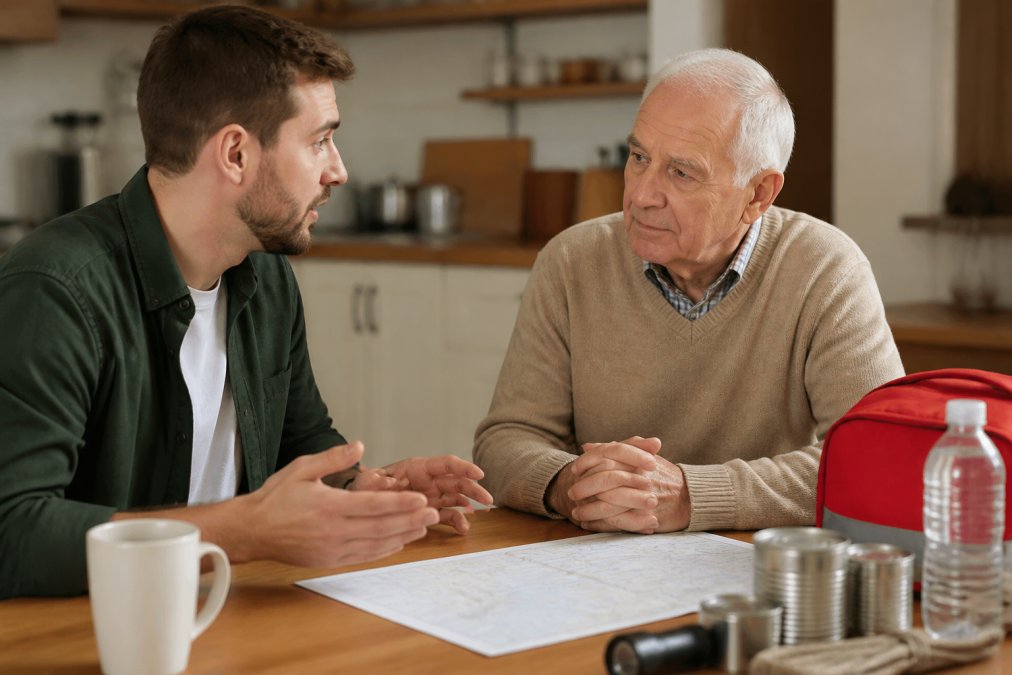
Table of Contents
- Why Communicating Emergency Plans to Elderly Family Members Requires a Different Approach
- How to Talk to Parents About Disaster Planning Without Causing Panic
- Building a Senior Emergency Preparedness Checklist Together
- Using an Emergency Communication Plan Template for Seniors
- Communication Tools and Backup Methods That Work for Older Adults
- Planning for Cognitive Impairment, Mobility Limits, and Evacuation Logistics
- Frequently Asked Questions
Last Updated: September 24, 2026
Why Communicating Emergency Plans to Elderly Family Members Requires a Different Approach
Communicating emergency plans to elderly family members is the process of sharing disaster response steps in a way that fits an older adult's physical limits, memory, and emotions. It works best when you slow down and repeat key details over time.
The stakes are real.
Physical, Cognitive, and Emotional Factors That Change the Conversation
Hearing loss, poor vision, and slower processing speed all affect how a senior takes in information. So does anxiety. A parent who feels talked down to will shut down fast.
Three things shift the conversation:
- Hearing and vision: Speak face to face. Use large print.
- Memory: Repeat the plan across several talks, not one.
- Emotion: Frame the plan as care, not control.
How to Talk to Parents About Disaster Planning Without Causing Panic
Start with their concerns, not yours. Ask what worries them most about a power outage or storm. Then build the plan around those answers.
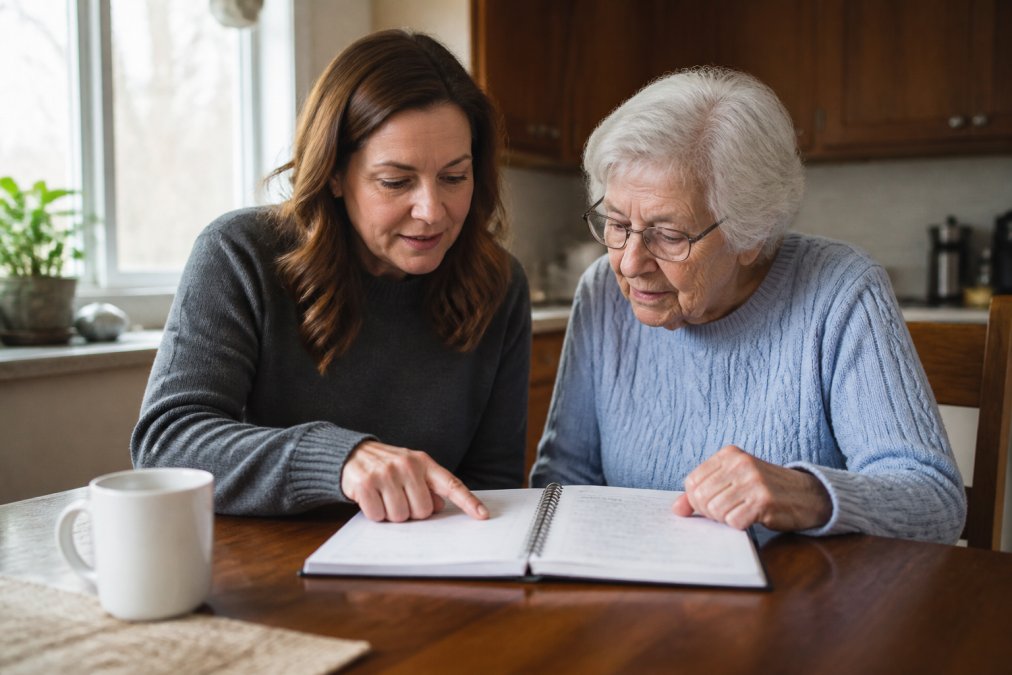
Opening the Conversation: What to Say and What to Avoid
Try openers like "I'm updating our family plan and want your input." Avoid "You need to be ready for the worst."
Keep these rules in mind:
- Ask before you advise.
- Use "we" instead of "you."
- Pick a calm, unhurried moment.
- Keep the first talk short.
Building a Senior Emergency Preparedness Checklist Together
A senior emergency preparedness checklist covers documents, medications, supplies, and contacts in one place. Build it with your parent, not for them.
Documents, Medications, and Supplies That Must Be in Place
Keep copies of key items in a waterproof folder and a digital backup.
- Photo ID and insurance cards
- A list of medications and doses
- Doctor and pharmacy phone numbers
- A 7-day supply of medications
- A contact card for each family member
- Water, shelf-stable food, and a flashlight
Using an Emergency Communication Plan Template for Seniors
An emergency communication plan template for seniors lists who to call, where to meet, and how to check in. Fill it in together and post it where it's easy to see.
The template has four parts:
| Section | What to Fill In | Why It Matters |
|---|---|---|
| Contacts | Family, neighbors, doctor | Fast reach in a crisis |
| Out-of-state contact | One distant relative or friend | Local lines often fail |
| Meeting points | Two spots near and far | Reunion if separated |
| Check-in times | Morning and evening | Reduces worry |
Filling In Contacts, Meeting Points, and Out-of-State Check-In Numbers
Pick an out-of-state contact. After a disaster, local phone lines jam, but long-distance calls often still connect.
Choose two meeting points:
- One right outside the home
- One outside the neighborhood
Communication Tools and Backup Methods That Work for Older Adults
Most preparedness guides stop at "keep a charged phone." That advice fails the seniors who need it most. The right setup pairs one digital tool the person will actually use with two analog backups that work when cell towers and power fail.
Digital Tools Built for Older Adults
Match the tool to the person, not the trend. A few categories are worth knowing:
- Simplified smartphones and flip phones. Phones with large physical buttons, hearing-aid compatibility (look for an M3/T3 or M4/T4 rating on the packaging), and a dedicated emergency button are easier to operate under stress than a touchscreen.
- Medical alert systems with fall detection. These devices connect to a monitoring center through a landline, cellular, or Wi-Fi base. Most require a monthly subscription, and coverage depends on the base unit's range inside and just outside the home.
- Smart speaker check-ins. A voice-activated speaker can be used for hands-free calling and reminders, but it depends on home Wi-Fi and power, so treat it as a convenience, not a lifeline.
- Wireless Emergency Alerts (WEA). These are the free, location-based alerts pushed by authorities to cell phones. Make sure alerts are enabled on the phone and that the senior knows what the alert tone means.
- NOAA Weather Radio. A battery or hand-crank NOAA weather radio receives continuous National Weather Service broadcasts and sounds an alarm for local warnings. This is the single most reliable one-way channel when the power is out.
The Analog Backup Layer
When towers go down, the plan has to run on paper and batteries. Build three backups:
- A laminated contact card. Wallet-sized, large print, with the out-of-state contact at the top. Laminate two copies, one for the wallet, one taped inside a kitchen cabinet.
- A written check-in schedule. Morning and evening times posted by the phone, so the senior knows when to expect a call and when to place one.
- A battery or hand-crank radio. Keep spare batteries taped to the radio so they do not walk off.
Practicing the Tools, Not Just Listing Them
A tool the senior has never used is not a backup. Run a short drill once a season: have them turn on the weather radio, read the contact card aloud, and place a test call to the out-of-state contact. Ten minutes of practice beats a drawer full of unused gear.
Planning for Cognitive Impairment, Mobility Limits, and Evacuation Logistics
Dementia, poor balance, and wheelchair use change every part of the plan. Build these needs in from the start, because a plan that assumes a fully mobile, fully oriented adult will fail exactly when it matters.
Communicating the Plan When Memory Is Impaired
A senior with mild cognitive impairment or dementia cannot hold a multi-step plan in working memory. The goal shifts from "remember the plan" to "recognize the cue."
- One idea per sentence. "The power is out. We are going to the neighbor's house." Not a paragraph.
- Use recognition, not recall. A photo of the out-of-state contact taped by the phone works better than a name the senior has to retrieve.
- Anchor to routine. Tie the check-in call to something already habitual, right after breakfast, right before the evening news.
- Repeat across days, not within one sitting. Short, calm reviews spread over a week stick better than one long briefing.
- Watch for sundowning. Late-afternoon confusion can spike. Schedule important conversations in the morning.
Mobility Limits and Evacuation Logistics
Mobility is the part most family plans skip. Sort it out before the storm, not during it.
- A 7-day supply of medications in original labeled bottles, plus a printed medication list.
- A copy of photo ID, insurance cards, and advance directives.
- A spare pair of glasses, hearing aid batteries, and a charger.
- A change of clothes, a light blanket, and non-perishable snacks.
- A walker or folding wheelchair if one is available.
Rehearsing the Evacuation
Once a season, walk the route from the bedroom to the car with the senior. Time it. If it takes longer than you expected, adjust the plan, earlier departure, more help, or a different vehicle. A rehearsal that exposes a problem is worth more than a plan that looks good on paper.
Frequently Asked Questions
Can you provide an example of a family emergency communication plan?
A workable plan lists every household member's phone number, one out-of-state contact who can relay messages if local lines fail, two meeting points (one near home, one outside the neighborhood), and a check-in schedule. For elderly family members, add a printed contact card in their wallet and a large-print copy by the phone. Review and update the plan every six months or whenever someone's health, address, or medication changes.
How do you explain emergency preparedness to an elderly parent?
Lead with a specific scenario they already worry about, such as a power outage or a storm that keeps you from reaching them. Frame the conversation around staying independent at home rather than being rescued. Ask what they would want to happen, then build the plan around their answers. Keep the first conversation short, and follow up with a written senior emergency preparedness checklist they can review on their own time.
What should be included in an emergency plan for seniors?
Include a printed contact card with medical conditions, medications, and allergies; a list of trusted neighbors and their phone numbers; two meeting points; an out-of-state contact; and copies of medical records and insurance cards in a waterproof pouch. Add a backup communication method such as a battery-powered radio and a charged power bank. If mobility assistance is needed, note who will help with evacuation and where equipment like walkers or oxygen tanks are stored.
How can caregivers help elderly family members prepare for disasters?
Caregivers should practice the plan with the person, not just hand them a document. Run a short drill: call the out-of-state contact together, walk to the meeting point, and locate the emergency supplies. Check that phones are charged, alert notifications are enabled, and the contact card is current. Coordinate with the personal support network so neighbors and relatives know their role. Revisit the plan after any hospital stay or change in medication.
Talking through a plan with an aging parent can feel heavy, and most families put it off. SHTF Prepper Club makes the supply half easier with expert-vetted food, water, power, and safety gear, plus long-term food storage built for up to a 25-year shelf life. You handle the conversations; we handle the kit. Get started with SHTF Prepper Club and give your family a plan they can actually follow.