
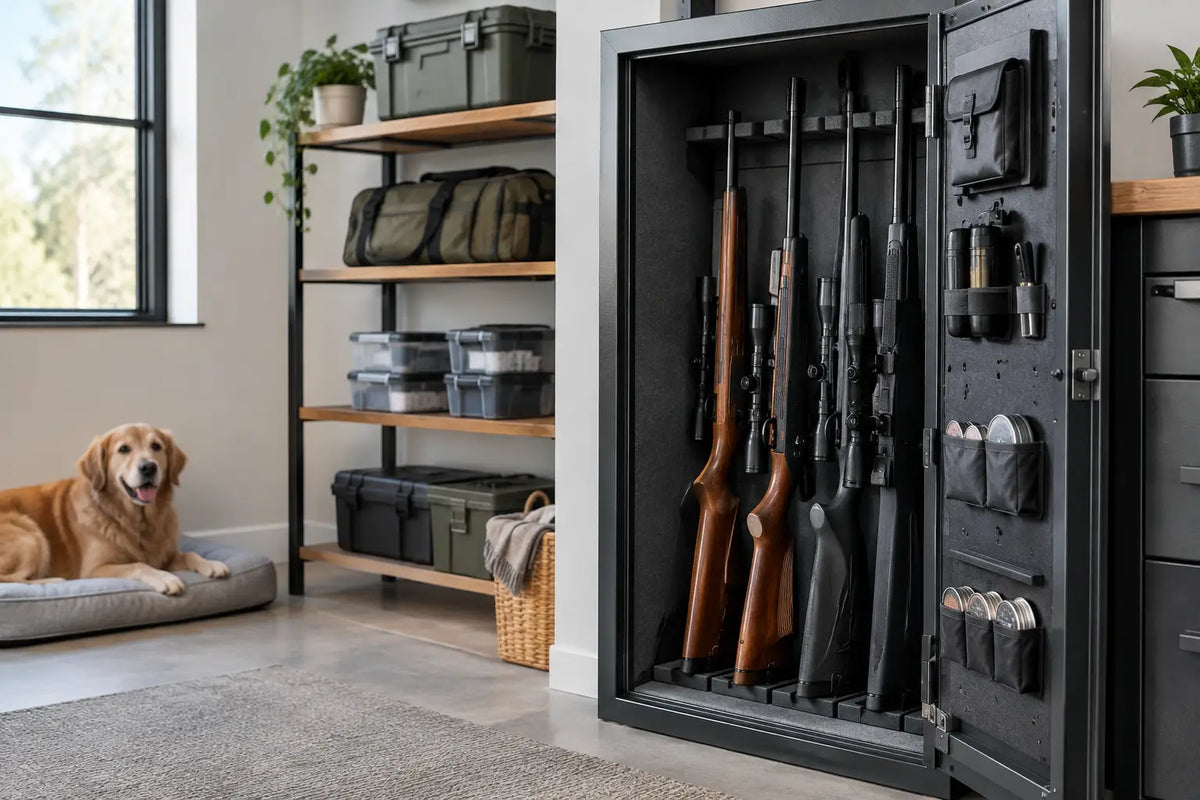
A pellet rifle leaning in a garage corner may look harmless compared with other household equipment. It still deserves a storage plan. The best way to protect airgun equipment is to treat it as both a valuable tool and an item that must stay out of unsupervised hands. That means protecting it from moisture, heat, accidental damage, and unauthorized access at the same time.
For a family home, the goal is not to turn a closet into an armory. It is to create one predictable, secure place where equipment stays dry, organized, and unavailable to children, guests, or anyone who should not handle it. A few practical decisions now can prevent a ruined airgun, a missing tin of pellets, or a much more serious household safety problem later.
Protect Airgun Equipment by Controlling Access
Start with location. An airgun should not be stored under a bed, behind a door, in an unlocked mudroom cabinet, or in a vehicle. Those spots are easy to reach, easy to forget, and often exposed to humidity or temperature swings.
A locked cabinet, lockable hard case, or secured safe is a better fit for most homes. Choose something that can be anchored to a wall or floor if practical. The lock does not need to be complicated, but it should prevent casual access. Keep keys, combinations, and backup access methods separate from the storage unit and out of reach of children.
Store pellets, CO2 cartridges, magazines, and related accessories separately inside the same locked area when possible. This adds a useful layer of safety without creating a complicated routine. If a teenager uses an airgun for supervised target practice or pest control where lawful, set clear household rules: equipment is returned to storage immediately after use, and an adult controls access.
This is also a good time to talk plainly with children. A locked container matters, but it does not replace a calm conversation about never handling an airgun without permission or adult supervision. Families do better with clear expectations than with assumptions.
Keep Moisture Away From Metal and Wood
Rust is one of the most common ways an airgun slowly loses value and reliability. Basements, sheds, garages, and unfinished workshops are frequent trouble spots because they trap damp air and experience wide temperature changes. A case that feels dry can still hold moisture against metal surfaces, especially after being brought in from cold weather.
Indoor storage in a climate-controlled part of the home is usually the simplest answer. A locked closet cabinet or interior safe is often better than a garage safe. If you must store equipment in a basement or garage, raise the container off the concrete floor and use a moisture-control product designed for enclosed storage. Check and refresh it on the schedule provided by its manufacturer.
After use outdoors, wipe down exposed metal with a clean, dry cloth before storage. If the airgun manufacturer recommends a specific protective oil or lubricant, use only that product and apply it sparingly. Excess oil can attract dust, migrate into areas where it does not belong, or leave residue on wood and seals.
Wood stocks need attention too. Very dry indoor heat can cause wood to shrink, while damp storage can lead to swelling, stains, or cracking. A stable indoor environment protects both the stock and the working parts better than repeated moves between a hot garage and an air-conditioned house.
Do Not Rely on a Soft Case Alone
A soft case protects against scratches during transport. It is not automatically suitable for long-term storage. Foam and fabric can hold humidity close to the finish, particularly in humid areas or after a rainy day at the range.
If you use a case for storage, open it periodically and inspect the airgun. Look for orange spotting, moisture on metal, loose screws, damaged seals, or a musty odor. A hard, lockable case can offer better physical protection, but it still needs moisture management and regular checks.
Store Each Airgun in Its Recommended Condition
Different airgun power systems have different storage needs. The owner’s manual should be your first reference because manufacturers can specify care requirements for particular models.
For spring-piston models, store the airgun uncocked. Leaving a spring compressed for long periods can affect components and creates an unnecessary safety risk. For CO2-powered models, many manufacturers recommend removing cartridges before extended storage to reduce the chance of slow leaks or seal problems. Do this only after following the model’s normal unloading and safety procedures.
Pre-charged pneumatic, or PCP, airguns require more nuance. Do not assume every air reservoir should be fully emptied before storage. Some manufacturers specify a safe storage pressure range, while others give different instructions. Follow the manual and avoid taking apart pressurized components unless you are qualified to do so. If you notice a leak, damaged fitting, or pressure behavior that seems unusual, stop using the airgun and have it inspected by a qualified service provider.
Before storing any model, make sure it is unloaded and pointed in a safe direction while you complete the manufacturer’s normal clearing procedure. Keep this routine consistent. Familiarity is what makes safe habits dependable during busy weeks, holiday visits, and household disruptions.
Protect It From Everyday Household Damage
Many airguns are damaged by ordinary accidents, not dramatic events. A ladder falls in the garage. A storage tote shifts on a shelf. Someone moves boxes during a power outage and does not realize what is behind them. Proper storage should account for these predictable moments.
Avoid placing heavy items on top of a case or stacking other gear where it could press against sights, scopes, stocks, or barrels. If the airgun has an optic, use a fitted case or a cabinet arrangement that prevents side pressure. Keep cleaning supplies, tools, and spare parts in a labeled bin nearby rather than loose at the bottom of the cabinet.
A simple inventory card can help. List the airgun, its serial number if applicable, any optic or accessory attached, and the date of the last inspection. Photograph the equipment for household records and keep that record with other important documents. This is useful after a theft, fire, or storm-related damage claim, and it also helps you notice when something is missing.
Plan for an Emergency Without Making It the Priority
During an evacuation, your family, medications, identification, communication plan, pets, water, and basic supplies come first. Do not let equipment storage create a last-minute decision when you should be leaving promptly.
Think through the likely disruptions in your area. In hurricane and wildfire country, a securely locked, discreet case that can be moved quickly may be more practical than a large fixed cabinet alone. In tornado-prone areas, an anchored safe or cabinet in a protected interior location can reduce the chance of damage from falling objects. For apartment residents, a compact lockable case may be the realistic choice.
If you evacuate with an airgun, follow all applicable local, state, transportation, and destination rules. Keep it unloaded, secured in a locked case, and separate from its ammunition and accessories. If you are unsure whether travel or temporary storage is permitted where you are going, verify the rules before an emergency forces the question.
There is a trade-off here. A container that is easy to move may not be as resistant to theft as a heavy anchored safe. A larger safe may offer stronger protection but be impossible to relocate. The right choice depends on your home, local risks, and who lives or visits there. Start with secure access and dry storage, then improve the setup as your budget allows.
Make Inspection Part of Your Household Routine
You do not need to check an airgun every week. Twice a year is a reasonable starting point for many households, with more frequent checks in humid climates or if equipment is stored in a garage, basement, or seasonal property.
During that inspection, confirm the lock works, look for moisture or corrosion, review the manufacturer’s maintenance guidance, and make sure pellets and cartridges are accounted for. Replace depleted moisture-control materials and reassess whether children, grandchildren, guests, or household routines have changed since the last review.
Preparedness is often built from small routines that remove stress later. A dry, locked, organized place for an airgun is one more way to protect your home, your equipment, and the people you care about most.