
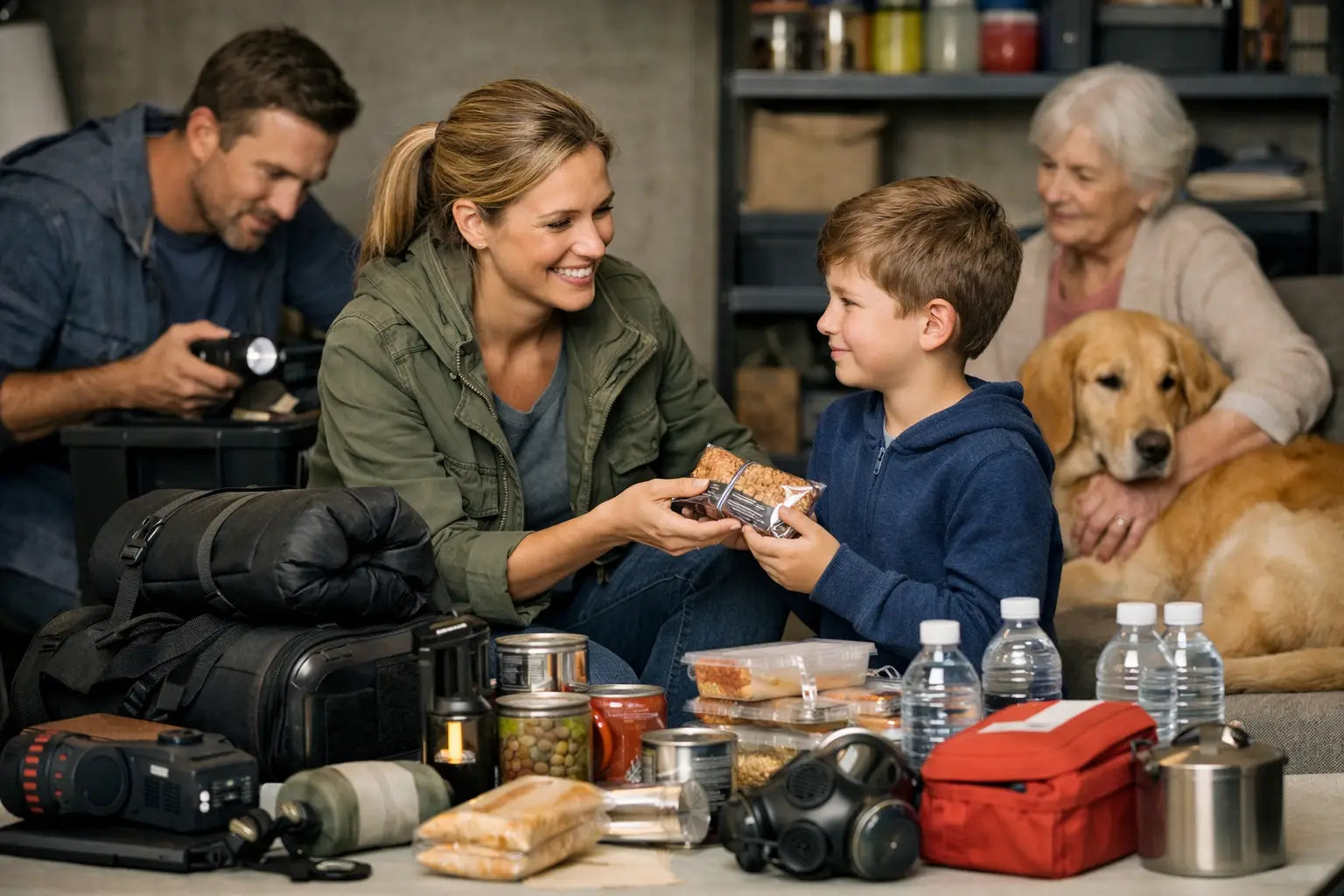
The phrase shtf prepping can sound louder and more dramatic than what most families actually need. For a parent trying to get through a five-day power outage, a wildfire evacuation, or a week of empty grocery shelves, preparedness is not about fantasy scenarios. It is about making sure your home can stay functional, your kids can stay calm, and your family can make good decisions under stress.
That shift matters. When people hear the term, they often picture bunkers, tactical gear, and extreme personalities. Most real emergencies do not look like that. They look like a refrigerator full of food warming up after day two without power. They look like a boil-water notice, a pharmacy delay, an ice storm, or a hurricane track changing overnight. Good preparedness starts when you stop asking, “What if everything collapses?” and start asking, “What would make the next disruption easier on my family?”
What shtf prepping really means at home
For a household, shtf prepping is less about surviving in the wilderness and more about keeping normal life going when normal systems fail. Water still has to be safe. Food still has to be easy to prepare. Phones still need charging. Prescription medications, pet supplies, baby items, and basic first aid still matter.
That is why the smartest approach is category-based. Think in terms of water, food, power, medical needs, shelter and warmth, sanitation, communication, and evacuation. When families skip this and buy random gear first, they often end up with expensive items that solve problems they are unlikely to face while leaving obvious gaps at home.
A better plan starts with the disruptions you are actually likely to see. In Florida or the Gulf Coast, that may be hurricanes and long outages. In California, wildfire smoke, evacuation, and power shutoffs may be higher on the list. In the Midwest, tornadoes and ice storms can shut things down fast. The right setup depends on your region, your home, your health needs, and how many people you are preparing for.
Start your shtf prepping with the boring essentials
The least exciting categories are usually the most important. Water comes first because it becomes a problem quickly. A family can improvise meals for a few days. Safe water is much harder to improvise once stores are empty or municipal service is disrupted.
A practical baseline is stored water for immediate use and a way to filter or purify more if needed. If you have room, dedicated containers beat stacks of disposable bottles because they are easier to manage and replace on a schedule. If you live where storms, earthquakes, or boil alerts happen, a filtration backup is not optional. It is part of a responsible household plan.
Food is next, but not in the way many people assume. You do not need to begin with a year’s supply. Start with food your family will actually eat during a stressful week. Shelf-stable meals, easy breakfast options, snacks, comfort foods, and a small reserve of longer-term staples make more sense than buying buckets your kids refuse to touch. If the power is out, your food plan also has to match your cooking setup. A pantry full of dry goods is less helpful if you cannot safely heat water.
Power deserves more attention than it usually gets. Most families already know they need flashlights. Fewer think through the chain reaction that happens when outlets stop working. Refrigeration, internet, medical devices, garage doors, sump pumps, and phone charging all become issues. Portable power stations, backup batteries, lanterns, and a simple charging plan can take a household from reactive to steady very quickly. You do not need to power your entire house on day one. You need enough backup to cover your most important jobs.
The family plan matters as much as the gear
Preparedness gear without a plan creates false confidence. In a real emergency, people lose time looking for items, debating next steps, or assuming someone else handled the details. Families do better when decisions are made ahead of time.
Everyone in the household should know where core supplies are stored. Adults should know how to shut off utilities if needed, how to use the water filter, how to operate backup power safely, and what the evacuation triggers are for your area. Older children should know simple things too, like where the flashlights live, where to meet if communication fails, and what to grab if you need to leave fast.
Your evacuation bag should reflect your actual family. That means copies of documents, medications, pet supplies, chargers, a few changes of clothes, hygiene basics, and familiar items for kids. It may also mean spare glasses, hearing aid batteries, mobility items, or backup formula. The details are not glamorous, but they are exactly what makes a hard day more manageable.
Where most families underprepare
Medical readiness is one of the biggest blind spots. Many households have a few adhesive bandages and a half-used bottle of pain reliever and call it good. That may be enough for ordinary life. It is not enough if roads are blocked, pharmacies are closed, or urgent care is overloaded.
A better setup includes trauma basics, over-the-counter medications you use regularly, extra prescription planning where possible, and supplies for the issues your family is most likely to face. That could mean asthma support, glucose monitoring supplies, children’s fever reducers, or wound care that goes beyond the basics. The goal is not to become your own hospital. It is to handle common problems safely until help is available.
Sanitation is another category people underestimate. When water is limited or plumbing is interrupted, small problems turn into miserable ones fast. Toilet alternatives, waste bags, cleaning supplies, hand hygiene, paper goods, and moisture control deserve a place in your plan. This is especially true for families with babies, older adults, or anyone with health conditions.
Then there is comfort. That word can sound soft, but comfort is operational. Warm blankets, decent lighting, familiar food, games for kids, and a way to make coffee or tea can lower stress and help everyone think clearly. A family that sleeps better and stays calmer makes better decisions.
Build in layers, not all at once
One reason people avoid preparedness is that they assume it has to be expensive from the start. It does not. The best family plans usually grow in layers.
Layer one is a short-term outage setup. Think three days of water and food, light, phone charging, first aid, sanitation basics, and a simple cooking option. Layer two stretches that to one or two weeks and adds more fuel, more water capacity, better medical supplies, and stronger power backup. Layer three is where longer-term food storage, home resilience upgrades, and tools for more extended disruptions begin to make sense.
This layered approach does two useful things. First, it keeps you from overspending on things you may not use. Second, it gives you visible progress. A family that has covered its first 72 hours is already in a far better position than one that keeps talking about getting prepared someday.
It also helps with budget trade-offs. A freeze dryer may be a great long-term fit for one household and a poor first purchase for another. A large generator may be worth it if you have frequent outages and a medical need, but not if your biggest risk is rapid evacuation. The right answer depends on your threats, your storage space, and how self-sufficient you want to become over time.
Keep your preparedness realistic and maintained
The best shtf prepping plan is one your family can maintain. Supplies expire. Batteries die. Kids outgrow clothing. Pets change needs. Medical routines shift. If your system is too complicated, it will quietly fall apart.
Try to keep your setup organized by use case. Home outage supplies should be easy to reach. Evacuation gear should be ready to grab. Long-term food should be dated and stored correctly. Water containers should be on a rotation schedule you can actually remember. Even a simple written checklist helps more than people expect.
This is also where quality matters. Bargain gear that fails during an emergency is not a bargain. Reliable water storage, dependable power equipment, practical first aid, and food your family will truly eat are worth choosing carefully. If you are building gradually, buy fewer items and buy better.
At SHTF Prepper Club, that is the mindset we believe serves families best. Start with what solves real problems. Build confidence through use. Add depth as your budget and goals allow.
Preparedness does not have to turn your home into a warehouse or your weekends into a hobby. It can be as simple as deciding that the next outage, storm, or shortage will be inconvenient, not chaotic, because your family took the time to think ahead.