
Last Updated: November 2, 2026
Quick Summary
Portable water purification for medical use means treating water to a clinical standard, not just a drinking-water standard, because a device that makes stream water safe to swallow may still leave particles, minerals, and microbial load that medical equipment cannot tolerate. Match the water to the job, since drinking-water safety, sterile water, and ultrapure water are not interchangeable.
- Hollow-fiber and ceramic filters handle bacteria and protozoa but generally not viruses.
- Ultraviolet treatment inactivates microbes but needs clear water and power.
- Reverse osmosis removes dissolved ions but wastes water and needs pressure.
- Granular activated carbon addresses taste, odor, and many organic chemicals but is not a disinfectant.
- Buying a single purifier for every medical task is the most common selection error.
Table of Contents
- Why Portable Water Purification for Medical Use Is Different
- Drinking-Water Safety vs. Medical-Grade Water: Know the Gap
- Choosing a Medical Grade Water Filtration System by Use Case
- Portable Water Filtration Systems for Disaster Relief: What to Look For
- What Drives Portable Water Purification for Medical Use Price
- Validation, Testing, and Failure Modes in Portable Systems
- Installing a Medical Grade Water Filter for Home Backup
- Building Your Family's Medical Water Plan with SHTF Prepper Club
- Frequently Asked Questions
Why Portable Water Purification for Medical Use Is Different
Portable water purification for medical use is the process of treating water to a standard strict enough for clinical tasks, not just for drinking.
At SHTF Prepper Club, we treat this as the most misunderstood corner of preparedness gear. Most families buy one filter and assume it covers everything.
Here is the gap in plain terms: drinking-water safety protects a healthy digestive system. The CDC guidance on water treatment and safe drinking water draws the line at human consumption.
Below, we walk through the seven rules that keep households and clinics from confusing the two.
Drinking-Water Safety vs. Medical-Grade Water: Know the Gap
The gap comes down to measurable targets. Drinking water is judged on microbial reduction and a set of regulated contaminant limits.
Three tiers are worth knowing:
- Potable water: safe to drink, with microbial reduction and sediment removal to regulated levels.
- Sterile water: free of viable microorganisms, used for wound care, irrigation, and device preparation.
- Ultrapure and deionized water: stripped of ions and minerals for laboratory and equipment use.
Microorganisms are the first concern. Bacteria, viruses, and parasites are the targets a portable purifier should address.
For a deeper look at removing per- and polyfluoroalkyl substances, read our guide on how to remove forever chemicals from drinking water.
Choosing a Medical Grade Water Filtration System by Use Case
Selection starts with the task, not the cartridge. You can also browse our Water Security collection to compare storage, carrying, and filtering options.
Use this decision sequence for any medical or care setting:
- Name the use. Is the water for patient drinking, wound or skin contact, device feedwater, cleaning and disinfection, or laboratory work? Each has a different target.
- Check the device or procedure instructions. Medical-device manufacturers publish water-quality specifications, and those specifications override any general purifier claim. If the instructions call for sterile or purified water, a drinking-water filter is not a substitute.
- Set the measurable target. For patient drinking, microbial reduction plus regulated contaminant limits is the baseline. For device feedwater, look for the manufacturer's limits on hardness, conductivity, and microbial counts. For wound contact or irrigation, sterility is the target, and filtration alone usually does not achieve it.
- Match the method to the target. Hollow-fiber and ceramic filters handle bacteria and protozoa but generally not viruses. Ultraviolet treatment inactivates microbes but needs clear water and power. Reverse osmosis removes dissolved ions and is the usual route to low-conductivity feedwater, but it wastes water and needs pressure. Granular activated carbon addresses taste, odor, and many organic chemicals but is not a disinfectant.
- Size capacity and flow to the case. Count people, liters per day, and peak demand. A field clinic with twenty patients has a different duty cycle than a household caring for one person.
- Confirm field serviceability. Can the cartridge be replaced without tools? Is a spare available? Can the unit be cleaned and disinfected in place?
Home Care and Elderly Support
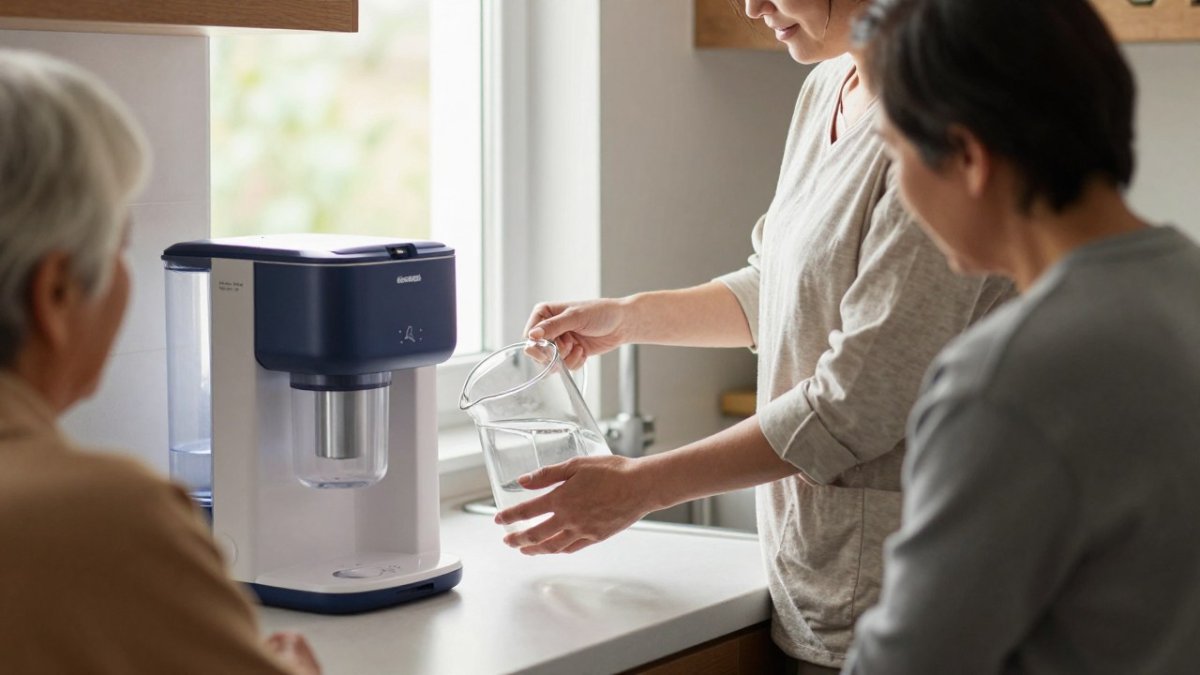
For household care, prioritize microbial reduction, ease of cleaning, and a flow rate that keeps up with daily needs. A countertop or under-sink system with a replaceable filter cartridge and a clear maintenance schedule fits most homes. Confirm the system's rated capacity in gallons so you can set a replacement interval, and keep a spare cartridge on hand. If the person you are caring for has a weakened immune system, treat drinking water as a higher bar and follow clinician guidance on whether sterile water is required.
Clinic, Field, and Disaster Settings
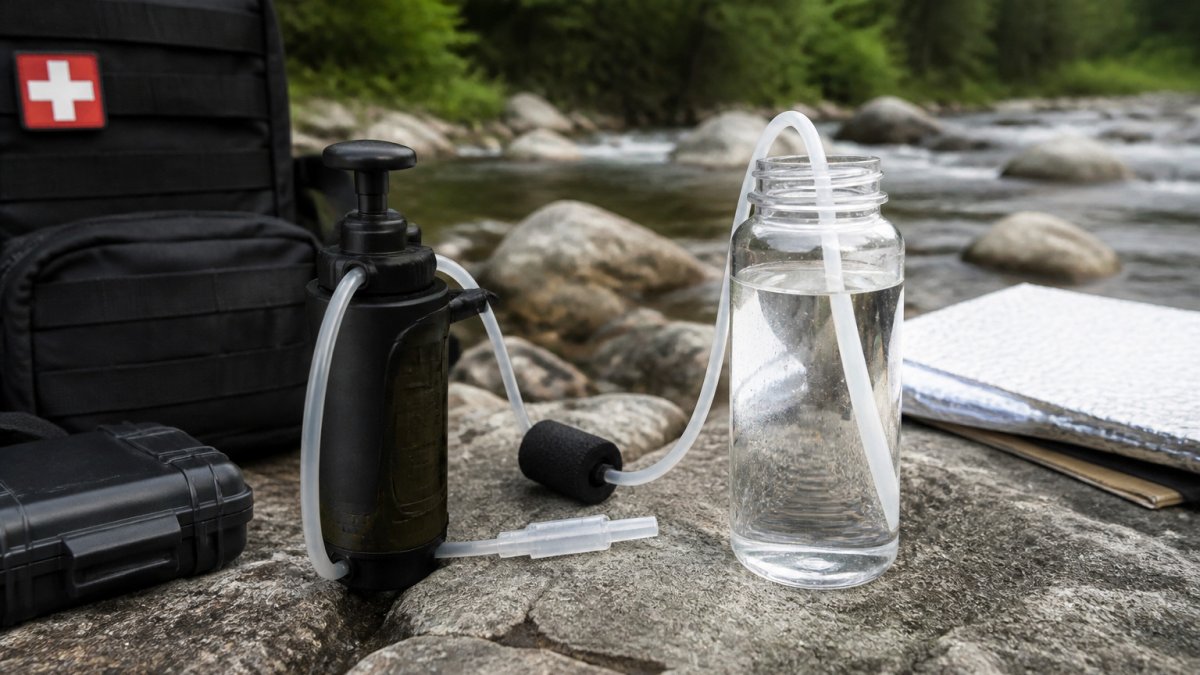
For field and disaster settings, portability and off-grid operation lead. Look for a purification device that runs without power, ships with spare filter cartridges, and states its treatment capacity per cartridge. In clinics, confirm the system meets the device manufacturer's water requirements before you buy. A common pattern is to pair a sediment prefilter with a primary purifier so the main cartridge is not exhausted by turbid source water.
Laboratory and Equipment Feedwater
Laboratory and equipment use usually calls for water beyond potable grade: low conductivity, controlled mineral content, and in some cases sterility. Portable reverse-osmosis units can reduce dissolved ions in the field, but verify output with a conductivity meter against the instrument's specification. Do not assume a consumer pitcher or straw purifier meets laboratory requirements; check the written specification and test the output before use.
Patient Drinking Water in a Care Setting
For patient drinking water, the target is safe consumption, not sterility. Match the purifier to the source water: clear municipal water may need only carbon and microbial treatment, while surface water needs sediment removal and disinfection.
Watch out: buying a single purifier for every medical task is the most common selection error. One device rarely covers drinking water, device feedwater, and wound contact at the same time.
Match the treatment method to the water-quality target, because no single method covers everything.
| Method | Handles | Limits |
|---|---|---|
| Hollow-fiber and ceramic filters | Bacteria and protozoa | Generally not viruses |
| Ultraviolet treatment | Inactivates microbes | Needs clear water and power |
| Reverse osmosis | Removes dissolved ions | Wastes water and needs pressure |
| Granular activated carbon | Taste, odor, many organic chemicals | Not a disinfectant |
| Chemical disinfection | Many pathogens | Leaves residuals, less effective in turbid water |
Portable Water Filtration Systems for Disaster Relief: What to Look For
Disaster relief puts a premium on durability over elegance. When supply chains fail, the system that works is the one you can clean, maintain, and resupply without special tools.
Our shortlist of criteria:
- Microbial reduction rating covering bacteria, viruses, and parasites
- Flow rate that matches how many people you are serving
- Treatment capacity per cartridge, in gallons, so you can plan resupply
The EPA guidance on emergency water supplies is a solid reference for planning safe water during outages. Pair any purifier with stored water and a backup plan.
What Drives Portable Water Purification for Medical Use Price
Price depends on the technology inside, the validation behind it, and the volume it handles. Pricing varies with treatment capacity, whether the unit is field-serviceable, and how the cartridge is replaced.
Pricing depends on quantity, delivery, and the setup you choose. For current prices or a quote, visit the SHTF Prepper Club website.
Watch out: buying on price alone can leave you with a cartridge that clogs on the first murky source.
Validation, Testing, and Failure Modes in Portable Systems
Validation is the difference between a claim and proof. Ask for the microbial reduction rating, the testing standard behind it, and the water-quality targets the system was verified against. NSF/ANSI standards are the reference point buyers should look for: NSF/ANSI 42 covers aesthetic effects such as taste and odor, NSF/ANSI 53 covers health effects including many contaminants, and NSF/ANSI 58 covers reverse-osmosis systems.
How to Verify Output
A practical verification workflow for a portable system:
- Read the certification listing. Confirm the specific model, not just the brand, appears in the certification body's listing and that the claim matches your use.
- Test the source water. A simple test strip or meter for pH, hardness, and conductivity establishes a baseline. If the source is surface water, assume microbial and sediment load until tested.
- Test the treated water. Use a microbial test kit appropriate to field use, and a conductivity or total-dissolved-solids meter if the water feeds equipment. Compare results to the target you set for the use case.
- Log the results. Record date, source, treatment method, and test result so you can spot drift before a cartridge fails.
- Re-test after any change. A new source, a new cartridge, or a long storage period warrants a fresh test.
What Portable Methods May Not Remove
No single portable method covers everything. Hollow-fiber and ceramic filters typically remove bacteria and protozoa but not viruses. Carbon media addresses many organic chemicals and taste but is not a disinfectant. Reverse osmosis removes dissolved ions and many contaminants but typically needs power or pressure and produces reject water. Ultraviolet treatment inactivates microbes but depends on clear water and a functioning lamp.
Failure Modes in the Field
Common failure modes show up in the field, not the lab:
- Clogged cartridges from high-sediment source water, which drop flow rate and can force bypass
- Exhausted media past its rated capacity, which silently stops removing the target contaminant
- Improper storage that lets a wet cartridge grow bacteria between uses
A common mistake is skipping the cleaning and disinfection routine. In practice, maintenance discipline matters as much as the hardware. Follow the manufacturer's cleaning interval, dry cartridges before storage where instructed, and replace media on the rated schedule rather than waiting for a taste or flow problem.
Watch out: a purifier that passed its certification test on clear lab water can fail quickly on turbid floodwater. Prefilter sediment and derate capacity when the source is poor.
Installing a Medical Grade Water Filter for Home Backup
Home backup is about redundancy. A medical grade water filter for home pairs with stored water so your household keeps clean supply during an outage.
Start with storage. A large-capacity tank gives you a reserve to draw from. Then add filtration sized to your family. For a full walkthrough of catchment, storage, and filtration planning, see this off grid water system example for families.
Install in this order:
- Confirm the filter's flow rate meets daily demand.
- Set storage capacity for at least a multi-day outage.
- Label cartridge replacement dates and set a reminder.
- Test the setup before you need it.
Building Your Family's Medical Water Plan with SHTF Prepper Club
A plan beats a pile of gear. Write down your water needs by person, by task, and by day, then match each need to a source and a treatment method.
Our approach is simple: store, filter, and rotate. Store a reserve, filter what you draw, and rotate cartridges on schedule.
Frequently Asked Questions
Do portable water purifiers really work for medical purposes?
They work for drinking water and basic hygiene, but not all of them meet medical-grade requirements. A portable water purification system that removes bacteria, viruses, and parasites can make water safe to drink in an emergency. Medical equipment such as endoscopy reprocessors, renal care machines, and laboratory analyzers often need water with stricter limits on dissolved minerals, chemical contaminants, and microbial counts. Check the manufacturer's water specification for the device before relying on any portable purifier.
Can a portable water filter make water safe for medical equipment?
Usually not without verification. A portable filter may remove sediment, microorganisms, and some chemicals, but medical devices often specify ultrapure or deionized water with defined conductivity and microbial limits. Before using filtered water in a device, confirm the filter's NSF certification, its contaminant removal claims, and the device maker's water quality requirements. If the device calls for sterile or ultrapure water, a portable filter alone will not meet that standard and you should follow the manufacturer's approved water source.
What should you check before using purified water for medical purposes?
Start with the source water: test it for bacteria, sediment, and chemical contaminants so you know what the purifier must remove. Next, confirm the purifier's certification and flow rate against the volume you need. Then check shelf life, filter cartridge replacement intervals, and cleaning requirements. Finally, verify compatibility with each device or use case, since a medical grade water filtration system for home backup may not meet clinic or laboratory standards. Document your test results so you can show the water met the target.
What cannot be filtered out of water?
Most portable filters cannot reliably remove dissolved salts, some heavy metals, certain pharmaceutical residues, or very small chemical contaminants unless they include activated carbon, reverse osmosis, or distillation stages. Many filters also leave mineral content in place, which is fine for drinking water but may be unacceptable for medical equipment that requires deionized or ultrapure water. If your source water is contaminated with industrial chemicals or high dissolved solids, choose a system with the specific treatment stage that addresses those contaminants and test the output.
The hardest part of preparedness is knowing which gear actually fits your household. SHTF Prepper Club simplifies that with expert-vetted water, food, power, and safety essentials, long-term food storage built for up to a 25-year shelf life, and step-by-step guidance that removes the guesswork. Get started with SHTF Prepper Club and build a water plan your family can rely on.
