
Last Updated: November 23, 2026
Quick Summary
Keeping a pet medication supply ready means keeping a reserve of doses, storing them in a cool, dry, sealed container, rotating stock before it expires, and keeping a current written medication list. Start with daily medications and add a reserve of at least 7 days.
- Keep at least a 7-day reserve of daily medications, longer if outages are common.
- Count the reserve in doses and write the number on the medication list.
- Store medications in original labeled containers, in a cool, dry, sealed box.
- Rotate oldest stock into daily use and replace it with a fresh refill.
- Call your veterinarian early to ask about advance prescriptions for your pet.
Table of Contents
- How Do You Keep a Pet Medication Supply Ready for Emergencies?
- Building a Pet Medication List Template
- How Much Pet Medication to Keep on Hand
- Rotating and Storing Pet Medications Safely
- Assembling a Pet Emergency Kit Checklist
- Getting an Emergency Prescription Refill for Pets
- Keep Your Pet's Emergency Medication Plan Current
- Frequently Asked Questions
How Do You Keep a Pet Medication Supply Ready for Emergencies?
Keeping a pet medication supply ready for emergencies means keeping enough doses on hand, storing them well, rotating stock before it expires, and keeping a current list of what your animal takes.
A power outage, a storm or an evacuation can cut off your normal pharmacy and veterinary visits for days. For a wider guide to preparing your home for medical needs and outages, see preparing for a power outage at home.
Here is the plan, in the order most households should tackle it:
- Make a written medication list for each pet.
- Decide how many days of medication to keep on hand.
- Store each medication in a cool, dry, sealed container.
- Rotate stock so nothing expires unused.
- Pack the medications into a go-bag or emergency kit.
- Know how to get an emergency refill from your veterinarian.
Building a Pet Medication List Template
A pet medication list is the single most useful document you can keep for an emergency. It tells a shelter, a relief worker or a veterinarian exactly what your animal needs.
Keep one page per pet with these fields:
- Pet name, species, breed, age and weight
- Medication name (brand and generic)
- Strength and form (tablet, liquid, chew, injection)
- Dose and how often it is given (for example, "1 tablet by mouth twice daily")
- Reason for the medication (heartworm prevention, thyroid, seizure control)
- Prescribing veterinarian and clinic phone number
- Allergies or reactions to note
- Date of last refill and expiration date
Store a printed copy in your kit and a photo of it on your phone. Update the list every time a dose changes.
How Much Pet Medication to Keep on Hand
A reserve covering several days to a couple of weeks is a common starting point.
A practical starting point looks like this:
- Daily medications: keep at least a 7-day reserve, and more if your area is prone to long outages.
- Monthly preventives: keep the next dose on hand, since these are easy to miss during a disruption.
- Controlled or restricted drugs: these often cannot be stockpiled. Ask your veterinarian what they can legally prescribe in advance.
Count the reserve in doses, not boxes. Divide the total number of doses by how often your pet takes them, and write the result on your medication list.
Watch out: do not assume a larger reserve is always safer. Medications stored for too long can lose potency, and extra supply of a restricted drug can create legal trouble. Keep a reserve that matches your actual needs.
Rotating and Storing Pet Medications Safely
Storage conditions and rotation decide whether your reserve still works when you need it. Most pet medications keep best in a cool, dry, dark place away from heat and humidity. A bathroom cabinet or garage is usually a poor choice because of temperature swings.
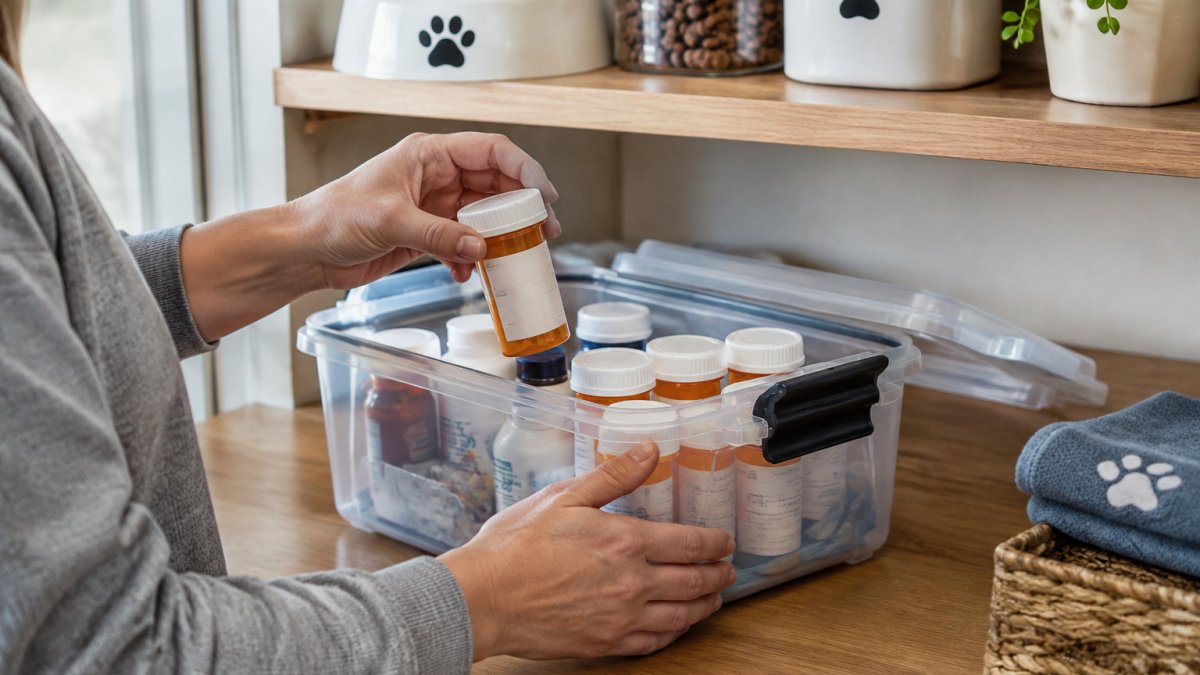
Build a first-in, first-out rotation
The goal of rotation is simple: the oldest stock gets used first, and nothing sits in the reserve long enough to expire. Treat your pet's medication like a small pantry.
- Keep every medication in its original labeled container. Do not combine pills into an unlabeled bottle, you lose the dose, the expiration date, and the prescribing information in one move.
- When a refill arrives, put the new supply behind the old supply. Use the older container for daily dosing and hold the newer one in reserve.
- Write the expiration date in large marker on the lid of each container so you can see it without opening the box.
- Keep a single index card or spreadsheet row per medication with three fields: name, expiration date, and doses remaining.
- On a set schedule, pull anything expiring within 60 days into daily use and replace it with a fresh refill.
- Set a calendar reminder for the check. Tie it to a routine you already keep, changing smoke alarm batteries, rotating pantry food, or a seasonal home maintenance task, so the check happens without willpower.
Expiration dates vs. beyond-use dates
These are not the same thing, and confusing them is a common way households either throw away good medication or keep bad medication.
- The expiration date printed by the manufacturer applies to the sealed, unopened container stored under the labeled conditions.
- A beyond-use date is the shorter window a pharmacist assigns once a container is opened or a liquid is mixed. Many liquid medications and compounded preparations carry a beyond-use date measured in days or weeks, not months.
- A tablet that has been sitting in a pill organizer is no longer in its original container and should not be counted as reserve stock.
Watch out: do not extend a beyond-use date because the printed expiration date is later. Once a liquid is opened or mixed, the shorter date governs, and giving a degraded dose is worse than having no reserve at all.
What to do with expired stock
Do not flush expired medication down the toilet unless the label or a pharmacist specifically directs it. Many communities run take-back programs, and some pharmacies accept returns of unused medication. If no take-back option is available, the common guidance is to mix the medication with an undesirable substance such as used coffee grounds or cat litter, seal it in a bag, and place it in household trash, but confirm the current local guidance before you do, because rules vary by jurisdiction.
Storage container specifics
A waterproof, childproof, pest-resistant container is the baseline. Look for a hard-sided box with a gasketed lid and a latch, not a zip-top bag. Add a small desiccant pack if the container will sit in a humid space, and replace it on the same schedule as your rotation check. For guidance on keeping medications usable without power, see how to prepare for power outages.
The rotation schedule that actually holds
A quarterly check is the minimum most households can sustain. A workable pattern looks like this:
- Monthly: count doses remaining and note anything below your reserve threshold.
- Quarterly: check expiration and beyond-use dates, rotate oldest stock into use, replace desiccant, and confirm the container seal is intact.
- Annually: review the whole reserve against the pet's current prescriptions and discard anything no longer prescribed.
Rotation is the step most households skip. Learn when to rotate supplies for family readiness to set up a seasonal schedule. Build it into a routine you already keep so the check happens on its own schedule, and write the next check date on the container lid so it is visible every time you open the box.
Assembling a Pet Emergency Kit Checklist
A pet emergency kit should hold everything your animal needs for several days away from home. Medications are only one part of it.
Pack these items together:
- Medication reserve, labeled and stored in a sealed container
- Printed pet medication list and vaccination records
- Veterinarian and clinic contact information
- At least a 3-day supply of food and water
- Collapsible bowls and a leash or carrier
- Waste bags and a pet-safe cleaning supply
- A copy of microchip and ID information
- A recent photo of each pet for identification
- Comfort items such as a blanket or familiar toy
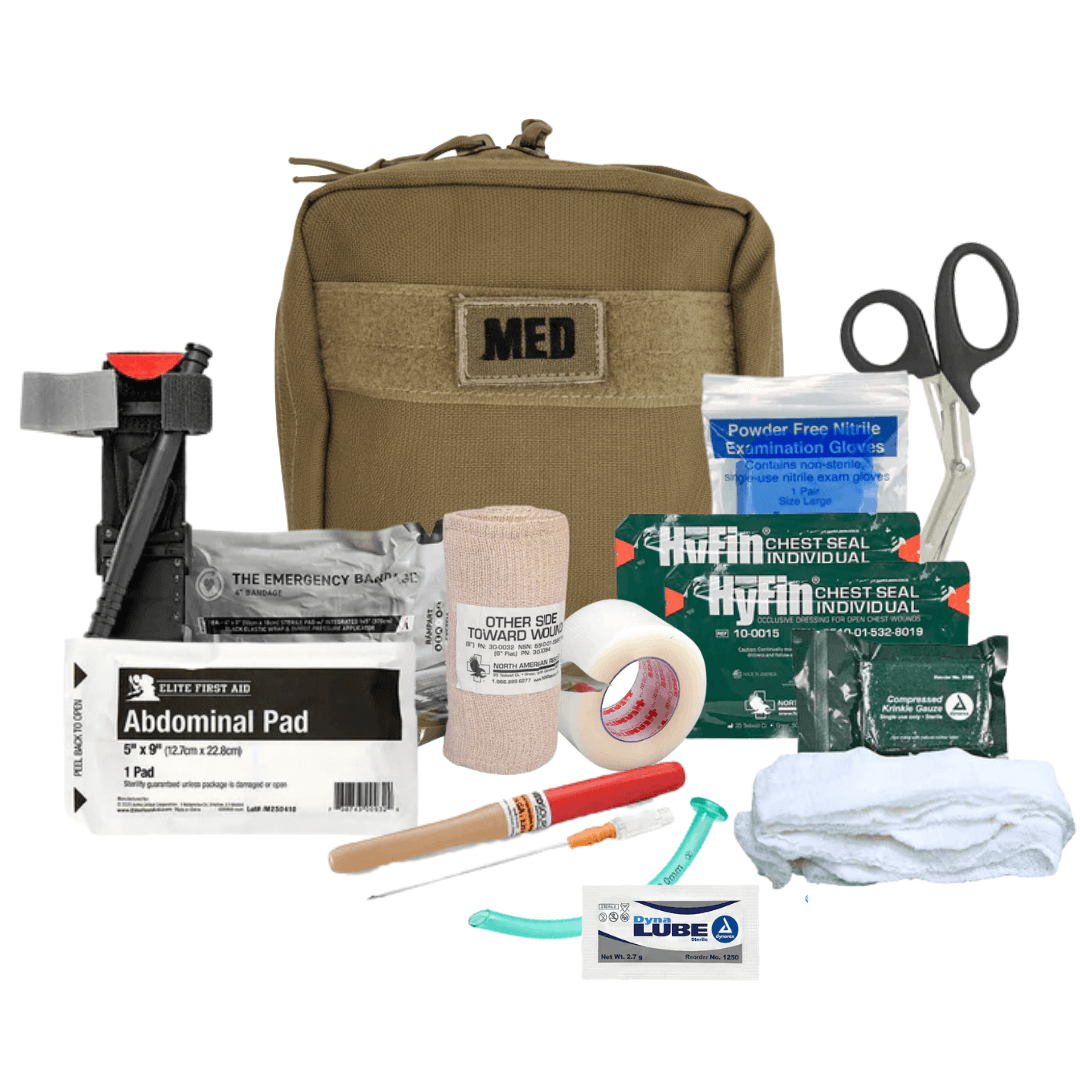
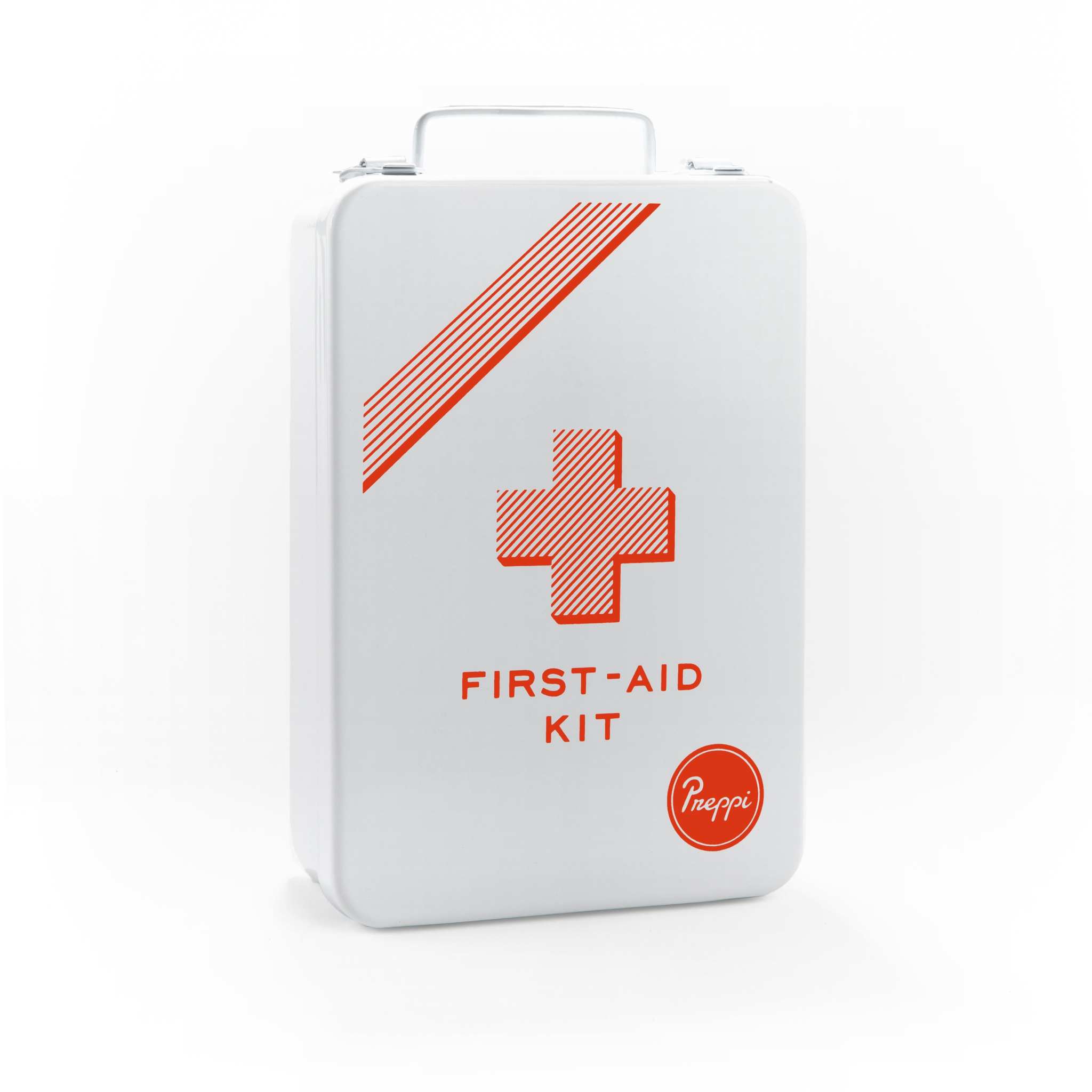
For the human side of your kit, a trauma-focused first aid kit like the Enhanced IFAK - Pro Trauma Kit w/Tourniquet & Chest Seals at $164.95 is built for serious injuries, while the Preppi Metal First-Aid Kit at $89.00 is a waterproof steel case of everyday supplies. For broader guidance on keeping pets safe in any disaster, see emergency preparedness for pets.
Review the kit at least twice a year, and again after any move or change in your pet's health.
The table below summarises the core kit components so you can check them at a glance.
| Item | Value | Note |
|---|---|---|
| Medication reserve | Labeled, sealed container | Store with printed medication list |
| Food and water | At least 3-day supply | Covers the period before help arrives |
| Waste bags | Pet-safe cleaning supply | Keep with the kit |
| Pet photo | Recent photo of each pet | Used for identification |
| Kit review | At least twice a year | Also review after a move or health change |
Getting an Emergency Prescription Refill for Pets
When your supply runs low, the fastest route is usually your veterinarian. Call the clinic early, before you have only a day or two of medication left.
Ask these questions when you call:
- Can you write an extra prescription to keep on hand?
- Is there a limit on how far ahead I can get a refill?
- Can you send the prescription to a pharmacy outside my area in case of a local emergency?
- Do you offer telehealth or phone consults during an emergency?
Some medications are classed as controlled substances. Those usually require a fresh in-person prescription and cannot be stockpiled.
Keep your veterinary records in a second location, such as a cloud folder or a printed binder, so a clinic can confirm your pet's history if your original paperwork is lost.
Keep Your Pet's Emergency Medication Plan Current
An emergency plan is only useful if it matches your pet's current needs. Medications change, doses change and expiration dates pass. Review your plan on a set schedule.
Use this simple routine:
- Every month: check the medication count and refill anything below your reserve.
- Every three months: check expiration dates and rotate stock.
- Every six months: review the medication list with your veterinarian and reprint it.
- After any change: update the list the same day a dose, medication or vet changes.
Treat this as a routine, not a one-time project. A plan that stays current is the one that works when a real emergency arrives.
Frequently Asked Questions
How much of my pet's medication should I keep on hand for an emergency?
Many households keep a supply large enough to cover at least two weeks of doses, with extra on hand for ongoing prescriptions where the veterinarian approves it. Check how much each prescription allows per fill, and ask your veterinarian whether an early refill is permitted for emergency preparedness. Track expiration dates on every bottle and rotate older stock into daily use so nothing goes unused past its date. Write the supply level on your pet medication list so anyone in the household can see when a refill is due.
How can I get an emergency refill of my pet's prescription?
Call your veterinary clinic early and explain that you are building an emergency supply, since many clinics will authorize an early refill when asked directly. Some prescriptions are controlled substances and have stricter rules, so confirm what your state and clinic allow before you ask. Keep a copy of your pet's prescription records and the veterinarian's contact details in your emergency kit. If your regular vet is unreachable during a disaster, an emergency veterinary clinic can often review your records and write a short-term prescription.
How should I store pet medications during a power outage or evacuation?
Store medications in a cool, dry place away from direct sunlight, and keep them in their original labeled containers. Use a waterproof, childproof container to protect pills and liquids from moisture and accidental access. Some medications, such as certain injectables, need refrigeration, so pack them in an insulated cooler with ice packs and check the label for temperature limits. When you evacuate, take the medications with you rather than leaving them behind, and bring a printed copy of the medication list.
What should I do if my pet misses a dose during an emergency?
Do not double the next dose to make up for a missed one unless your veterinarian tells you to. Contact your veterinarian or an emergency clinic as soon as possible for guidance on whether to give the missed dose now or skip it. Never give your pet a human medication as a substitute without veterinary approval, because many human drugs are toxic to animals. Record the missed dose in your pet medication log so the veterinarian has an accurate history.
