
Last Updated: November 13, 2026
Quick Summary
The best lightweight camping gear for families cuts packed weight and bulk without cutting comfort, warmth, or weather protection. Lighter loads mean faster setups and open up walk-in, paddle-in, and short backpacking sites beyond car camping. Weigh your kit at home and keep each adult's load under about 35 lb for a walk-in site.
- We judge gear on packed weight, packed size, setup time, and durability for family use.
- A sleeping pad's R-value of 3 to 4 is the practical minimum for kids on three-season trips.
- A bag's temperature rating is a survival rating, not a comfort rating, so size down for margin.
- Keep each adult's load under about 35 lb for a walk-in site and 25 lb for real distance.
- Tape a printed checklist to a dedicated gear bin to stop forgetting small items.
Table of Contents
- Why Lightweight Camping Gear Changes a Family Trip
- How We Evaluated This Lightweight Camping Gear
- Family Tents and Shelters That Stay Manageable
- Sleep Systems: Bags, Pads, and Warmth for Every Age
- Camp Kitchen, Coolers, and Food Storage Without the Bulk
- Camping Essentials for Kids That Earn Their Pack Space
- Your Camping List for a Family of 4, Weighted and Sized
- The Most Forgotten Camping Items (and How to Stop Forgetting Them)
- Frequently Asked Questions
Why Lightweight Camping Gear Changes a Family Trip
The best lightweight camping gear for families is the equipment that cuts packed weight and bulk without cutting comfort, warmth, or weather protection. It is the difference between a trip your family remembers fondly and one everyone wants to leave early. Lighter loads mean faster setups, fewer arguments at the trailhead, and kids who still have energy at dinnertime. One parent can carry the tent while the other handles the sleep system and kitchen, which matters when you are managing small children and a full vehicle.
Weight also changes where you can camp. A family loaded with heavy canvas and steel-frame furniture is locked into car camping. Trim the packed weight and walk-in sites, paddle-in spots, and short backpacking routes open up. Before committing to lighter gear, see this budget family camping gear packing guide to compare costs. That flexibility is the real payoff, not the number on a scale.
How We Evaluated This Lightweight Camping Gear
We judged every item on four criteria: packed weight, packed size, setup time, and how well it holds up to family use. A tent that pitches in minutes but leaks in a storm fails. A sleeping bag that packs small but leaves a child shivering also fails. We weigh comfort and durability as heavily as grams.
We also factor in repairability and replacement parts. Zippers fail, poles bend, and fabrics tear. Gear you can fix with a spare part beats gear you have to replace. For weight and load guidance, the American Hiking Society trail resources offer sensible starting points for what a pack should carry.
| Criterion | What We Check | Why It Matters |
|---|---|---|
| Packed weight | Total pounds per person | Kids carry less; adults absorb the rest |
| Packed size | Liters of pack space used | Frees room for food and clothing |
| Setup time | Minutes to pitch solo | Fast setup saves patience |
| Durability | Fabric, zippers, poles | Family use is hard on gear |
Family Tents and Shelters That Stay Manageable
The right family tent balances capacity against weight, and the honest answer is that most roomy tents are not truly light. A six-person tent such as The North Face Wawona 6 gives families real living space, though you will feel its bulk on a long carry. Larger families who drive to the site may prefer a roomier cabin-style tent, while a six-person car-camping tent such as the Kelty Wireless 6 can suit a family of four.
For smaller groups, a three-person tent suits a parent and one or two children. Watch out: a tent rated for six people rarely sleeps six comfortably once you add pads and bags, so size up if you have gear or a dog.
Sleep Systems: Bags, Pads, and Warmth for Every Age
Sleep is where lightweight gear earns its keep, and it is also where families overspend on the wrong specs. A sleeping bag keeps a child warm by trapping body heat, but the temperature rating on the tag is a survival rating, not a comfort rating.
For pads, think in R-values. An R-value around 1 to 2 suits summer car camping on warm ground. An R-value of 3 to 4 handles three-season family trips and is the practical minimum for kids. An R-value of 5 and up is for cold-weather or snow camping.
The Big Agnes Sidewinder Super Light balances comfort, packability, and durability, which is exactly what a family needs from a bag that gets stuffed and unstuffed all season. For mild-weather trips, the Recon 2 Sleeping Bag is rated to 41°F and packs small enough for a child's load. For three-season family camping, the Recon 3 Sleeping Bag is rated to 23°F and keeps warmth and packability in balance.
Age changes the math. Toddlers and preschoolers should not sleep in a bag they can slide down into; a bag with a hood and a draft collar, or a quilted sleep sack sized to the child, keeps them covered through the night.
Weight and packed size are the trade-off. A down bag packs smaller and lighter than a synthetic bag of the same rating, but it costs more and loses warmth when wet. Synthetic bags are heavier and bulkier but keep insulating when damp, which matters for families whose gear gets rained on.
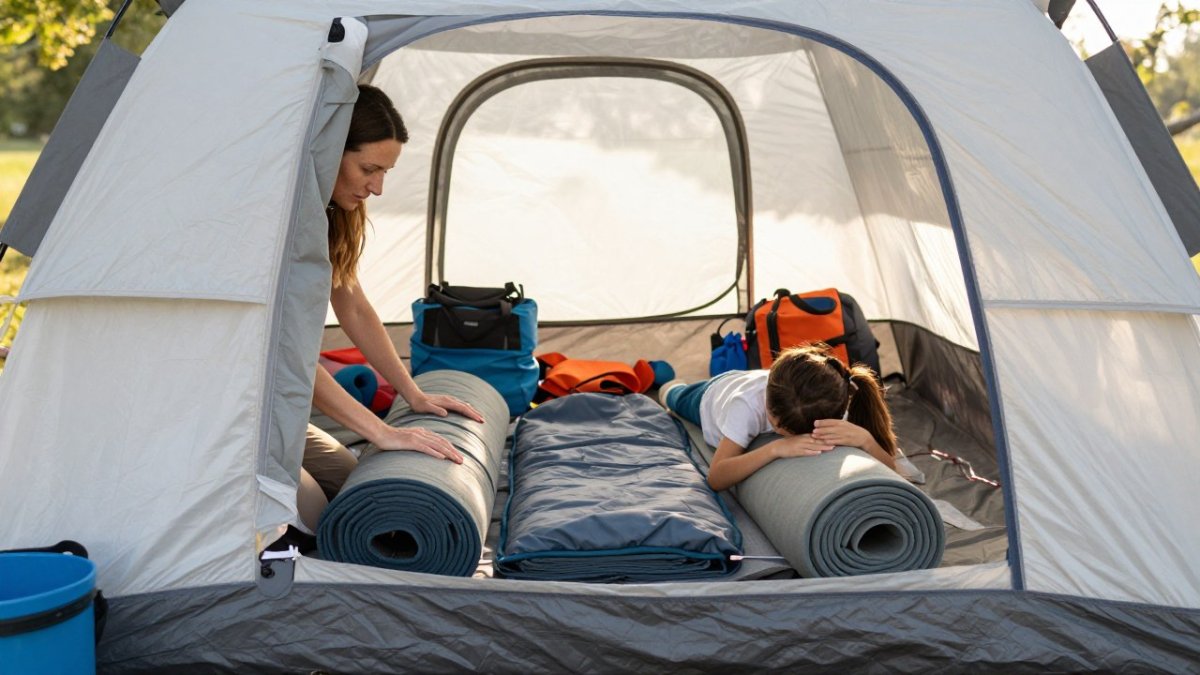
Watch out: a bag's temperature rating assumes a pad with a matching R-value and a dry sleeper in a base layer; a child in cotton pajamas on a bare tent floor will be cold in a bag rated well below the overnight low.
Camp Kitchen, Coolers, and Food Storage Without the Bulk
A lightweight camp kitchen comes down to one stove, one cooler, and smart food storage. A compact stove such as the MSR PocketRocket Deluxe can handle backcountry cooking. For car camping, a mid-size cooler with a tight lid holds ice longer than a large one you have to fill. Store dry food in sealed bags and group meals by day so you are not digging through a bin at dusk.
Water and hydration deserve their own plan. Bring a filter or purification tablets plus a water storage container, and keep everyone's bottles filled before you leave the site.
Camping Essentials for Kids That Earn Their Pack Space
Kids' gear should be light, durable, and theirs to carry. A kids' sleeping bag, a small headlamp, and a personal water bottle cover the basics. Add a lightweight daypack like The Park Pack so a child can haul their own layers, snacks, and a flashlight. Camp clothing matters too: quick-dry layers and kids' trousers that handle mud and brush beat cotton every time.
Bug protection is non-negotiable. Pack mosquito repellent, a lantern for the tent, and a small power bank to keep a phone charged for emergencies. Give each child a job, like hanging the lantern or setting out camp chairs, and they stay engaged instead of bored.
Your Camping List for a Family of 4, Weighted and Sized
Here is a camping list for family of 4 built around packed weight and pack size, with the numbers most lists leave out.
| Category | Items | Packed Weight (approx.) | Packed Volume (approx.) | Carried By |
|---|---|---|---|---|
| Shelter | 6-person tent, rain tarp, stakes | 12-20 lb | 25-40 L | Adult 1 |
| Sleep | 4 bags, 4 pads, pillows | 12-18 lb | 40-60 L | Adult 2 |
| Kitchen | Stove, fuel, cooler, food bin | 10-20 lb | 30-50 L | Adult 1 |
| Water | Filter, storage container, bottles | 3-6 lb (empty) | 10-15 L | Adult 2 |
| Kids | Daypack, headlamp, layers | 3-5 lb each | 10-15 L each | Each child |
| Comfort | 2 camp chairs, camp table | 6-12 lb | 15-25 L | Adult 1 |
Those ranges are wide on purpose, because a ultralight two-person setup and a roomy six-person cabin tent live at opposite ends. Weigh your own kit once at home on a luggage scale and measure packed volume by stuffing each category into a known-size duffel or pack.
For a family of four, a practical target is to keep each adult's load under about 35 lb for a walk-in site and under about 25 lb if you are carrying gear any real distance, with children carrying no more than roughly 10 to 15 percent of their body weight.
Budget-wise, it helps to plan in tiers rather than buying everything at once. A starter kit that covers shelter, sleep, and cooking for four can be assembled for a few hundred dollars by prioritizing a reliable tent and adequate pads and accepting heavier synthetic bags.
Cost-per-use changes the math. A tent that costs more but lasts eight seasons and gets used ten nights a year is cheaper per night than a budget tent replaced every other season. The same logic applies to pads and bags, which is why repairability and replacement parts belong in the buying decision, not the afterthought.
Watch out: packed weight and packed volume on product pages are often measured for the item alone, without stakes, stuff sacks, or the fuel canister, so add those in before you compare your total to a target load.
The Most Forgotten Camping Items (and How to Stop Forgetting Them)
The most forgotten camping items are almost always the small ones: matches, a can opener, sunscreen, trash bags, and spare batteries. The fix is a family camping checklist PDF you print and pack with the gear. Check items off as they go into the bin, then check them back in when you unpack at home.
A dedicated gear bin with a printed list taped to the lid solves most of this. Our 72 Hour Family Emergency Checklist follows the same logic for home readiness, and the habit carries straight over to camping. Watch out: gear borrowed for a backyard night rarely makes it back into the bin, so return everything the same day.
Packing light for a family is a skill, and it starts with gear you can trust when the weather turns. SHTF Prepper Club curates vetted food, water, power, and safety gear plus step-by-step preparedness guides, so your household stays ready whether you are at a campsite or sheltering at home. Our long-term food storage and water purification solutions take the guesswork out of planning. Get started with SHTF Prepper Club and build a kit your whole family can carry with confidence.
Frequently Asked Questions
What is the best gear for a family camping trip?
Start with shelter, sleep, and cooking, since those decide whether the trip works. A six-person tent gives a family of four room for bags and changing clothes. Add packable sleeping bags for adults, warmer-rated bags for kids, insulated pads, and a compact stove. Weigh each item before it goes in the bin so the whole kit stays carryable.
How can families reduce the weight of their camping gear?
Weigh every item on a kitchen scale and write it down, because most family kits are heavier than parents guess. Trade the heavy cooler for a soft-sided one, swap steel cookware for a single lightweight pot, and let each child carry their own sleeping bag and clothes. Choose one tent sized for your family instead of two small ones, and leave duplicate lanterns and chairs at home. Cutting 10 pounds from a four-person kit is realistic once you see the numbers.
What is the most forgotten item when camping?
Lighting and power top most forgotten lists: headlamps, spare batteries, and a charged power bank. Families also routinely leave behind bug protection, a rain tarp, and a small first aid kit. The fix is a printed checklist you pack against, not from memory. Keep a dedicated bin stocked with headlamps, repellent, and a power bank so those items are already in the car before anyone starts loading the tent.
What should a family of four pack for camping?
A workable camping list for a family of 4 covers one six-person tent, four sleeping bags and pads, a stove with fuel, one cooler, a water container, four headlamps plus a lantern, a power bank, bug protection, rain gear, and one change of clothes per person. Add camp chairs only if you are car camping. Weigh the packed bins before you leave and note the total so the next trip is easier to plan.
What are some cool camping gear options for kids?
Kid-sized headlamps, their own sleeping bag in a favorite color, and a small daypack they can carry build ownership of the trip. Glow sticks and a kid-friendly lantern make nighttime easier for younger children. Give each child a job, such as carrying the bug spray or checking the tent zippers, and pack clothing in layers they can add or remove themselves as the temperature drops after dark.
