Last Updated: November 10, 2026
Quick Summary
Budget camping gear for a family should start with ten essentials: a shelter sized for everyone, a sleeping bag rated for the coldest night, a sleeping pad, a headlamp per person, a camp stove with fuel, water treatment, a first aid kit, layered clothing, a multi-tool, and waterproof fire starters. Borrow large, rarely used items and buy gear that affects safety or sleep.
- Start with ten essentials covering shelter, sleep, light, cooking, water, and first aid.
- Buy sleeping bags and pads for each person rather than sharing them.
- Borrow family tents and large coolers if you camp fewer than three or four times a year.
- A starter kit for four people is estimated at about 705 USD, a mid-range kit about 1,125 USD.
Table of Contents
- The 10 Most Important Things to Bring Camping
- Budget Camping Gear by Category: Shelter, Sleep and Cooking
- Lighting, Clothing and Hygiene Essentials for Families
- Minimalist Camping on a Budget: What You Can Skip or Borrow
- Budget Camping Gear Costs: Itemized Tiers and Total Spend
- Download the Family Camping Checklist PDF
- Packing Your First Family Trip With SHTF Prepper Club Gear
- Frequently Asked Questions
Budget friendly family camping gear checklist planning starts with knowing what you actually need before you spend a dollar. SHTF Prepper Club built this guide for parents and heads of households who want to get their family outdoors without overspending. The goal is simple: pack the essentials, skip the extras, and plan each category with care.
A camping trip rarely fails because the family lacked a fancy gadget. It fails because someone forgot a headlamp, the tent flooded, or the kids were cold at 2 a.m. A focused list solves most of that. The sections below group gear into shelter, sleep, cooking, lighting, clothing, and hygiene, so you can build the kit one category at a time.
The 10 Most Important Things to Bring Camping
Start with ten items that cover most camping emergencies and comfort problems. Pack these before anything else.
- A shelter sized for your family plus one so gear has room inside.
- A sleeping bag rated for the lowest overnight temperature you expect.
- A sleeping pad to block cold from the ground.
- A headlamp for each adult and older child.
- A two-burner or single-burner camp stove with spare fuel.
- Water storage and a water filter or purification method.
- A basic first aid kit with bandages, pain relievers, and any prescriptions.
- Layered clothing, including rain gear and a warm hat.
- A multi-tool for repairs and small jobs.
- A fire starter and matches stored in a waterproof container.
Most families can cover these ten items for far less than a full outfitting spree. Buy them first, then add comfort items once the basics are handled.
Budget Camping Gear by Category: Shelter, Sleep and Cooking
Shelter, sleep, and cooking gear usually take the biggest share of a camping budget. This is where a careful buyer can save the most without sacrificing safety.
Tents, Sleeping Bags and Pads
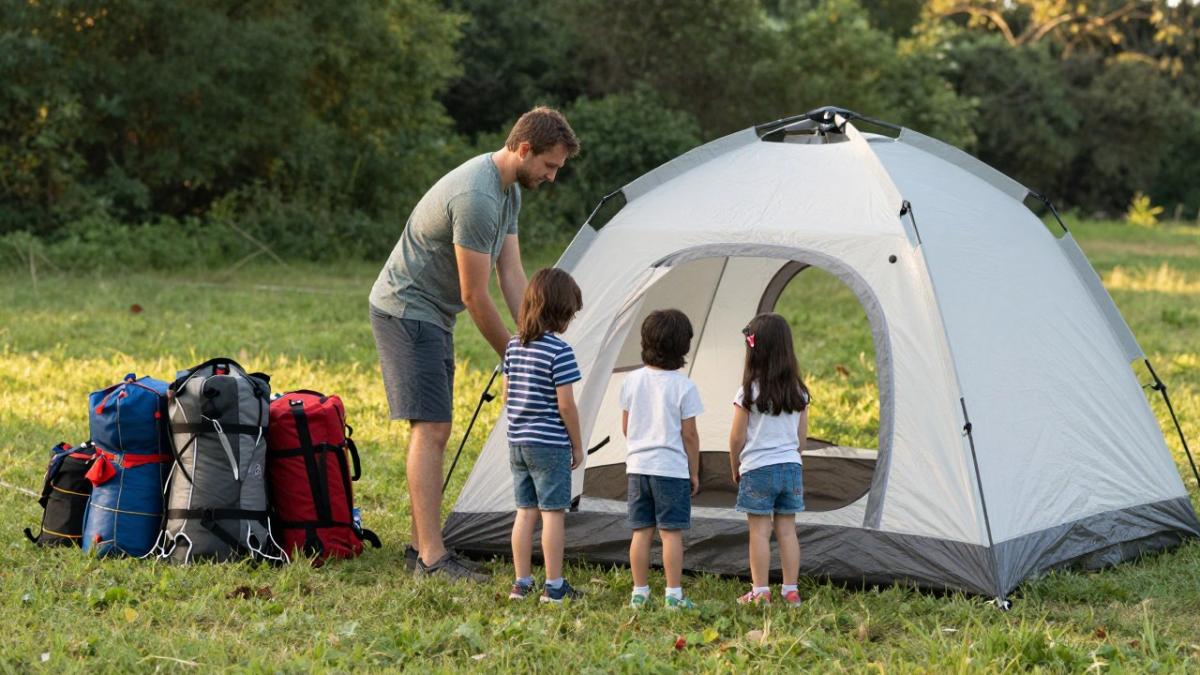
A family tent does not need to be expensive. For a sleeping pad, the Self Inflating Sleeping Mat offers comfort and insulation with easy setup.
Stoves, Kettles and Camp Kitchen Basics
A foldable camp table and a camp chair round out the kitchen. For an affordable, portable option, a compact Collapsible Mini Stove burns charcoal, wood, or natural fuel. A Foldable Camping Table by FROG & CO gives you a lightweight, weather-resistant surface for cooking and eating.
Lighting, Clothing and Hygiene Essentials for Families
Lighting and clothing decide how comfortable the trip feels after dark and in bad weather.
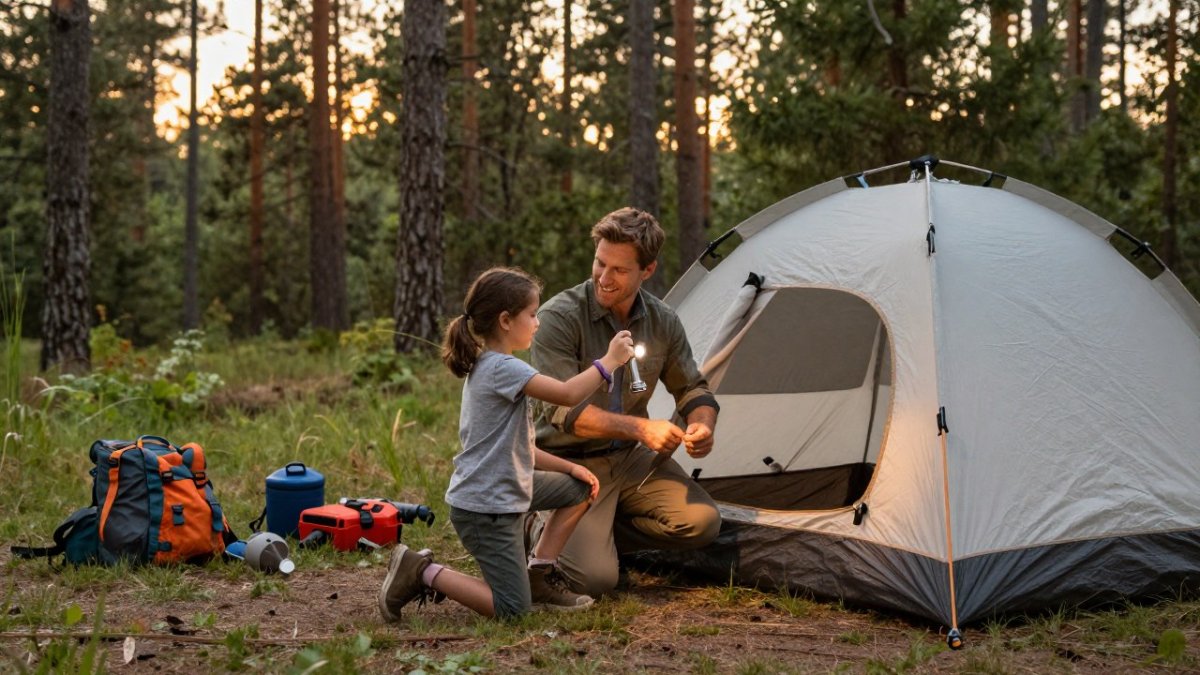
Give one to each adult and older child so nobody depends on a single light.
For clothing, focus on layers rather than bulk. A thermal base layer, a fleece mid-layer, and a waterproof shell handle most conditions. Pack one extra set of socks per person and a warm hat for kids, since heat loss through the head is significant.
Hygiene supplies are easy to forget. Bring biodegradable soap, a small towel per person, hand sanitizer, sunscreen, insect repellent, and a basic toiletry kit. A small bin for dirty dishes and a dish soap bottle keep the campsite clean.
Minimalist Camping on a Budget: What You Can Skip or Borrow
Not every item on a packing list is equally necessary, and sorting them into must-have and optional groups is the fastest way to cut spending without cutting safety. The list below separates gear that protects your family from gear that only adds comfort.
Must-have, do not skip: shelter that keeps rain out, a sleeping bag rated for the coldest night you expect, a sleeping pad or foam mat, a working light for each person, a water source or treatment method, a first aid kit, and a way to cook food safely. Substitutes can replace some of these, but they should be tested at home before you rely on them.
Optional, skip or substitute: camp chairs, a dedicated camp table, a camp shower, an electric cooler, and specialty cookware. Each of these can be replaced with household items. A sturdy plastic storage bin doubles as a table, a bath towel works as a camp chair cushion, a cooler you already own handles most food storage, and a cast iron pan replaces a set of camp pots.
Borrow when the item is large and you camp rarely: family tents, large coolers, and specialty stoves are the strongest candidates for borrowing. A common rule of thumb is that if you expect to use an item fewer than three or four times a year, borrowing or renting usually costs less than owning. Ask relatives, friends, or a local outdoor club first, since many people store gear they rarely touch.
Buy when the item affects safety or sleep: a sleeping bag, a sleeping pad, and a headlamp are worth owning because a bad experience with any of them ruins the trip for everyone. Sizing matters here. Adult sleeping bags are not interchangeable with youth bags, and a child who sleeps cold will not sleep well. Buy one headlamp per adult and per older child, and one sleeping bag per person, rather than sharing.
Quantity guidance by family size: a family of four needs four sleeping bags, four pads, and at least two lights per sleeping area. A family with a baby or toddler should add a separate sleeping surface and extra layers, since young children lose heat faster than adults.
Keep a list of gear you already own that can double as camp equipment, and check it before every purchase. Most families find they can cover a first weekend trip with about half of the items they assumed they needed.
Budget Camping Gear Costs: Itemized Tiers and Total Spend
A budget guide is only useful if the numbers add up. The table below outlines the types of items a family kit may include across three spending tiers. Prices depend on quantity, sales, used purchases, and brand choice, so confirm current listings before you buy.
| Item | Starter Tier (USD) | Mid-Range Tier (USD) | Upgrade Tier (USD) |
|---|---|---|---|
| Family tent (4-person dome) | 80 | 150 | 300 |
| Sleeping bags (per person, 4 people) | 60 each, 240 | 90 each, 360 | 150 each, 600 |
| Sleeping pads (per person, 4 people) | 20 each, 80 | 40 each, 160 | 80 each, 320 |
| Headlamps (4 people) | 15 each, 60 | 25 each, 100 | 40 each, 160 |
| Two-burner propane stove | 75 | 110 | 180 |
| Propane canisters (4 refills) | 20 | 25 | 30 |
| Kettle or pot set | 15 | 35 | 70 |
| Camp table and chairs (4 chairs) | 60 | 120 | 240 |
| Water filter or purification | 20 | 40 | 80 |
| First aid kit | 25 | 35 | 60 |
| Multi-tool and fire starter | 15 | 25 | 45 |
| Estimated total | About 705 | About 1,125 | About 2,185 |
Spread the purchase over several trips rather than buying the whole kit at once. A practical sequence is to buy the shelter and sleep items first, since they are the largest share of the total and the hardest to improvise, then add kitchen and safety items once you know what your family actually uses. Watch out: a cheap tent that leaks costs more than a mid-range tent that keeps everyone dry, so do not cut the shelter budget first.
If your budget is tight, prioritize the first aid kit, lighting, and a water solution, then borrow the remaining items until you can buy them.
Download the Family Camping Checklist PDF
A printable checklist keeps packing consistent from trip to trip. Use the category list in this guide as your starting point, then mark off items as you load the car. SHTF Prepper Club also offers a broader 72-hour family emergency checklist covering water, food, first aid, and power, which pairs well with your camping list.
Packing Your First Family Trip With SHTF Prepper Club Gear
Pack in layers: heavy gear low in the car, sleeping items accessible, and first aid and lighting within reach. Test your setup once at home by pitching the tent in the backyard. Fixing a missing pole there beats discovering it at dusk on the trail.
Visit the SHTF Prepper Club website for current prices and availability on sleeping, cooking, and emergency gear to round out your kit. Start with the ten essentials, add one category at a time, and your family will be ready for its first trip without overspending.
Frequently Asked Questions
What are the must-haves for a family camping trip?
The core must-haves are shelter, sleeping gear, a way to cook and boil water, lighting, a first aid kit, water and a water treatment method, and weather-appropriate clothing. Start with these before adding comfort items like camp chairs or games. For a family, add one headlamp per person so nobody is searching for a light in the dark, and pack a spare set of batteries. Buying these basics first keeps the budget under control while covering every safety need.
How can a family camp on a budget?
Borrow gear from friends or family for the first few trips, buy used items from local classifieds, and choose a campground close to home to cut travel costs. Prioritize sleep and safety gear, since those affect comfort and health most, and delay upgrades like premium cookware or specialty chairs. Cooking simple meals from a cooler and a single stove also reduces spending on food and fuel. Pricing for any specific product depends on the seller, condition and retailer, so compare current listings before buying.
What camping gear can families borrow or buy used?
Tents, camp chairs, coolers, lanterns and cookware are the most commonly borrowed or bought secondhand, since they see the most use and are often sold by families who only camp occasionally. Inspect used tents for holes, check zippers and poles, and confirm that stoves light properly before you trust them. Avoid used sleeping bags and water filters for hygiene reasons unless you can verify they are clean and in working order.
What should a family pack for a weekend camping trip?
For a weekend trip, pack shelter and sleep gear for every person, a stove with fuel, a cooler with food and water, a basic kitchen kit, two or three lighting sources, layered clothing for the forecast, rain gear, and a first aid kit. Add toiletries, sunscreen, insect repellent and a fire starter. Keep the list to one bin per category so setup and teardown stay quick and nothing gets left behind.
