
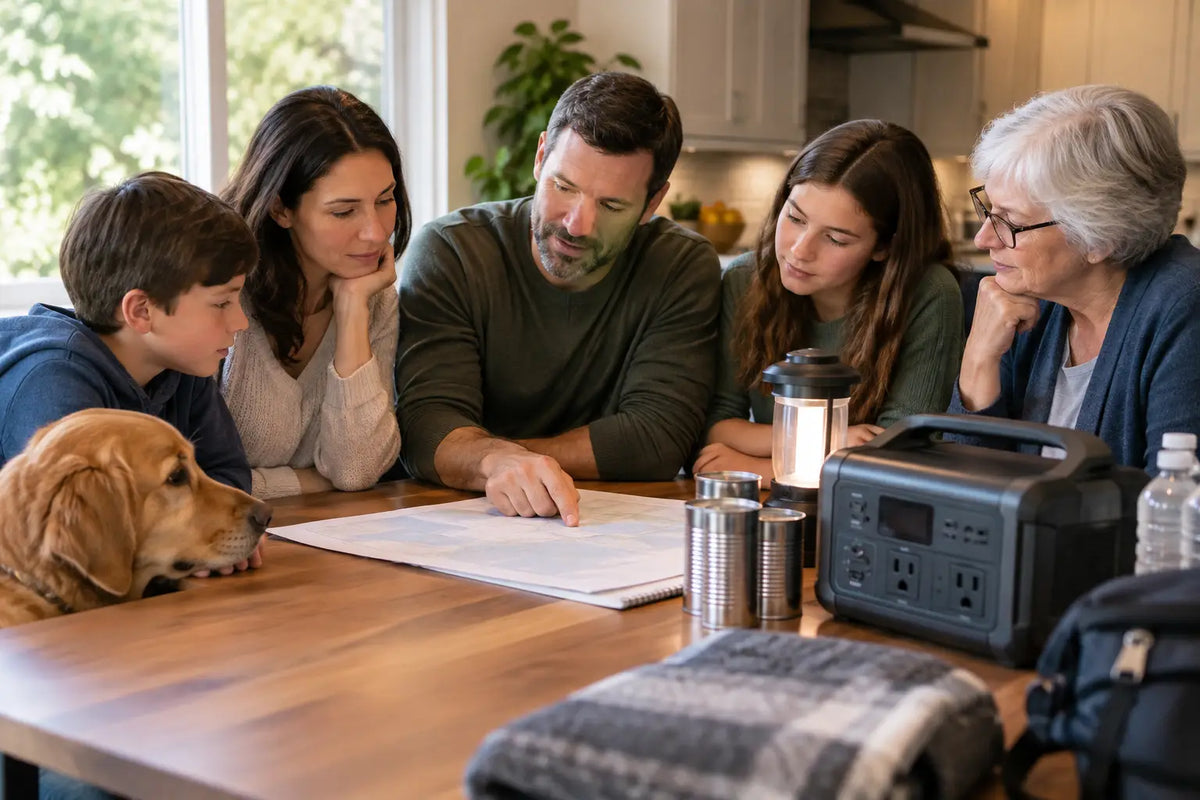
A power outage changes the rhythm of a house quickly. The refrigerator becomes a timer, phones become communication tools, and a dark hallway becomes a problem when a child needs medicine at 2 a.m. The best grid failure options are not about turning your home into a bunker. They are about keeping your family safe, comfortable, fed, informed, and able to make good decisions until service returns.
Start with the disruptions your household is most likely to face. A winter storm may mean staying warm for three days. A hurricane may bring an evacuation order, then a week without electricity. A wildfire can mean smoke, road closures, and leaving quickly. Your plan should fit your area, your home, your health needs, and the people who depend on you.
Grid Failure Options Start With What Your Family Needs
Before choosing a generator or filling a pantry, think through the first 72 hours. Water, medications, light, a way to communicate, safe food, and a reasonable indoor temperature come first. For families with infants, older relatives, pets, or people who rely on medical equipment, those needs deserve extra attention before convenience items.
A useful question is: What stops working when the power does? In many suburban homes, the answer includes the well pump, garage door, sump pump, furnace blower, electric stove, Wi-Fi, refrigerator, medical devices, and the ability to charge a phone. Write down your own list. It turns a vague concern into a practical shopping and planning guide.
Plan for hours, days, and longer outages
A brief outage calls for flashlights, charged phones, and patience. A three-day outage calls for stored water, shelf-stable meals, backup lighting, and a way to keep essential devices running. An outage lasting a week or more may require a larger fuel plan, more serious food storage, laundry alternatives, sanitation supplies, and a clear decision about whether staying home is still the right choice.
You do not need to buy everything at once. A family that has water, ready-to-eat food, battery lights, a first aid kit, and a way to charge phones is already in a much better position than one relying on a last-minute store run.
Water and Food Are the Foundation
Power can be inconvenient. No water is a health issue.
Store at least one gallon of water per person per day for a minimum of three days. In hot climates, with pets, or when a household includes young children, nursing mothers, or older adults, storing more is sensible. Keep some water in smaller containers that are easy to carry, not only in large containers that may be difficult to move or pour.
A water filter adds flexibility, but it should not replace stored water. Municipal water systems can lose pressure, wells cannot run without electricity, and water sources may be contaminated after a storm or flood. Store water first, then add filtration and treatment as a backup layer.
For food, begin with items your family will actually eat without much preparation. Canned meals, nut butters, crackers, shelf-stable milk, fruit cups, rice, soups, and freeze-dried meals all have a place. Keep a manual can opener with the food, not in a separate drawer. If anyone has allergies or dietary restrictions, build those needs into your storage from the start.
Your refrigerator and freezer are useful during an outage, but only for a limited time. Keep refrigerator and freezer thermometers on hand. As a general rule, unopened refrigerated food may remain safe for about four hours, while a full freezer can hold temperature for roughly 48 hours if left closed. When in doubt, follow food-safety guidance rather than trying to save a questionable meal.
Choose Backup Power Based on Essential Loads
Backup power is where grid failure options can feel expensive and confusing. The right answer depends on what you need to run, for how long, and whether you can safely operate fuel-powered equipment outside.
A portable power station is often the simplest starting point. It can keep phones, lights, a modem, a laptop, CPAP equipment, and some small appliances powered without noise or fumes. Match the unit’s battery capacity and output to the devices you expect to use. A phone charger uses very little power. A space heater, microwave, refrigerator, or window air conditioner uses much more.
Solar panels can recharge compatible power stations during a prolonged outage, provided weather and sunlight cooperate. They are especially useful for keeping communications and small essentials going after a storm, but they should not be treated as guaranteed daily power during heavy cloud cover, smoke, or winter conditions.
A portable generator can run more demanding loads, including a refrigerator, freezer, well pump, or selected household circuits. It also brings more responsibility. Run it outdoors only, far from doors, windows, vents, and attached garages. Carbon monoxide is odorless and deadly. Never operate a generator indoors, in a garage, under a covered porch, or near an open window.
For homeowners who experience frequent or lengthy outages, a professionally installed standby generator or home battery system may be worth considering. These systems cost more, but they can reduce the scramble during an emergency. They also require planning around fuel, installation, electrical panels, maintenance, and which circuits truly matter.
Do not forget the low-tech option: reduce your electrical needs. Battery lanterns, headlamps, insulated coolers, thermal clothing, window coverings, and shelf-stable food can make a smaller power setup far more effective.
Safe Heat, Cooking, and Light Matter More Than Comfort
During cold-weather outages, keeping one safe room warm is usually more realistic than heating the whole house. Choose an interior room if possible, close doors to unused areas, dress in layers, and use blankets or sleeping bags rated for the temperatures you may face. Never use an oven, grill, camp stove, or propane heater not rated for indoor use to heat your home.
Cooking plans should be equally simple. A camp stove, propane cooking system, or charcoal grill can be useful, but outdoor-only equipment stays outdoors. Keep enough fuel for the equipment you own, and practice using it before an emergency. If severe weather makes outdoor cooking unsafe, ready-to-eat meals become more than a convenience.
For light, skip candles when possible. Battery lanterns and headlamps are safer around children, pets, curtains, and tired adults. Place a lantern in each bedroom, one in the bathroom, and one near the kitchen or main gathering area. Headlamps are especially helpful when both hands are needed for cooking, carrying water, or helping a child.
Build Communication and Medical Backups
A charged phone is helpful, but do not make it your only plan. Keep battery banks charged and store vehicle charging cables. A battery or hand-crank weather radio can provide local updates when cellular networks are overloaded or internet service is down. Keep printed contact numbers, insurance information, and medication lists in your family emergency kit.
If someone in your home depends on refrigerated medication, oxygen, a CPAP machine, dialysis, or other medical support, make a specific outage plan now. Ask the medical provider what backup arrangements are appropriate. Identify the device’s power requirements, keep necessary supplies on hand, and know where you would go if home power could not support the need.
Families should also choose one out-of-area contact. Text messages may go through when calls do not, and a single contact can help relatives confirm everyone is safe without tying up local networks.
A Sensible Order for Building Your Grid Failure Plan
If you are starting from scratch, focus your budget in this order:
1. Water storage, water treatment, shelf-stable food, first aid supplies, and medications.
2. Battery lanterns, headlamps, spare batteries, power banks, and a weather radio.
3. Safe cooking equipment and enough fuel to use it.
4. A portable power station or generator sized for your essential loads.
5. Longer-term upgrades such as solar charging, home batteries, expanded food storage, or a standby generator.
SHTF Prepper Club encourages families to build in layers because readiness is easier to maintain when it grows with your household. Check stored food and water regularly, test batteries, rotate fuel according to its storage requirements, and run your backup power equipment before the weather forecast gives you a reason.
Know When Staying Home Is No Longer the Best Option
A grid failure does not always mean sheltering at home. Flooding, wildfire, extreme cold without safe heat, medical needs, or an evacuation order can change the plan fast. Keep evacuation bags with copies of documents, medications, water, snacks, chargers, clothing, and pet supplies where they can be grabbed without searching in the dark.
Decide in advance where you might go: a relative’s house outside the affected area, a hotel, a community shelter, or another safe location. If you own a generator, remember that it is not a reason to ignore an evacuation order. Property can be replaced. People cannot.
The goal is not to predict every emergency. It is to remove the avoidable stress from the first hard hours. Set aside one evening this week to list your essential loads, check your water, and charge your backup batteries. That is a calm, practical start - and your family will feel the difference when the lights go out.