
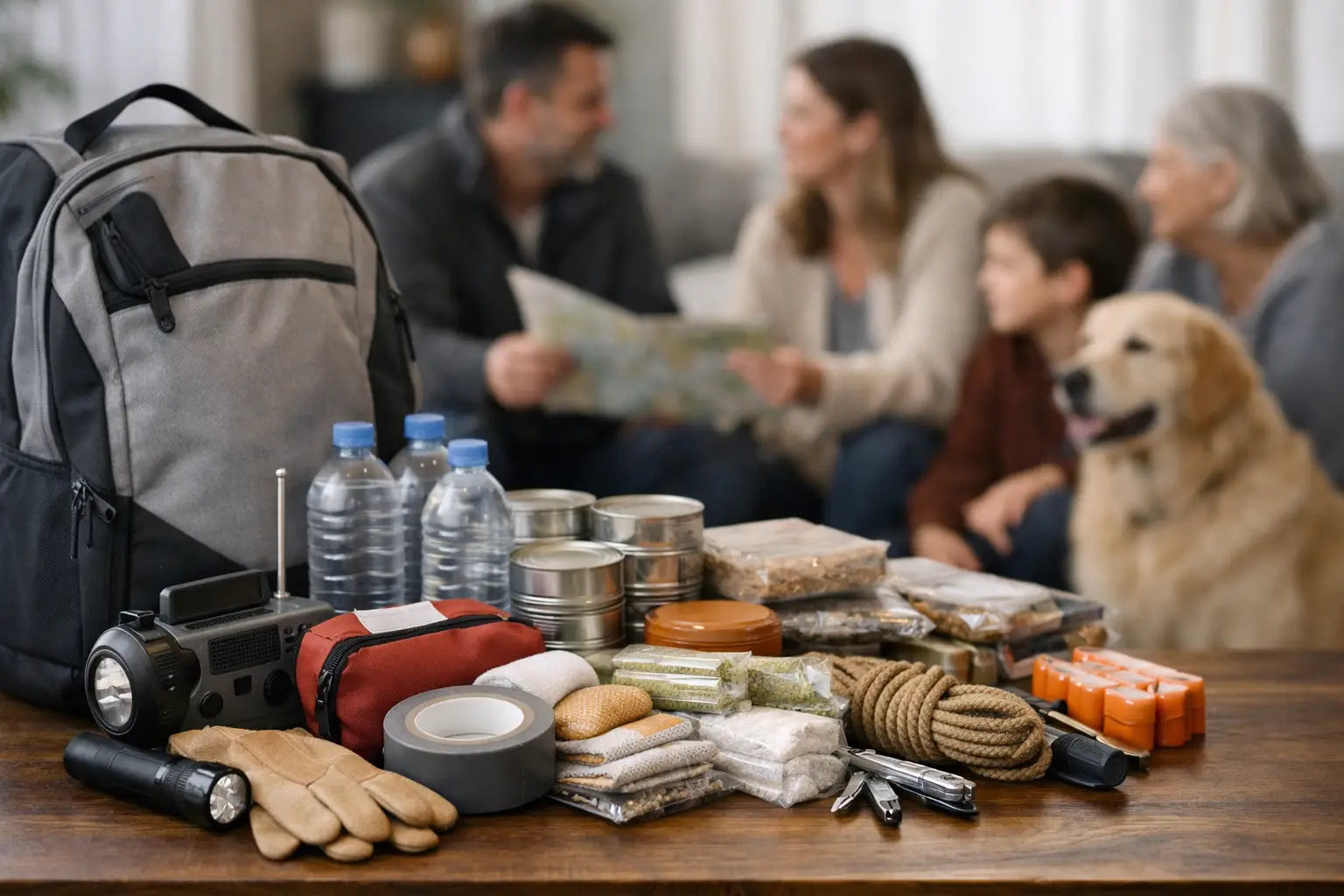
The freezer is thawing. The cell network is overloaded. Your child’s school has closed early, and the gas station line is already around the block. Family disaster readiness is not about predicting every emergency. It is about giving your household enough water, food, light, information, and a workable plan to make calm decisions when normal services disappear.
Start with 72 hours. That window is realistic for a $200 starter effort, meaningful for most short disruptions, and a strong base for building longer-term readiness. Once those first three days are covered, you can expand at a pace that fits your home, budget, climate, and family.
Family Disaster Readiness Begins at Home
Every household has different risks. A family in coastal Florida may plan for a hurricane evacuation and days without power. A homeowner in California may need to leave quickly because of wildfire. In the Midwest, a winter storm can make travel unsafe while a power outage turns a comfortable house cold. Earthquake-prone areas bring a different problem: you may be safer at home, but water lines, roads, and stores may not be usable.
The good news is that the first priorities overlap. Before buying specialty gear, focus on the things your family will need in almost any disruption: safe water, food that needs little preparation, medications and first aid, light and power, warmth or cooling, sanitation, and a way to communicate.
Think in household terms, not individual items. A flashlight is useful. Three dependable light sources with fresh batteries, placed where people can find them in the dark, are a plan. A case of bottled water is a start. Stored water plus a way to filter more water is a system.
Build Your First 72-Hour Layer
Water comes first
Plan for at least one gallon of water per person per day for drinking and basic sanitation. A family of four needs 12 gallons for three days. That number should rise in hot weather, when someone is ill, or when infants, older adults, nursing parents, and pets are part of the household.
Bottled water is convenient, but it gets expensive and takes up space. Refillable water containers offer better long-term value, especially when paired with a quality water filter and a backup purification method. The trade-off is maintenance: containers must be cleaned, filled, rotated, and kept where they will not freeze or leak. Label the fill date and put a reminder on your calendar to check it.
Do not assume a swimming pool, rain barrel, or nearby creek is ready-to-drink water. Those sources can be useful only when you understand the treatment required and have the proper equipment.
Food should be familiar and easy
Choose foods your family already eats. A three-day supply does not need to be gourmet or complicated. Ready-to-eat meals, canned proteins, nut butters, shelf-stable milk, crackers, fruit cups, oatmeal, and simple comfort foods work well because stress changes appetites, especially for children.
Plan around the equipment you actually own. Freeze-dried meals are compact and have a long shelf life, but most need hot water. Canned foods can be eaten without cooking, though they are heavier and require a manual can opener. A mix usually makes the most sense: familiar pantry foods for the first few days and longer-lasting food storage for the weeks beyond.
Keep a small supply of food that meets real dietary needs. That includes baby formula, diabetic-friendly options, soft foods for grandparents, and food your pet can tolerate. An emergency is not the time to test a new diet.
Light, power, and heat need separate plans
A power outage affects more than the lights. It can interrupt refrigeration, phones, medical devices, well pumps, garage doors, internet service, and home heating or cooling. Start with LED lanterns, headlamps, flashlights, batteries, and power banks. Headlamps are especially useful because they keep both hands free when cooking, checking a breaker, or helping a child.
Then decide what level of backup power makes sense. A small battery power station can keep phones, lights, and some medical equipment running. A larger unit or solar setup may support a refrigerator or more essential loads, but capacity, recharge time, and appliance wattage matter. Do not buy based on a vague promise that it will run “everything.” Make a list of the devices your family truly needs and check their power requirements.
For cold-weather families, safe warmth deserves special attention. Blankets, sleeping bags, layered clothing, and a plan to stay in one insulated room are often safer than trying to heat an entire house. Never use grills, camp stoves, or fuel-burning heaters indoors unless the equipment is specifically designed and rated for indoor use. Carbon monoxide is a serious threat when people improvise.
Make Evacuation Simple Enough to Use
Some emergencies give you hours of warning. Others do not. Each person who can carry one should have an evacuation bag with basic clothing, water, snacks, medications, copies of key documents, chargers, a flashlight, hygiene supplies, and weather-appropriate layers. Keep bags near an exit rather than buried in a closet.
Your home supplies and evacuation bags serve different jobs. Home supplies support you when it is safe to stay put. Evacuation bags help you leave quickly. Trying to make one kit do both often creates a heavy, disorganized pile that is useful for neither.
Create a short family communication plan as well. Pick an out-of-area contact who can receive updates if local calls fail. Decide where to meet if your home is unsafe. Keep printed phone numbers and addresses because a dead phone or downed internet connection can erase the information people rely on without thinking.
For families with children, practice without making it scary. A five-minute “where are the flashlights?” drill before a storm can build confidence. Let kids help check snack dates, pack a comfort item, and learn how to contact a trusted adult. Preparedness feels less frightening when everyone has a small role.
Do Not Forget Health, Documents, and Pets
A first-aid kit should match your household, not just contain a few adhesive bandages. Include supplies you know how to use, along with prescription medications, copies of prescriptions, spare glasses, hearing-aid batteries, and necessary mobility or medical-device backups. Ask your doctor or pharmacy what options are available for maintaining a reasonable medication reserve.
Protect documents before you need them. Keep physical copies of identification, insurance information, medical records, property details, and emergency contacts in a waterproof pouch. Digital copies can help, but they are not a full replacement if your phone is missing, damaged, or out of power.
Pets need their own readiness plan. Store food, water, medications, a leash or carrier, vaccination records, and waste supplies. Identify pet-friendly lodging or a trusted person outside your immediate area before an evacuation order arrives. Many families will delay leaving if they do not know where their animals can go.
Turn Supplies Into a Routine
The most common readiness problem is not buying the wrong item. It is buying useful supplies and forgetting where they are. Store gear in labeled bins or a dedicated cabinet. Keep a simple inventory on paper or in a note on your phone. Check food dates, batteries, water containers, medications, and seasonal clothing twice a year.
Use ordinary moments as reminders. Check supplies when clocks change, before hurricane season, or when you replace HVAC filters. Rotate pantry food into regular meals and replace it with fresh stock. This keeps waste low and helps everyone stay familiar with what is available.
Avoid trying to solve every scenario in one weekend. A family with a small apartment may begin with water, a medical kit, shelf-stable food, and portable power. A rural household with a well may prioritize water storage, backup power, fuel safety, and a longer food supply. Both are making progress.
The goal is not a perfect storage room or a dramatic survival story. It is the quiet confidence of knowing that when the next outage, storm, or evacuation notice arrives, your family has a practical place to start.