
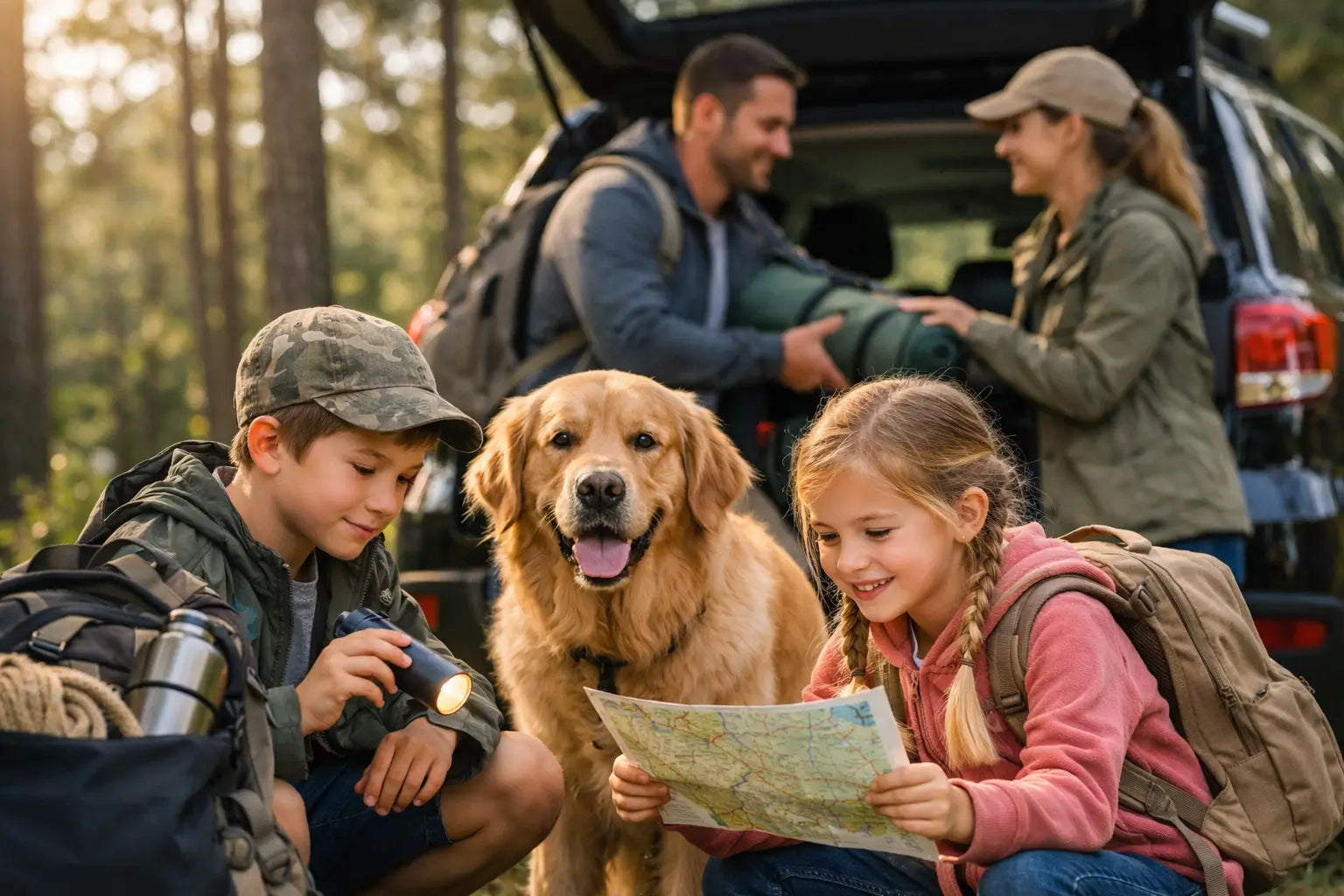
A wildfire warning, fast-rising water, or an approaching hurricane does not leave much room for debate. When officials say it is time to go, your family needs a simple answer to three questions: Where are we going, how are we getting there, and what do we take? That is the real purpose of family bug out planning. It is not about living out of a backpack in the woods. It is about leaving home safely and staying functional until you can return or reach a stable place.
For most households, an evacuation plan is more useful than a giant pile of gear. Start there. Then build bags and supplies around the people, pets, medications, and local risks that make your situation unique.
Start Family Bug Out Planning With Decisions, Not Gear
The first job is deciding what would make you leave. Some emergencies require sheltering at home, especially during a winter storm or a short power outage. Others demand early action. Wildfire, flooding, chemical spills, hurricanes, and a house fire are clear examples.
Use official evacuation orders as your baseline, but do not wait for a perfect moment if conditions are getting worse. Families with young children, older adults, mobility needs, or pets often need more time than they expect. Leaving early can mean a normal drive instead of a stressful evacuation route with no fuel, closed roads, and overwhelmed hotels.
Choose two destinations before an emergency. The first can be a trusted friend or relative outside your immediate area. The second should be farther away, in case the disruption affects a whole region. Write down complete addresses, phone numbers, and several routes. Cell service can be unreliable, and map apps are only helpful while your phone has power and a signal.
Your plan should also name a family contact who lives out of town. If family members get separated, everyone can send that person a brief message with their location and status. A single contact reduces the confusion of trying to reach everyone at once.
Build Evacuation Bags Around Real Family Needs
An evacuation bag should support each person for roughly 72 hours, but the exact setup depends on your family and the type of emergency. A bag for a hurricane evacuation looks different from one kept near the door for a sudden wildfire. The goal is not to carry every possession. It is to take the essentials that make the first few days safer, calmer, and more manageable.
Each capable adult and older child should have a bag they can carry. Keep younger children's supplies in an adult's bag or use a small backpack with a comfort item, lightweight clothing, and age-appropriate snacks. Do not assign a six-year-old responsibility for critical water, medicine, or documents.
A practical family evacuation bag includes water, a way to treat additional water, shelf-stable food, weather-appropriate layers, a flashlight or headlamp, charging power, basic first aid supplies, hygiene items, and a paper copy of key contacts. Add a small amount of cash in mixed bills. Card readers and ATMs may not work during a prolonged outage.
The details matter. Pack familiar snacks if your child has food sensitivities. Include prescription glasses, hearing-aid batteries, mobility aids, and a written medication list. If someone takes daily medication, keep a rotating emergency supply when possible and ask your pharmacist or physician what is appropriate for your situation. A first aid kit is a strong foundation, but it does not replace prescribed care.
For many families, water is the limiting factor. Water is heavy, so do not assume you can carry three days' worth for everyone. Keep enough ready-to-drink water for the drive and first arrival, then include a dependable filtration or treatment option for longer disruptions. Store extra water in your vehicle or near the exit if local evacuation risks make that practical.
Keep Documents Dry and Easy to Grab
A waterproof document pouch can save hours of frustration. Include copies of identification, insurance information, home and auto policies, medical information, vaccination records if relevant, property records, and pet vaccination records. Keep digital copies in a secure location as a backup, but do not rely on a password manager or cloud account being available at the worst possible time.
Add recent family photos, especially of children, older relatives, and pets. They can be useful if someone becomes separated from the group.
Plan for the People Who Need More From You
A family plan works only if it accounts for the least mobile, most vulnerable, or most dependent person in the household. That is not pessimism. It is good logistics.
For infants and toddlers, plan for diapers, wipes, formula or feeding supplies, familiar foods, a change of clothes, and one comfort item. For school-age children, give them a small role, such as carrying their own jacket and a favorite book. A little participation can make a frightening departure feel more predictable.
Older adults may need medication management, mobility equipment, medical paperwork, extra warmth, or a quieter destination. If a grandparent lives alone nearby, decide now whether they are part of your departure plan and who will pick them up. Do not leave that decision for a midnight evacuation alert.
Pets need their own supplies: food, water, bowls, leashes, carriers, waste bags, medication, and records. Confirm that your planned destinations and backup lodging options accept animals. During an evacuation, the safest choice is almost always to take pets with you rather than assume you will return soon.
Make the Vehicle Part of the Plan
Your car is often your first evacuation tool. Keep the fuel tank above half, particularly during hurricane season, wildfire season, or severe winter weather. A vehicle with a quarter tank may be enough for an ordinary week, but it gives you few options when gas stations lose power or lines form quickly.
Keep a compact vehicle kit with a phone charging cable, paper maps, basic tools, jumper cables, blankets, water, snacks, and a flashlight. If you live where snow and ice are common, add traction aids and cold-weather equipment. In hot regions, prioritize extra water, shade, and cooling supplies.
Decide who drives which vehicle if you own more than one. A two-car departure can provide flexibility, but it can also split the family and double the chances of getting separated. It depends on your household size, pets, adult drivers, and the urgency of the evacuation. When possible, traveling together is simpler.
Practice a Short, Low-Stress Departure Drill
A plan kept in a drawer is not a plan your family can use under pressure. Once or twice a year, run a 15-minute departure drill. Tell everyone that this is practice, not a reason to panic. Set a timer, grab the bags, load the vehicle, and see what slows you down.
You may find that shoes are scattered, a pet carrier is buried in the garage, or the document pouch is not where everyone thought it was. Those are useful discoveries. Fix them now, while the weather is clear and everyone is calm.
Use the drill to check bag weight and replace expired food, batteries, medications, and seasonal clothing. A bag packed for August may leave someone cold during a January ice storm. Review it after a move, a new diagnosis, a new pet, or any major change in your household.
Avoid the Most Common Planning Mistakes
The biggest mistake is trying to solve every possible emergency with one oversized bag. Heavy gear gets left behind. Instead, keep evacuation bags focused on immediate needs and build separate home supplies for sheltering in place.
Another mistake is treating an evacuation bag as the whole plan. Supplies cannot tell you which route is open, who picks up the kids, or where the dog will sleep. Put the decisions on paper and make sure every adult knows where it is.
Finally, avoid buying complicated equipment you have never used. A reliable water filter, power station, camp stove, or medical supply is valuable only when you understand its limits and can operate it safely. Start with the basics, practice at home, and add capability over time. SHTF Prepper Club organizes family-ready supplies by the problems they solve, which can make that next step easier without turning readiness into a hobby you have to master overnight.
Your family does not need a dramatic escape plan. They need a practiced, realistic way to leave with the essentials, stay connected, and arrive somewhere safer. Put the first version on paper this week. It can be simple, and it can improve every season.