
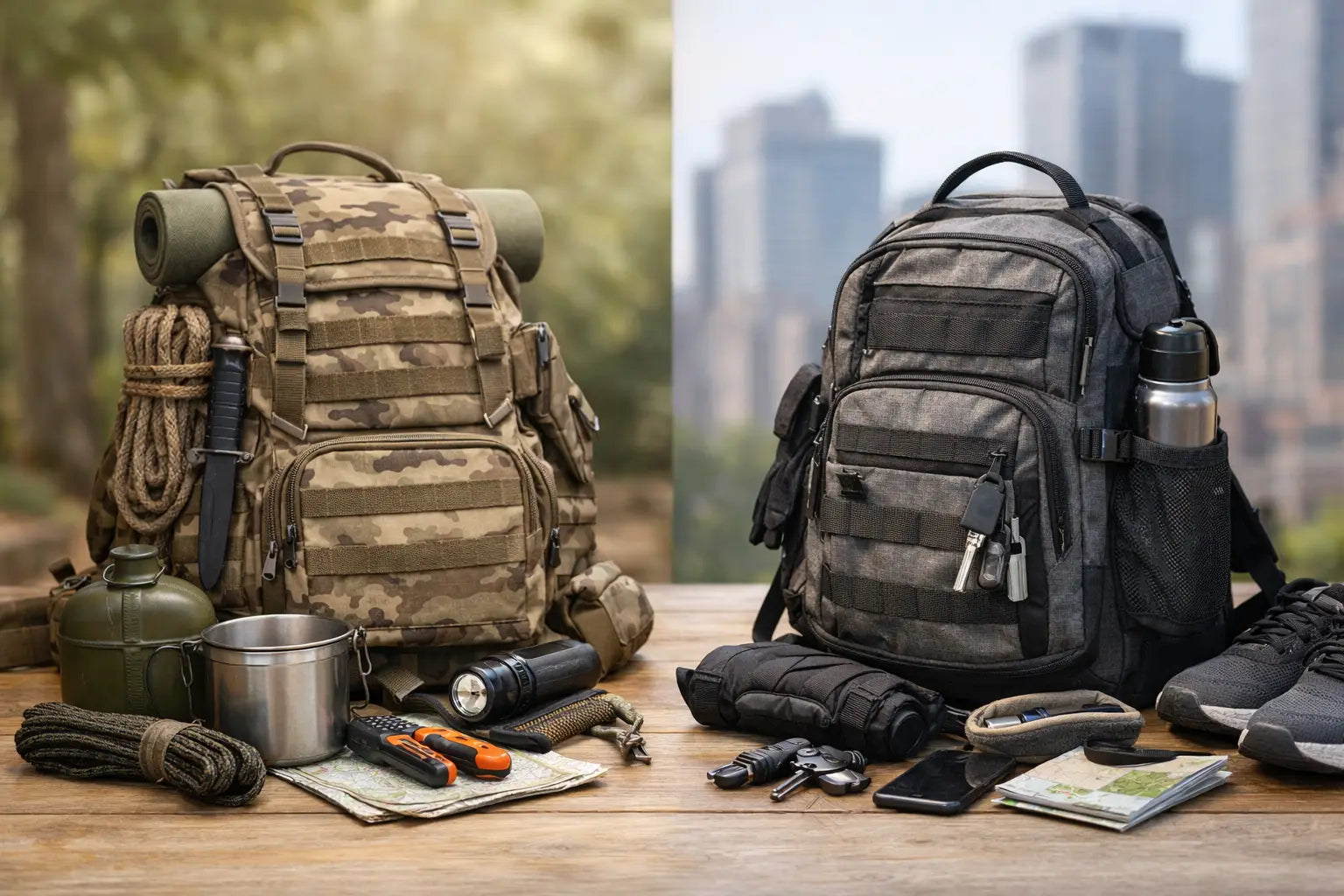
A school pickup during a fast-moving wildfire, a stalled commute after an ice storm, and a hurricane evacuation order are all emergencies. They do not call for the same bag. The question of a bug out bag versus get home bag is really about one thing: where your family is when trouble starts, and where they need to go next.
For most households, the clearer terms are evacuation bag and get-home bag. An evacuation bag supports your family when you must leave home and may not return for several days. A get-home bag helps one person travel from work, school, or another everyday destination back to the safety of home. Both are useful. Neither needs to look tactical or cost a fortune to be effective.
Bug Out Bag Versus Get Home Bag: The Core Difference
An evacuation bag is built for displacement. You may use it after a wildfire, hurricane, flood, apartment fire, chemical spill, or earthquake that makes your home unsafe. It goes with you in the car when authorities advise or order evacuation, or when your own judgment says it is time to leave. Think in terms of at least 72 hours of basic needs, though a longer disruption may require more supplies waiting at home or in your vehicle.
A get-home bag has a narrower mission. It helps an individual get from point A to point B when normal transportation, roads, weather, or communication are disrupted. It may live in a vehicle, under a desk, or in a commuter backpack. Its contents should support a walk of a few miles, or possibly much farther, in the conditions common to your area.
That distinction matters because weight matters. A parent trying to evacuate with children, pets, paperwork, medication, and a few bags should not also carry a heavy pack filled with duplicate tools. A commuter walking home in summer heat does not need a three-day cooking system. Each bag should solve its own problem well.
Start With Your Family's Real Risks
Before buying gear, picture the events that are most likely where you live. In coastal areas, evacuation may mean hours in traffic, crowded shelters, and limited hotel availability. In northern states, a get-home bag may be more about staying warm after a vehicle breakdown. In wildfire country, masks, eye protection, copies of insurance documents, and pet supplies deserve more attention. In earthquake-prone areas, sturdy shoes and a way to shut off utilities may be especially relevant.
Also consider your daily geography. Does one spouse commute 35 miles? Does a teenager drive to school or sports practice? Do grandparents watch the kids during the day? A get-home plan is not just a backpack. It is a family agreement about who calls whom, where everyone goes if phones are unreliable, and when it is safer to stay put rather than travel.
Do not assume walking home is always the right move. During dangerous heat, severe storms, civil unrest, active fire conditions, or a major hazardous-material incident, sheltering in a safe location may be smarter. A get-home bag gives you options. It should not pressure you into taking an unnecessary risk.
What Belongs in an Evacuation Bag
A family evacuation bag should be organized for a stressful departure. You want essentials that can be loaded quickly, carried reasonably, and used without digging through a pile of loose supplies. Many families do best with one bag per capable adult, plus a clearly marked tote or duffel for shared items.
Your bag needs water, food, warmth, light, basic first aid, medications, sanitation supplies, clothing, and documents. The exact quantities depend on family size, climate, health needs, and available vehicle space. Pack foods your family will actually eat, including familiar snacks for children. Shelf-stable emergency meals are useful, but they work best alongside ready-to-eat foods that do not require heated water.
Water is usually the limiting factor. Carrying three days of water for every person is heavy, especially with children. A practical approach is to take a reasonable amount of bottled or stored water, then add a dependable water filter or purification method. Keep in mind that floodwater and other visibly contaminated water may require more than a basic filter. Read the capabilities of your chosen treatment method before an emergency.
Include a change of clothes suited to the season, sturdy closed-toe shoes, rain protection, and a warm layer even in mild climates. Evacuation centers, vehicles, and hotel rooms can be colder than expected. A compact sleeping bag, blankets, or other warmth layers are worth considering if your region faces cold nights or limited shelter options.
Documents are easy to overlook until they are needed. Keep copies of identification, insurance information, medical details, prescriptions, emergency contacts, and pet records in a waterproof pouch. Digital copies stored securely can help, but paper copies remain valuable when a phone is dead, a website is unavailable, or cell service is overloaded.
For families, the overlooked items are often the ones that reduce stress: chargers and power banks, comfort items for younger children, spare glasses, hearing-aid batteries, infant supplies, and pet food with a leash or carrier. Your evacuation bag is not meant to replace your home supplies. It is meant to help your family leave safely and function while away.
What Belongs in a Get-Home Bag
A get-home bag should be compact enough that it stays where you need it. The best bag is not the one packed with every possible tool. It is the one you will keep in the car or take to work without resenting the space it uses.
Start with water, calorie-dense food, weather protection, a light, a phone charging option, a basic first-aid kit, and cash in small bills. Add a paper map of the routes between your common destinations and home. Navigation apps are helpful until a dead battery, damaged network, or road closure makes them less useful.
Foot care deserves special attention. Keep broken-in walking shoes and several pairs of socks in your vehicle if you commute in dress shoes, heels, sandals, or work boots that are not comfortable for distance. Blisters can turn a manageable walk into a serious problem. A hat, sunscreen, and electrolyte packets may be more useful in Arizona or Texas than an extra fleece. Gloves, a knit hat, hand warmers, and traction aids make more sense in snowy regions.
A small rain jacket or poncho, work gloves, dust mask, whistle, multitool, and compact emergency blanket are sensible additions. Avoid packing weapons or specialized gear you are not trained and legally permitted to use. The goal is to move safely, communicate, manage minor problems, and arrive home in good condition.
If your bag stays in the car, account for temperature swings. Extreme heat can damage batteries, medication, some foods, and adhesives. Rotate supplies at least twice a year, ideally when clocks change or when you change seasonal clothing. Replace expired food, check batteries, refresh water, and make sure shoes still fit.
Build the Bags in the Right Order
For many families, the first priority is not either bag. It is a safe home with stored water, food, medications, light, backup power, and a family communication plan. Most disruptions are shelter-in-place events: a power outage, winter storm, boil-water notice, or short-term supply interruption. Home readiness gives you the broadest benefit.
After that, build the bag that matches your most immediate weakness. If your area has evacuation orders during hurricane or wildfire season, start with evacuation bags and keep them near the exit. If a long commute separates you from children or a dependent family member, start with get-home bags for the adults who travel.
You can build in layers. Begin with water, food, light, first aid, and weather protection. Add documents, filters, power, and family-specific items as your budget allows. A carefully chosen $200 setup that is maintained will serve your family better than expensive equipment stored unopened in a closet.
One Plan Makes Both Bags Better
The bags are only equipment. Your plan is what turns them into preparedness.
Choose an out-of-area contact who can relay messages if local networks are jammed. Decide on a primary meeting place at home and a backup location outside your neighborhood. Keep school, workplace, and pet evacuation policies handy. Practice a simple departure drill once or twice a year: Who grabs medications? Who loads the pets? Where are the keys, documents, and chargers?
For an evacuation, leave early when possible. Roads are safer before conditions worsen, fuel is easier to find, and children and pets have more options for shelter. For a get-home situation, tell your family your route and expected arrival time before you start moving. If conditions are unsafe, communicate that you are staying put.
Preparedness is not about expecting the worst day of your life. It is about making ordinary decisions easier when a real disruption catches everyone off guard. Pack for the trip you may actually need to make, revisit the plan as your family changes, and take comfort in knowing you have given them better options.