
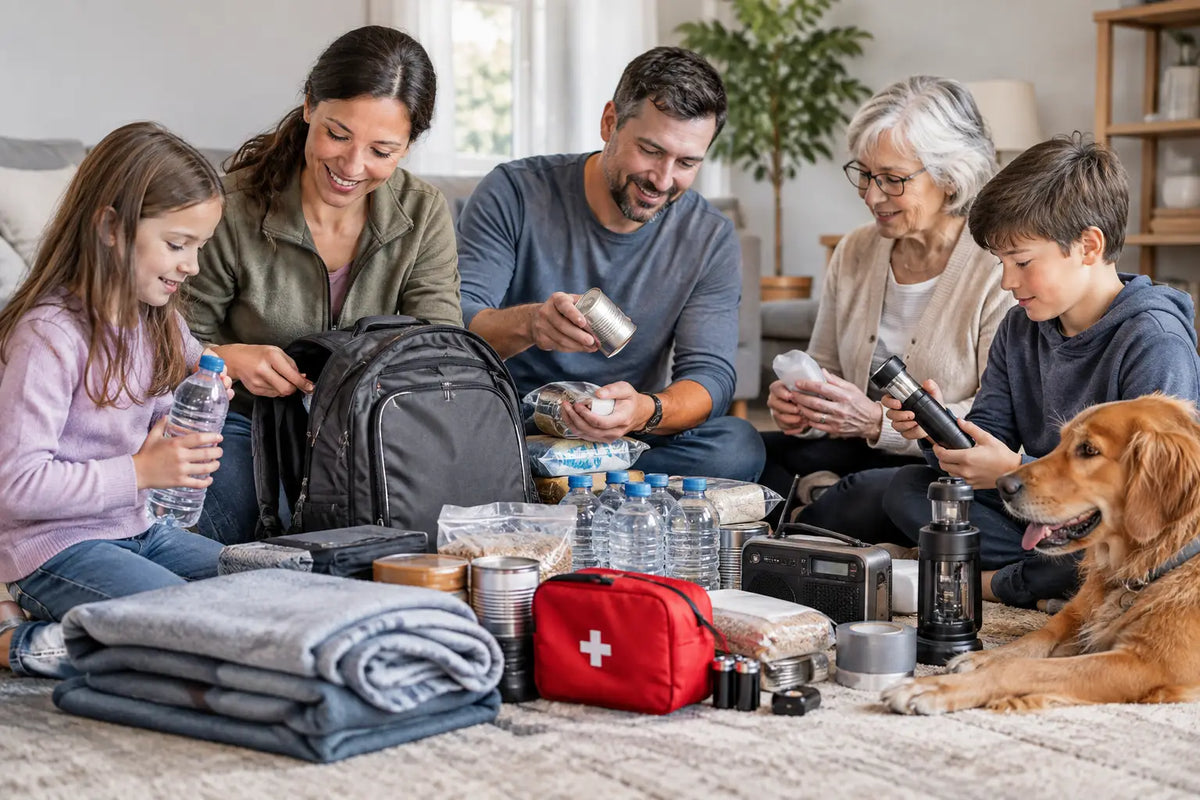
The next long power outage is a bad time to discover that your phone batteries are dead, the garage freezer is warming up, and everyone expects you to have a plan. Beginner emergency preparedness is simply the decision to solve those problems before they arrive. You do not need a bunker, tactical gear, or a year of food to make meaningful progress.
Start with the disruptions your household is most likely to face. A Texas family may plan around heat, hurricanes, and grid outages. A California household may focus on wildfire smoke and evacuation. In much of the country, winter storms, tornadoes, and flooded roads can make ordinary errands impossible for several days. The fundamentals are largely the same: water, food, light, power, medical needs, warmth, communication, and a way to leave safely if staying home is no longer the right call.
Beginner Emergency Preparedness Has One Goal
Your first goal is not total self-sufficiency. It is getting your family through a short disruption safely and calmly without making desperate last-minute purchases.
Think in time frames. Can your household manage the first 24 hours if the power goes out? Then three days? Then a week? Most families find gaps quickly when they walk through an ordinary day without electricity, running water, open stores, or cell service. How will you make coffee or warm a meal? What medication is needed? Can the garage door open? Where will everyone sleep if the house is cold or smoky?
This approach keeps preparedness grounded. Buy for the problems you actually have, then build outward. A family in a small apartment may prioritize compact water storage, a medical kit, shelf-stable meals, and evacuation bags. A homeowner with a garage and chest freezer may reasonably add backup power, larger water containers, and a deeper food supply.
Build Your Readiness in the Right Order
Preparedness purchases are easier when they follow the needs that become urgent first. Water comes before specialty tools. A working flashlight is more useful than an expensive gadget you have never tested.
Start with water for drinking and basic use
Water is the first serious constraint in most emergencies. A practical minimum is one gallon per person per day, with a three-day supply as an initial target. That number includes drinking and simple sanitation, but it may not be enough for hot climates, infants, older adults, nursing parents, sick family members, or pets.
Store some water in small, portable containers as well as larger containers if space allows. Small containers are easier to carry during an evacuation or share between rooms. Larger dedicated containers make sense for staying home. Rotate commercially packaged water by its stated date, keep stored containers out of direct sunlight, and do not rely on empty milk jugs or other containers that are difficult to sanitize.
Storage is only half the plan. Keep a reliable way to treat water if your supply runs low. A quality filtration system can be practical during boil-water notices, storm damage, or a longer interruption. Treatment methods have limits, so read the instructions before an emergency, especially if water could contain chemical contamination rather than just sediment or microorganisms.
Add food your family will really eat
For a first food goal, build a three-day supply of shelf-stable meals and ingredients that need little water and little cooking. Then expand toward one to two weeks as your budget and storage space permit. Choose familiar foods, not a pantry full of items your children will refuse after day one.
Canned soups, beans, vegetables, fruit, nut butters, crackers, rice, pasta, oatmeal, and ready-to-eat meals all have a place. Freeze-dried food can be an excellent long-term option because it stores compactly and lasts for years when properly stored. The trade-off is that many meals require water, and some need hot water to be enjoyable. It works best as part of a broader food plan, not as the only thing on the shelf.
Remember the tools. A manual can opener, basic cookware, disposable plates if water is limited, and a safe method for heating food matter just as much as the food itself. Never use charcoal grills, camp stoves, or fuel-burning heaters indoors or in a garage. Carbon monoxide is odorless, and it can turn a manageable outage into a tragedy.
Make darkness and device charging boring problems
Every household should be able to light the rooms it uses most without hunting for candles. Headlamps are especially useful because they leave both hands free for cooking, checking a breaker panel, helping a child, or administering first aid. Keep one near each bedside, plus a light source in the kitchen and near the main exit.
For power, begin with charged battery banks for phones and a way to recharge them. A portable power station can run phones, lights, a router, medical devices, or selected small appliances, depending on its capacity. It will not automatically run an entire house or central air conditioning. That is where families can waste money by buying based on a vague promise rather than a real power plan.
Make a short list of what must stay powered: a CPAP machine, a refrigerator medication compartment, phones, a well pump, or a baby monitor. Check the wattage and runtime requirements before choosing equipment. For longer outages, solar charging, a generator, or a larger backup system may be appropriate, but each has costs, maintenance needs, and safe operating rules.
Cover medical, hygiene, and comfort needs
A first-aid kit should match the people in your home, not just the label on the box. Start with bandages, gauze, antiseptic, gloves, pain relievers, a thermometer, and any supplies you know your family uses. Add a written medication list, doctor and pharmacy numbers, copies of insurance information, and a backup supply of prescription medicines when possible.
Comfort is not a luxury when an emergency stretches past a day. Include toilet paper, trash bags, hand sanitizer, menstrual products, baby supplies, pet food, and simple activities for children. If someone in your household relies on mobility equipment, oxygen, refrigerated medicine, or dietary restrictions, their needs should drive your plan from the start.
Create a Family Plan People Can Follow
Supplies help, but confusion can undo good preparation. A family plan does not need to be a binder no one opens. Put the key decisions on one page and talk through them twice a year.
Decide where you will meet if you are separated, both near home and outside your neighborhood. Pick an out-of-area contact because local networks can be overwhelmed while a distant relative may still be reachable. Make sure children know basic names, phone numbers, and addresses, even if they usually rely on a phone.
Discuss evacuation before you need it. Know two routes out of your area, where your important documents are stored, and who is responsible for pets. Keep an evacuation bag for each person with clothing, medications, copies of key documents, water, snacks, a flashlight, chargers, and a small comfort item for children. Put shoes near the bed during severe-weather season. Broken glass and debris are common after storms and earthquakes.
Avoid the Most Common Beginner Mistakes
The biggest mistake is waiting for the perfect plan. The second is buying a pile of gear without practicing how it works. Open the water filter. Cook one emergency meal. Run the power station with the devices you expect it to support. A quiet Saturday test will reveal problems without the pressure of a real outage.
Avoid storing everything in one location. Keep some essentials where you can reach them if a basement floods, a garage is inaccessible, or an evacuation is ordered at night. Label bins clearly. Rotate food into regular meals so your investment does not quietly expire.
Also be honest about your budget. A $200 start can cover water, basic food, lights, batteries, a medical kit, and a simple evacuation bag. A larger investment can add deeper food storage, water filtration, home backup power, and long-term food independence. Both are valid. SHTF Prepper Club is built around that practical progression: start small, choose quality, and add capability where it serves your family best.
Your First Weekend of Preparedness
Set aside one afternoon. Count the people and pets in your home. Inventory the water, food, medications, flashlights, batteries, and chargers you already own. Then make one focused shopping list based on the gaps, rather than trying to prepare for every scenario at once.
Before the weekend ends, choose your meeting place, write down important phone numbers, and place a flashlight by every bed. Those small actions may not look dramatic. They are exactly what readiness looks like in a real family home: fewer surprises, clearer choices, and the confidence that you can take care of the people counting on you.