
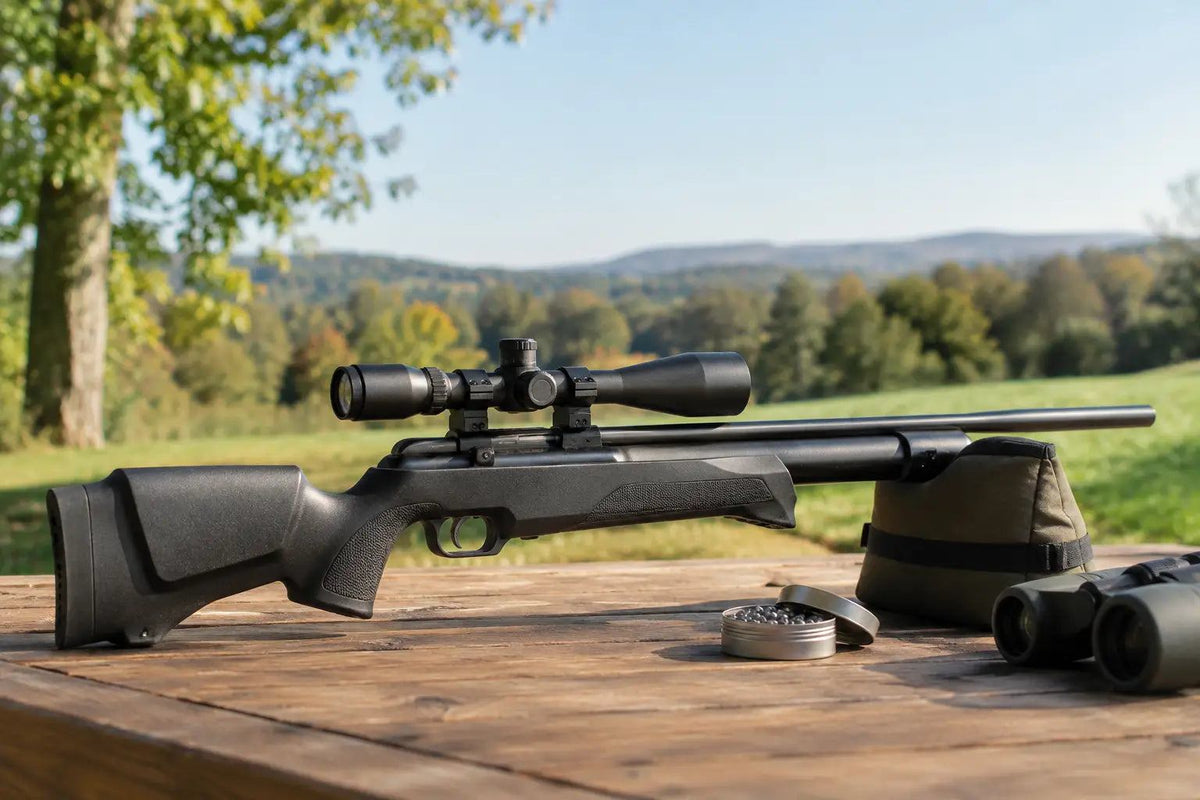
A Barra airgun can be a useful property tool for the right household, but it is not a substitute for a family emergency plan, stored water, backup power, or a well-stocked first-aid kit. Its best fit is usually routine property use: supervised target practice, small-scale pest management where legal, and building responsible equipment-handling habits.
That distinction matters. Airguns are often marketed as accessible and affordable, yet they can cause serious injury and property damage. For a family-focused household, the right question is not simply, “Which model has the most power?” It is, “Can we store, operate, and maintain this safely, legally, and for a purpose we genuinely have?”
What Is a Barra Airgun?
Barra is a brand that makes air-powered guns in several styles, including BB and pellet models. Depending on the model, a Barra airgun may use CO2 cartridges, compressed air, or a spring-powered mechanism to propel a projectile. The power source, ammunition type, and intended use vary considerably from one model to another.
Some models are designed primarily for recreational target shooting. Others are built with more power for pest-control applications where local regulations allow it. That range is why it pays to look beyond appearance. A lever-action airgun may look like a familiar Western-style rifle, while a PCP model can require a dedicated filling method, pressure monitoring, and more disciplined maintenance.
Treat every airgun as a real gun from the moment it enters your home. That means a secure storage plan, a clear rule that children never handle it without direct adult supervision, and a safe shooting area with a proper backstop.
Where a Barra Airgun Fits in Family Preparedness
Preparedness is about solving likely problems in the right order. For most families, the first priorities are drinking water, shelf-stable food, medications, light, heat or cooling options, communications, and a plan for evacuation or sheltering at home.
A Barra airgun belongs farther down the list. It may make sense for a rural or exurban household that already has those basics covered and needs a practical tool for lawful property management. It can also be a structured way for a parent or grandparent to teach mature teens about safety, patience, and respect for equipment.
It is not a practical answer to every uncertainty. It will not keep food cold during an outage, filter questionable water, or replace a dependable home security plan. Keeping its role in perspective helps prevent an impulse purchase from taking money away from the preparedness basics your family will use first.
For many homeowners, the most realistic use case is controlled target practice on private property, provided local rules permit it. Before setting up any range, think about what lies beyond your target. A pellet or BB that misses, ricochets, or passes through a weak backstop can travel far beyond the area you intended.
Choosing Between CO2, PCP, and Other Power Systems
The power system shapes both the experience and the responsibility of ownership.
CO2 Models
CO2-powered airguns are common because they are straightforward to operate and can offer a familiar shooting experience. The trade-off is that performance can change in cold weather, and you need a supply of compatible cartridges. A cartridge left in place for long periods may also affect seals, depending on the manufacturer’s guidance.
For occasional backyard target use, CO2 can be convenient. For a household evaluating equipment through a preparedness lens, remember that cartridges are a consumable. Store them in a cool, dry place, rotate older stock, and do not assume they will perform the same way during a winter storm as they do on a mild afternoon.
PCP Models
Pre-charged pneumatic, or PCP, airguns use compressed air stored in a reservoir. They can offer more consistent performance and greater capability than many entry-level options. They also require more supporting equipment, such as a hand pump, compressor, or high-pressure air source designed for that purpose.
This is where “more capable” can also mean “more complicated.” A PCP setup requires careful attention to rated pressure limits, seals, filling procedures, and secure storage. It can be a sensible choice for experienced adult owners with a legitimate need, but it is rarely the simplest place for a new family to start.
Spring-Piston and Pump Options
Spring-piston and multi-pump airguns do not rely on disposable CO2 cartridges or high-pressure tanks. That can make them appealing for basic target shooting. They still demand safe handling, suitable ammunition, and a backstop designed for airgun use.
The best choice depends on your intended use, your local rules, who will be using it, and how much equipment you are willing to maintain. Convenience is valuable, but simplicity and safe storage are usually more valuable in a busy household.
Safety Starts Before the First Shot
A safe airgun setup is not just a locked cabinet added after purchase. It begins with where and how the airgun will be used.
Choose a location where no person, pet, road, neighboring yard, window, or occupied structure can be behind the target area. Use a purpose-built pellet trap or a substantial backstop that is appropriate for the airgun and ammunition you own. Do not rely on thin plywood, cardboard boxes, or a fence. Those may slow a projectile, but they are not dependable containment.
Eye protection should be standard for anyone shooting or standing nearby. Ricochets are possible, especially with hard BBs and unsuitable target surfaces. Avoid shooting at water, rocks, metal objects not designed as traps, glass, or hard ground.
At home, establish a simple family rule: the airgun stays unloaded and secured unless a responsible adult is actively using it in a designated safe area. Store ammunition separately, and keep keys or access codes away from children and visitors. If a child is curious, answer the questions calmly, but do not confuse curiosity with readiness to handle equipment.
Check Local and State Rules First
Airgun laws are not uniform across the United States. State, county, and city rules may address where an airgun can be discharged, minimum age requirements, transportation, hunting or pest-control use, and whether certain models receive special treatment.
Neighborhood rules matter too. An HOA may prohibit discharge even where city rules do not. In dense suburban areas, a legal airgun can still be a poor fit because there is no safe direction of fire or sufficient distance from neighboring homes.
If pest control is your goal, identify the animal before acting. Wildlife regulations can protect species that homeowners assume are unregulated, and rules often differ between pests, game animals, and nuisance wildlife. When in doubt, contact your local wildlife agency, animal-control office, or a licensed wildlife professional. Humane, lawful choices are part of being a good neighbor.
Build a Responsible Storage Plan
A family’s storage plan should account for routine life, not just emergencies. Think about visiting grandchildren, contractors in the home, teenagers inviting friends over, and the occasional rushed morning when someone forgets to lock a door.
A locked cabinet or safe is the baseline. The airgun should be unloaded before storage, with ammunition secured separately. Keep CO2 cartridges, pellets, BBs, lubricants, and any filling equipment organized in a labeled container so adults can inspect supplies without leaving loose items around the garage or workshop.
Include the airgun in your household inventory. Record the make, model, serial number if applicable, purchase information, and storage location in a private home record. This is not about treating ordinary life like a crisis. It is simply the same good habit used for generators, power tools, and other valuable equipment.
A Practical Buying Checklist
Before bringing home a Barra airgun, make sure you can answer four questions clearly: What lawful job will it serve? Where can it be used safely? Who will have access to it? What equipment and ongoing supplies will it require?
Then consider the less exciting details. Can you afford a secure cabinet, eye protection, a proper backstop, appropriate ammunition, and maintenance supplies? If you choose a PCP model, do you have a safe and reliable way to fill it? If you choose CO2, are you willing to keep cartridges on hand and understand their cold-weather limitations?
Those answers will tell you more than a product description ever can. At SHTF Prepper Club, we encourage families to start with the tools that solve the disruptions they are most likely to face. For some property owners, an airgun has a reasonable place in that plan. For others, the better next purchase is water storage, a battery power station, or a family first-aid kit.
A well-prepared home is not defined by how much gear it holds. It is defined by whether the people in it can use what they own safely, calmly, and when it truly matters.