
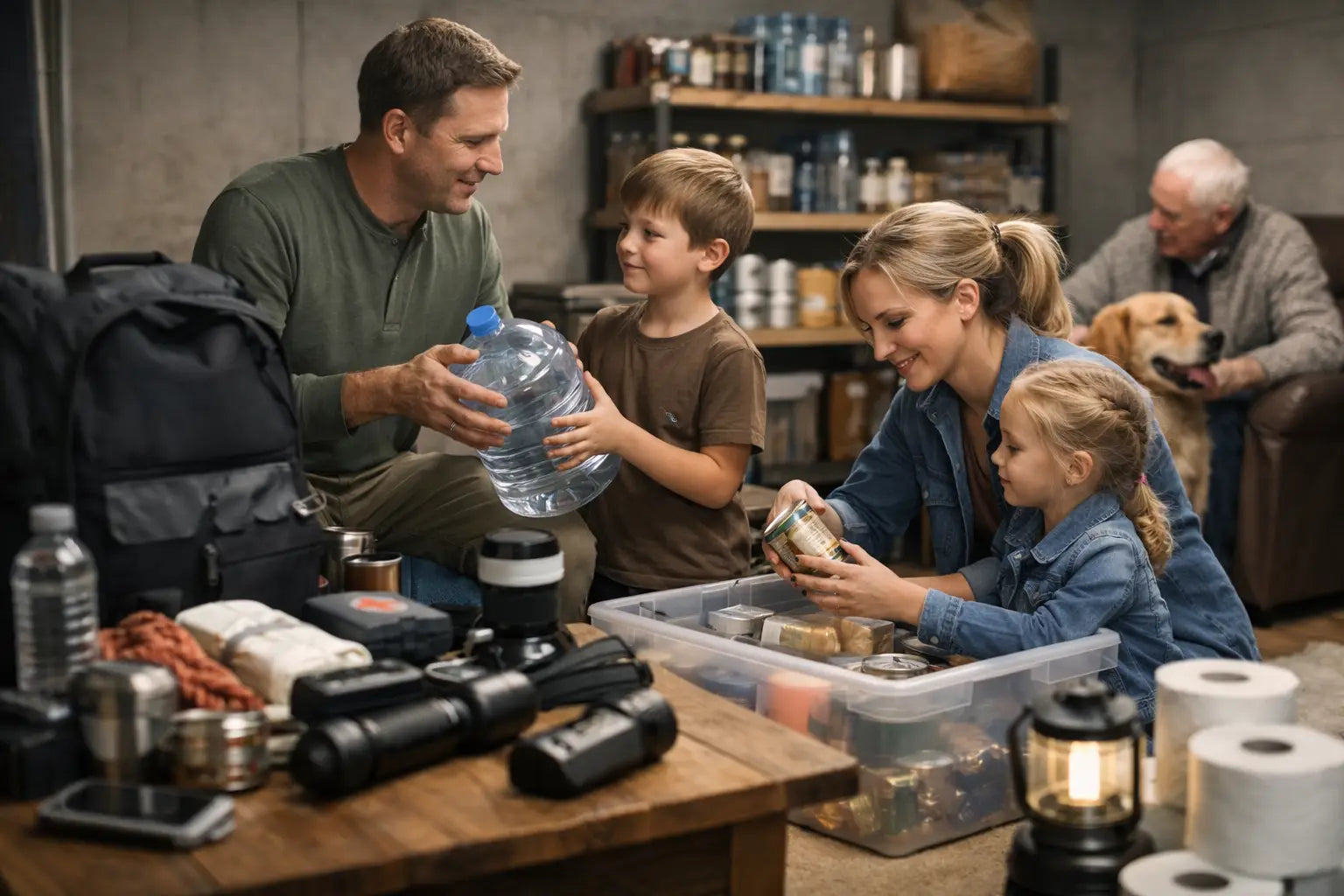
A five-day power outage changes the meaning of “prepared.” The refrigerator becomes a countdown clock, phones become harder to charge, stores may be closed, and a family dinner suddenly depends on what is already in the house. That is where sensible SHTF prep begins - not with a bunker or a dramatic scenario, but with the ordinary disruptions that put real pressure on real families.
The term can sound intense, and it is often used that way online. For a family household, it is more useful to think of it as emergency readiness: having enough water, food, light, warmth, medical supplies, and a workable plan to get through a problem without panic. You do not need to buy everything at once. You do need to start with the things your family would miss first.
Start SHTF Prep With Your Likely Emergency
A hurricane family in coastal Florida needs a different plan than a household facing California wildfire evacuation risk or a Midwest home that loses heat during an ice storm. Earthquakes can interrupt water and utilities with little warning. Tornadoes may leave only minutes to shelter. Supply shortages can develop more slowly but still leave shelves empty when you need a familiar medicine or a particular infant or pet supply.
Start by looking backward. What has already happened in your area? Maybe it was a three-day outage, a boil-water notice, a blocked road, or a week when groceries were difficult to find. Your best first preparedness project is the one that would have made that event easier.
Then think in timeframes. A short disruption calls for 72 hours of self-sufficiency. A serious storm, regional outage, or delayed evacuation return may call for two weeks. Longer-term food independence has value too, especially for rural households, gardeners, or families who want more control over their pantry, but it should not distract from the basics.
Cover the Four Needs That Matter First
People often begin by collecting gear. Gear has its place, but a practical plan starts with needs, not gadgets. For most families, water, food, power, and medical readiness are the first four categories to address.
Water: Store It Before You Need It
Water is the first problem in many emergencies. Municipal service may stop, pipes may be damaged, or a contamination notice may make tap water unusable. A reasonable target is at least one gallon per person per day for drinking and basic sanitation. Plan for a minimum of three days, then build toward two weeks as space and budget allow.
Stored water is the simplest answer. Use purpose-built containers in sizes your household can actually lift and rotate. A 55-gallon drum may make sense in a garage, but it will not help much if no one can safely move water from it. Smaller stackable containers are often easier for families to manage.
Water filtration adds a second layer. A good filter can help when stored supplies run low, but it is not a substitute for stored water. Filters have limits, and source water may contain contamination they are not designed to remove. Keep both on hand, along with a way to treat water if your local emergency guidance calls for it.
Food: Build a Pantry Your Family Will Eat
Emergency food does not need to mean meals your children refuse after one bite. Start with familiar, shelf-stable foods: canned proteins, soups, rice, pasta, peanut butter, oats, cooking oil, fruit, snacks, and the ingredients your family already uses. Rotate them through normal meals so nothing quietly expires in a closet.
Then add longer-lasting emergency meals and freeze-dried ingredients where they make sense. These can be especially useful for power outages, evacuation recovery, and homes with limited pantry space. The trade-off is cost and water use. A bucket of freeze-dried food is compact and has a long shelf life, but many meals need hot water and everyone should try them before an emergency.
Do not forget the people and animals with specific needs. Formula, baby food, diabetic-friendly snacks, allergy-safe foods, pet food, and extra treats belong in the plan. A family food supply that ignores medical diets or pets is not really a family food supply.
Power: Plan for Light, Communication, and Cold Food
A generator is useful for some households, but it is not the only power-outage solution and it comes with fuel, noise, maintenance, and carbon monoxide risks. Many families are better served by starting with flashlights, headlamps, rechargeable lanterns, power banks, batteries, and a battery power station sized for phones, lights, medical devices, or a small refrigerator.
Write down what truly needs power. A CPAP machine, refrigerated medication, a well pump, a sump pump, or a baby monitor changes the calculation. If you need to run larger loads or keep critical equipment operating for days, a portable power station, solar charging setup, generator, or a combination of those systems may be appropriate.
Keep lighting simple. Headlamps leave hands free for cooking, helping children, or finding a breaker box in the dark. Place a flashlight by each bed, and keep spare batteries together rather than scattered through drawers.
Medical: Prepare for the Problems You Can Predict
A first-aid kit is not a complete medical plan. It is a starting point. Add a supply of prescription medications when possible, copies of prescriptions, basic over-the-counter medicine, wound-care items, gloves, hygiene supplies, and a written list of allergies, conditions, and emergency contacts.
Take a realistic view of your skills. A high-quality trauma kit can be valuable, particularly in rural areas or households far from emergency services, but supplies work best when someone knows how to use them. Consider first-aid and CPR training as part of the household investment. During an emergency, calm competence is one of the most useful things you can bring to the room.
Make an Evacuation Plan Before You Pack a Bag
Some emergencies are safer to shelter through. Others require leaving early. Wildfire zones, hurricane evacuation areas, homes threatened by floodwater, and neighborhoods with an active safety hazard are not situations to solve with extra pantry shelves.
Each person in the household should have an evacuation bag with water, food, medications, clothing, basic hygiene supplies, chargers, copies of key documents, and a little cash. Keep sturdy shoes and weather-appropriate layers nearby. Add comfort items for younger children, because a familiar stuffed animal or card game can matter greatly during a long, uncertain night.
Your plan also needs a destination and a communication method. Choose an out-of-area contact who can relay messages if local cell networks are overloaded. Decide where you will meet if family members are separated. If you have pets, identify pet-friendly options well ahead of time and keep carriers, leashes, medications, and vaccination records accessible.
Organize Supplies So They Work Under Stress
Preparedness fails when the right item is somewhere in the house but nobody can find it. Store supplies by purpose and label them clearly. Water treatment, lights, batteries, and a radio belong together. Medical supplies should be known to every responsible adult. Food should be inventoried often enough that you know what is available without pulling everything onto the kitchen floor.
A simple household binder or printed folder is worth having. Include insurance information, medical details, utility shutoff instructions, local evacuation routes, copies of important documents, and the contact numbers you would want if your phone died. Digital copies are helpful, but paper does not need a password or a cell signal.
Review your plan twice a year. Change out clothing sizes in evacuation bags, rotate food and water, test power equipment, replace expired medications and batteries, and talk through the plan with the family. The goal is not a perfect system. It is a familiar one.
Build Readiness in Layers, Not in One Shopping Trip
A $200 budget can make a meaningful difference when it covers the gaps that matter most. Begin with water storage, a dependable light source, basic food, and medical essentials. Next, add a water filter, more pantry depth, backup charging, and evacuation supplies. Larger investments such as solar power, freeze-drying, or long-term food storage can come later if they fit your location, household needs, and goals.
SHTF Prepper Club approaches readiness this way because families deserve practical options, not pressure. The best equipment is the equipment you understand, can store safely, and will maintain over time.
Start with one shelf, one container, or one written plan this week. The relief of knowing your family can handle the next hard day is built in small, steady decisions.