
Table of Contents
- Why Starting Early Matters: Building Confidence, Not Fear
- Age-Appropriate Conversations: What to Say at Each Stage
- How to Explain Natural Disasters to a Child
- Creating a Family Emergency Plan Template
- Emergency Preparedness Activities for Kids
- Staying Calm and Managing Anxiety During Emergencies
- Maintaining Routines and Emotional Support After a Disaster
- Common Mistakes Parents Make When Discussing Emergencies
- Conclusion
Last Updated: August 10, 2026
Why Starting Early Matters: Building Confidence, Not Fear
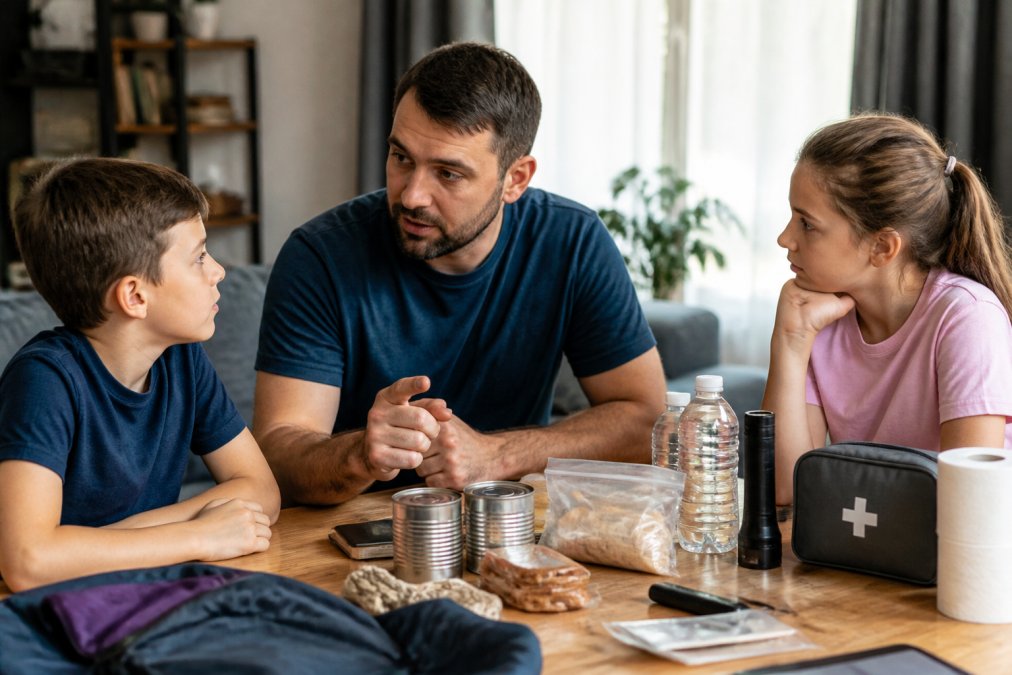
Talking to children about emergency preparedness doesn't have to mean scaring them. The goal is building confidence and competence, not anxiety. Research shows that children who have practiced emergency scenarios experience less panic during actual events because they know what to expect and what to do.
Parents often hesitate to discuss emergencies with their kids, worried they'll cause anxiety. The opposite is true. Kids who don't understand what's happening during a crisis tend to panic more. Kids who have been prepared stay calm because they know what to do.
Age-Appropriate Conversations: What to Say at Each Stage
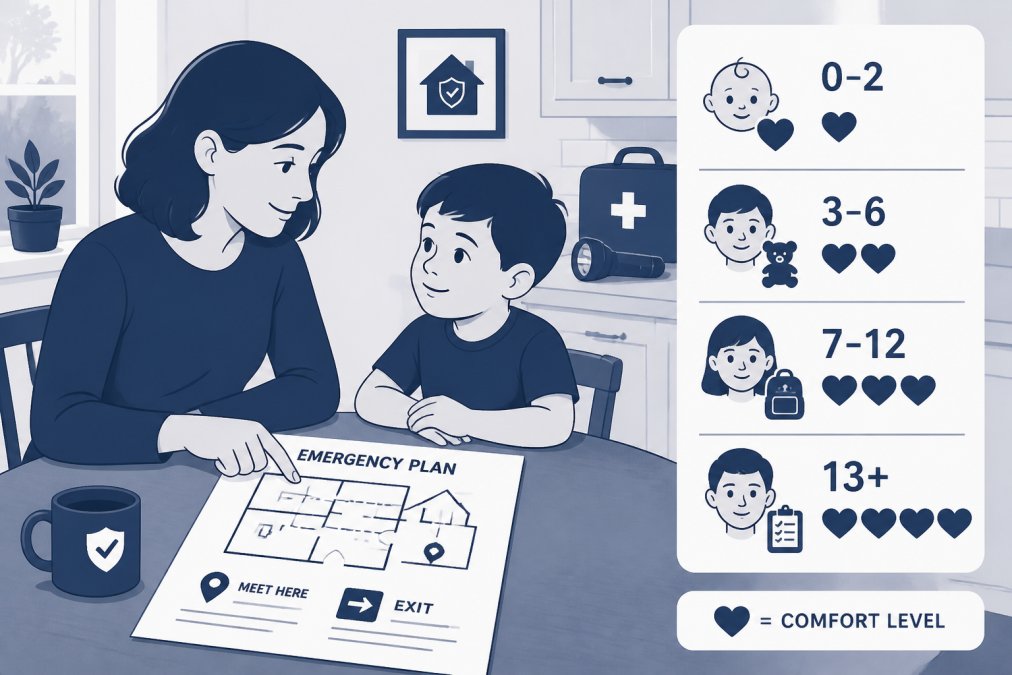
Different ages require different approaches. Understanding what each age group can grasp helps you have conversations that build confidence without overwhelming them.
Ages 4-7: Simple, Concrete Language
Young children think in concrete terms. They need simple, straightforward explanations without abstract concepts. Explain emergencies using familiar comparisons: a fire drill is like practicing a game; a tornado warning is like going to the basement when it's stormy.
Focus on the helpers: firefighters, police officers, neighbors, and family members who keep them safe. Let them know that grown-ups have plans to help them. Practice simple actions together: knowing how to get out of the house, where to meet outside, and what to do if they can't find you. Make it feel like a game or routine rather than something scary.
Ages 8-12: Building Understanding and Responsibility
Children this age can understand cause and effect and handle more detailed information. Explain different types of emergencies relevant to your area: if you live in a tornado zone, talk about tornadoes; if earthquakes are a concern, discuss those.
Give them real responsibilities in your family's emergency preparedness plan. Let them help build the survival kit, practice the evacuation route, and suggest items for an emergency kit. This builds ownership and competence. Teach them to recognize warning signs: dark storm clouds, earthquake shaking, smoke, or unusual sounds. Answer their questions honestly but reassuringly, showing them you've thought through scenarios and have a plan.
Ages 13+: Critical Thinking and Leadership
Teenagers can understand complex scenarios and take on leadership roles in family preparedness. Discuss real-world scenarios in detail: What would you do if a major storm knocked out power for a week? If you were separated during an emergency, how would you communicate?
Involve them in actual planning. Have them help research supplies, set up part of the emergency kit, and provide input on your family emergency plan. Teach them about digital preparedness: backing up important documents, accessing emergency information online, and using emergency alert systems. Discuss why you're preparing, connecting it to responsible adulthood rather than fear.
How to Explain Natural Disasters to a Child
Explaining natural disasters requires balancing honesty with reassurance. Your tone matters as much as your words. Start with what they already observe: storms, earthquakes, or power outages. Connect emergency preparedness to these familiar experiences.
Use age-appropriate language. Don't use terms like "catastrophic." Say some storms are stronger than others and families prepare. Show them pictures or videos of how communities recover, teaching resilience and hope alongside awareness. Answer their questions directly. If they ask "Could that happen to us?" the honest answer might be "It's possible, which is why we're learning about it and preparing."
Creating a Family Emergency Plan Template
A family emergency plan is the foundation of preparedness. It needs to be written down and practiced, with everyone in the household knowing the plan.
Step 1: Identify Your Family's Specific Risks
Research your region's hazards through your local emergency management office. If you live in an area prone to hurricanes, that's your primary concern. If earthquakes are common, focus there. Consider your household's specific vulnerabilities: elderly family members with mobility issues, young children needing special care, pets, or reliance on electricity for medical equipment. Write down your specific risks to clarify your thinking.
Step 2: Establish Emergency Contacts and Meeting Places
Identify a person outside your immediate area who can serve as a communication hub. If your family gets separated, you might not be able to call each other, but you might reach someone in another state. Give every family member their phone number written down.
Choose a meeting place outside your home within walking distance if possible. Identify a secondary meeting place in case the first isn't accessible. Write down your emergency contacts and keep copies in multiple places: in your emergency kit, car, wallet, and somewhere your children can access.
Step 3: Document Evacuation Routes and Safe Zones
Walk through your home and identify evacuation routes. Which exits are fastest? Which are safest? Practice these routes with your family. For each room where family members spend significant time, identify the nearest exit and safest route outside.
Identify safe zones within your home for different emergencies: under sturdy tables or against interior walls for earthquakes; basements or interior rooms away from windows for severe storms. Create a simple written map showing evacuation routes and safe zones. Document where you'll go if you need to evacuate your home: a family member outside the area, a hotel, or a public shelter.
Emergency Preparedness Activities for Kids
Emergency preparedness activities should feel engaging and practical. When children actively participate in preparing, they develop competence and confidence.
Practice Drills and Scenarios
Regular practice transforms emergency procedures into automatic responses. Run fire drills quarterly, having everyone exit using different routes and timing how long it takes. Practice earthquake drills if applicable: everyone drops, covers, and holds on several times a year. Practice tornado shelter drills if needed.
Create realistic scenarios and talk through them: "What would you do if you were at school and a fire alarm went off?" Let children think through their responses. Make drills regular and matter-of-fact so emergency procedures feel normal and routine.
Build a Family Survival Kit Together
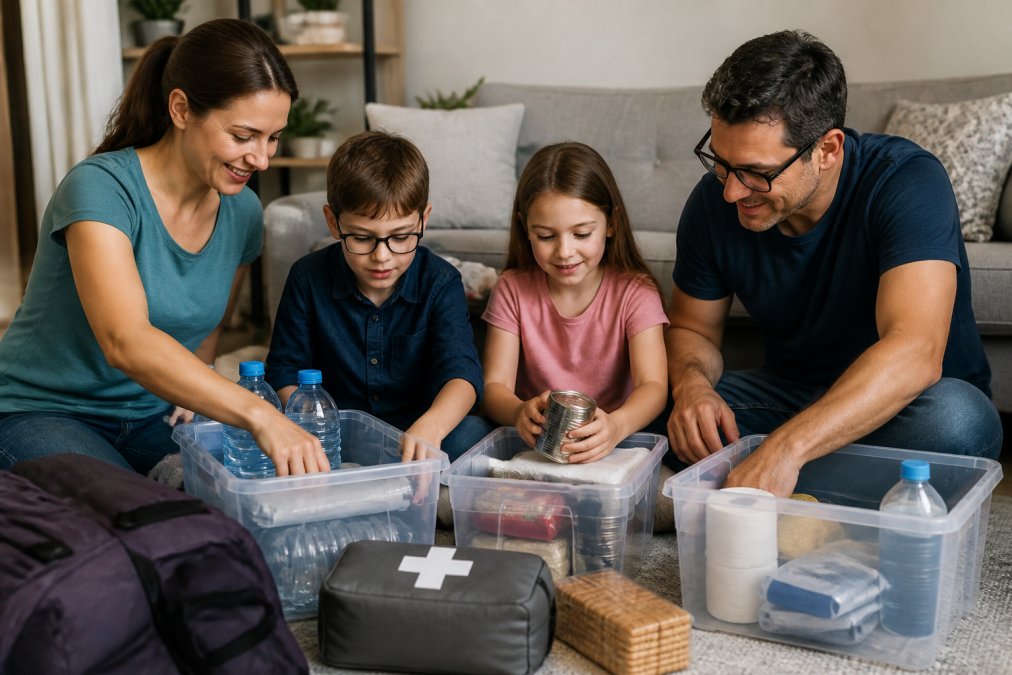
Assembling an emergency kit together teaches children what supplies matter and why. Start with basics: water, food, flashlights, batteries, first aid supplies, and important documents. Explain why each item matters. Let children choose some items and help organize supplies in clear containers. Rotate perishable items regularly as a family routine.
SHTF Prepper Club offers pre-assembled emergency kits that take the guesswork out of what to include, but whether you assemble your own or use a curated kit, involve your children in understanding what's in it and why.
Create a Digital Preparedness Plan
Teach children how to use emergency alert systems and sign up for local alerts. Establish a family communication plan that includes digital backup if cell networks are down. Create a digital document with important information: insurance policies, medical records, bank account numbers, and contact information, stored in a secure cloud location. Discuss what information is safe to share online and what isn't.
Staying Calm and Managing Anxiety During Emergencies
Your calm directly influences your children's calm. Before an emergency happens, practice staying calm yourself and develop breathing techniques. During an emergency, speak in a normal tone of voice using clear, direct language. Give children tasks if appropriate to help them focus on something besides fear.
Acknowledge their feelings without amplifying them: "I know you're scared. I'm here with you and we're safe" validates their experience while providing reassurance. After the emergency passes, talk about what happened and what you did, helping children recognize that your family handled it.
Maintaining Routines and Emotional Support After a Disaster
Recovery isn't just about rebuilding structures, it's about rebuilding normalcy and emotional stability. Restore normal routines as quickly as possible: bedtime, meals, school, and activities provide structure that tells children the world is still functioning.
Spend extra time with your children during recovery. Limit exposure to disaster news and images. Involve children in recovery activities appropriate to their age: cleaning up, organizing supplies, or helping neighbors gives them agency. Maintain connections with extended family and community. Watch for signs of prolonged distress: sleep problems, behavioral changes, withdrawal, or difficulty concentrating.
Common Mistakes Parents Make When Discussing Emergencies
Avoiding the topic entirely leaves children unprepared and anxious about the unknown. Using adult language and concepts confuses young children. Making it all about fear teaches anxiety rather than preparedness. Assuming one conversation is enough is unrealistic; children need repeated exposure at increasing complexity levels.
Not practicing what you preach undermines your message. Overwhelming them with too much information causes shutdown. Neglecting to reassure them leaves them feeling anxious. Ignoring their specific anxieties misses the point. Address their actual concerns, not just generic ones.
Talking to children about emergency preparedness transforms vague anxiety into specific knowledge and capability. Children who understand what to do feel safer, not more scared.
Start conversations early, keep them age-appropriate, and practice regularly. Build a family emergency plan together. Involve your children in preparing supplies and practicing drills. Answer their questions honestly and reassure them consistently.
At SHTF Prepper Club, we understand that family preparedness isn't about living in fear, it's about living with confidence. Our vetted emergency kits and comprehensive guides help you build a practical plan without overwhelming complexity. Start with your family's specific risks, involve your children in preparing, and practice until it becomes routine. When an emergency happens, your family will know what to do.
Frequently Asked Questions
At what age should you start talking to kids about emergency preparedness?
Start age-appropriate conversations around age 4-5 with simple language about safe places and trusted adults. By ages 8-12, children can understand more complex emergency plans and help with preparedness activities. Teenagers (13+) can learn about hazard awareness and take leadership roles in family emergency drills. The key is matching information to their developmental stage, avoid overwhelming younger children while giving older kids meaningful responsibility.
How do you keep kids calm during an emergency?
Stay calm yourself, children mirror your emotional responses. Use a reassuring tone and stick to facts without unnecessary details. Practice deep breathing exercises together beforehand so they're familiar during stress. Maintain physical closeness and provide clear instructions on what to do next. Remind them that adults have a plan to keep everyone safe. After the emergency, maintain normal routines as much as possible and allow time for questions and emotional processing.
What should a family emergency plan template include for kids?
A family emergency plan should identify specific hazards in your area, list emergency contacts with phone numbers, designate an out-of-state contact for when local lines are busy, mark evacuation routes and meeting places on a map, explain where to find important documents, and assign age-appropriate roles (like helping younger siblings or locating the emergency kit). Make it visual with pictures for younger children and practice it together at least twice yearly through emergency drills and scenarios.
How can parents explain natural disasters to children without causing fear?
Focus on preparation and resilience rather than catastrophe. Use simple, honest language: 'Storms happen, and here's how we prepare.' Show them the emergency supplies and explain each item's purpose, this builds confidence. Emphasize that adults have plans and that their role is to follow instructions. Read age-appropriate books about disasters and preparedness together. Avoid graphic details or worst-case scenarios. Frame emergencies as challenges families solve together, not threats to fear.
This article was written using GrandRanker