
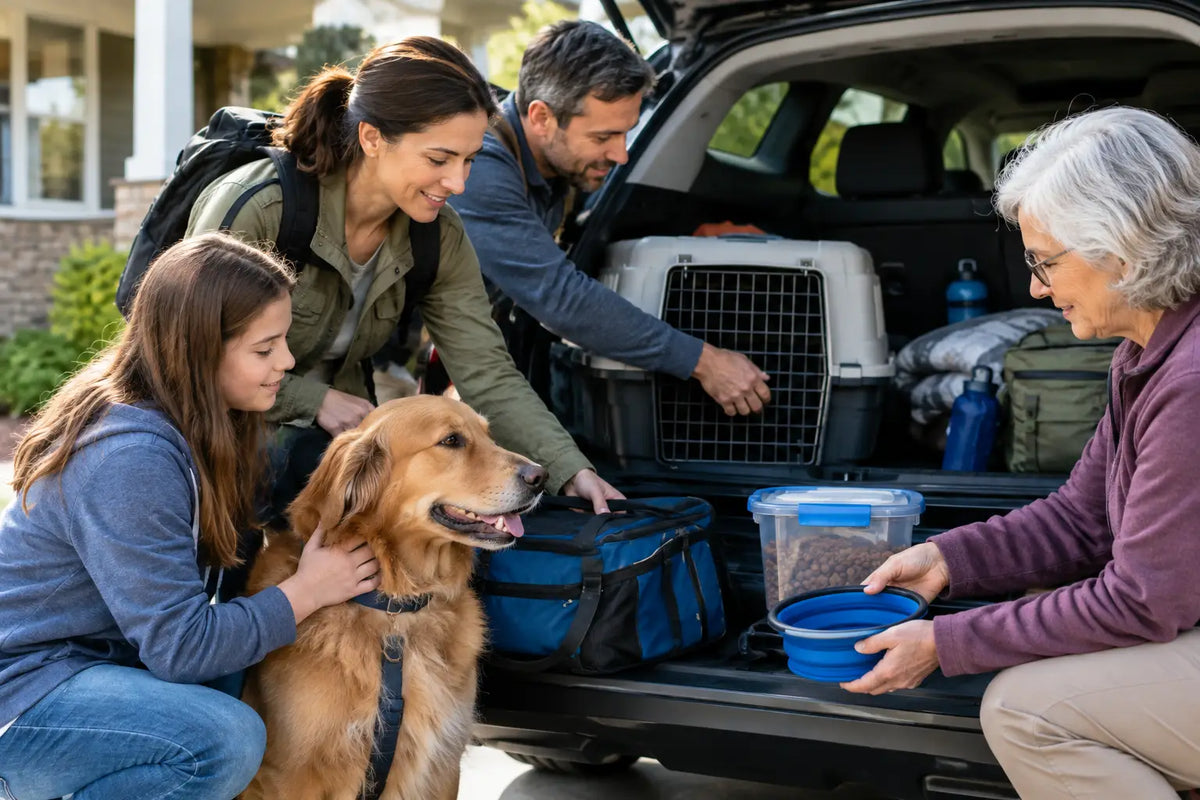
The decision to leave is hard enough. Searching for a carrier, prescription bottle, or leash while smoke is moving closer or floodwater is rising makes it much harder. Learning how to plan pet evacuation means making those decisions now, while the house is calm and your whole family can practice the plan.
Pets are family, but they need different things in an emergency. A dog may jump into the car with little encouragement. A cat may disappear under a bed. A rabbit, bird, reptile, or senior pet may need temperature control, specialized food, or a secure travel enclosure. A workable plan accounts for the animal you actually have, not a generic picture of pet preparedness.
Start with the rule: leave early with your pets
Do not assume you can come back for them. If conditions are unsafe for your family, they are unsafe for pets left at home. Fire, flooding, extreme heat, extended outages, and evacuation orders can block roads quickly. Emergency responders may not be able to rescue animals, and many shelters cannot accept pets without advance arrangements.
Your plan should have two triggers. The first is an official evacuation order. The second is your own early-departure trigger, such as a wildfire moving into a nearby zone, a hurricane forecast strengthening, or a medical device at home losing power during extreme temperatures. Leaving before the rush gives you more choices for roads, fuel, lodging, and pet-friendly shelter.
Build a pet evacuation bag that stays ready
Keep your pet supplies together near your family emergency kits, ideally close to the exit or vehicle-loading area. A backpack, sturdy tote, or labeled bin works well. The goal is not to create a perfect kit. The goal is to avoid forgetting essentials when you have minutes instead of hours.
A basic pet evacuation bag should include:
- At least three to seven days of food, plus a manual can opener if needed
- A supply of drinking water and a collapsible bowl
- Leashes, harnesses, waste bags, a carrier, and a backup restraint
- Current medications, copies of prescriptions, and basic first-aid supplies
- Vaccination records, a recent photo, and veterinary contact information
- A familiar blanket, small toy, towel, and cleaning supplies
Water deserves the same attention. Dogs and cats can become dehydrated quickly in heat, while anxious pets may drink more or less than usual. Store enough for your family first, then add pet needs to your overall water plan. A simple starting point is to plan for roughly one ounce of water per pound of body weight per day for dogs, with adjustments for heat, activity, and health needs. Cats often need less, but should still have clean water available.
Make identification do more than one job
A collar tag is helpful, but it is not enough by itself. Collars can slip off, tags can become unreadable, and frightened animals may be handled by someone who has no way to contact you. A current microchip gives your pet a permanent backup form of identification.
Confirm that the contact information connected to the microchip is current. Include your cell phone number, an alternate contact outside your immediate area, and your veterinarian if appropriate. Take clear photos of your pet from several angles, including any unusual markings. Keep one photo of you with your pet, too. It can help establish ownership if you are separated.
Write down your pet's normal behavior and medical needs. Note whether they are fearful of strangers, likely to bite when stressed, require daily medication, or react badly to loud noises. This information can help a temporary caregiver, shelter worker, or veterinary team provide safer care.
Choose destinations before an emergency begins
The biggest gap in many pet evacuation plans is the destination. Not every hotel, public shelter, relative, or rental property allows animals. Some allow dogs but not cats. Others have size limits, breed restrictions, or a requirement for vaccine records.
Choose at least three possibilities: a pet-friendly hotel outside your likely evacuation area, a friend or family member who can host you, and an animal boarding facility or veterinarian in another town. Call ahead before disaster season to verify their policies. Ask whether they accept multiple pets, whether they require reservations, and what records they need.
For a local evacuation, identify shelters that accept pets and learn how they operate. Some communities shelter people and animals at the same site, while others house pets in a nearby facility. You may be responsible for feeding, walking, and cleaning up after your animal. Bring your own carrier, leash, food, and supplies rather than assuming they will be available.
Practice getting out, especially with cats
A plan that only works with a cooperative pet is not a complete plan. Practice loading every animal into the vehicle and leaving the driveway. It may feel unnecessary, but it exposes small problems before they become a crisis.
Cats deserve special preparation because they often hide when they sense stress. Keep their carrier accessible, not buried in a garage or used as a laundry basket. Encourage positive carrier habits by leaving it open at home with bedding or treats inside. When evacuation may be possible, bring cats into one quiet room early, along with their carrier and supplies. Do not wait until alarms, sirens, or unfamiliar activity send them into hiding.
Dogs should be accustomed to a secure harness and leash. A frightened dog can bolt from an open car door or unfamiliar parking area, even if they are normally well trained. Use a leash before opening the vehicle door, and never rely on voice commands alone during a chaotic evacuation.
For birds, reptiles, and small mammals, use species-appropriate carriers that prevent escape and protect them from drafts or temperature swings. Reptiles may need safe temporary heat solutions, while birds can be highly sensitive to smoke and fumes. If you have animals with specialized care needs, speak with an exotic-animal veterinarian well before an emergency.
Plan the car, route, and overnight routine
Your vehicle is part of your pet evacuation system. Keep a leash and carrier within reach, not under a pile of luggage. Protect seats with a washable cover or old sheets, and bring paper towels, disinfecting wipes, and spare trash bags. These are not glamorous supplies, but they make an overnight stop far more manageable.
Map more than one route out of your area. A road that is safe during a routine trip may close because of flooding, downed trees, wildfire activity, or traffic. Keep your gas tank above half during severe-weather season, because long lines and fuel shortages are common when many households leave at once.
At every stop, keep pets restrained. Do not leave them in a parked car, particularly during warm weather. Even mild outdoor temperatures can become dangerous inside a vehicle. Offer water, give dogs controlled bathroom breaks, and keep cats safely inside their carriers unless you are in a fully secure indoor space.
Give every family member a role
Parents should not carry the full plan alone. Assign simple jobs that match each person's age and ability. One person can grab the pet evacuation bag, another can load carriers, and another can confirm doors and gates are closed. If you have adult children, neighbors, or nearby grandparents who may help, make sure they know where supplies are stored and how to handle your pets.
Post your veterinarian's number, microchip information, and destination options where the family can find them. Then review the plan twice a year, perhaps when you change smoke-detector batteries or prepare for hurricane and winter-storm seasons. Replace expired food, update photos, and adjust the plan as pets age or their health changes.
Preparedness does not require fear. It gives you a quieter, clearer next step when the weather turns or an emergency alert arrives. Pack the carrier, update the tag, and make one phone call to a pet-friendly destination this week. Your pet may never know you planned ahead, and that is exactly the point.