
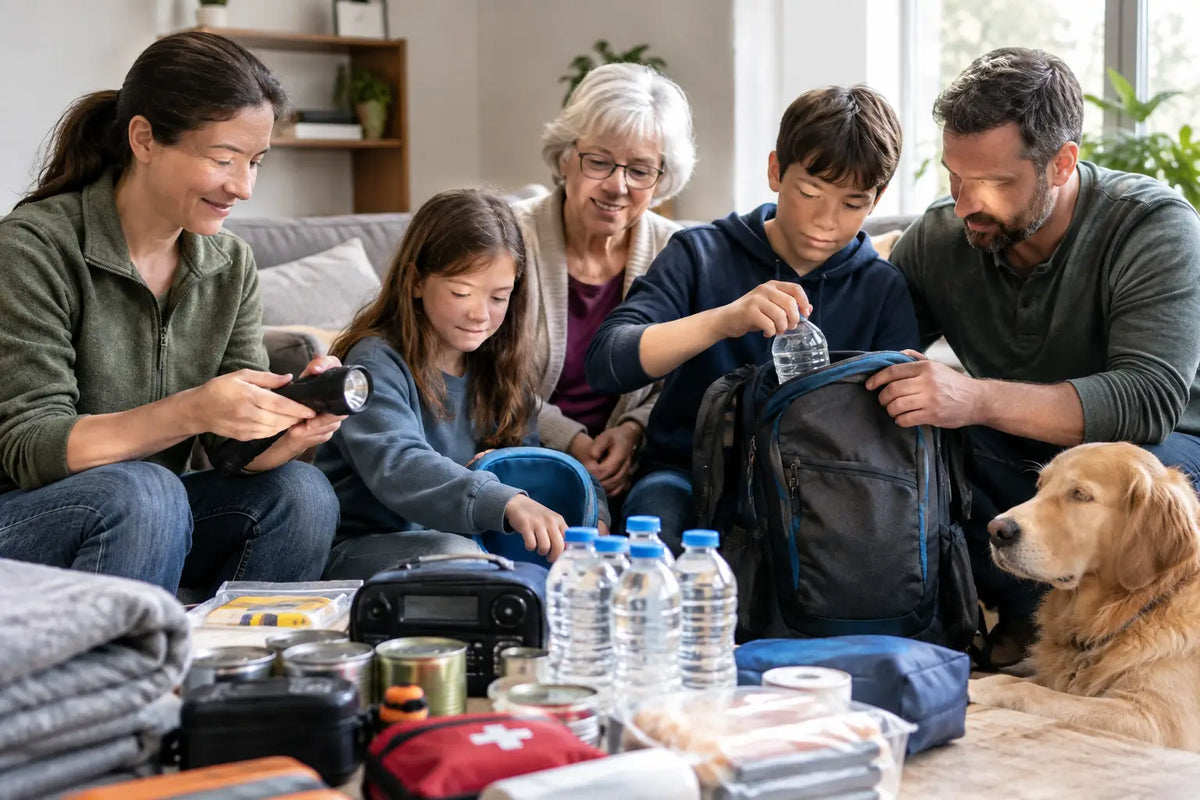
A storm takes down the power at 8 p.m. The refrigerator is warming, the phones are at 42 percent, and your child asks whether school will be open tomorrow. That is when a family plan stops being an abstract idea. To survive disaster, you do not need a bunker or a garage full of mystery gear. You need enough of the right basics, stored where you can use them, plus a clear plan for the people and animals who depend on you.
Most emergencies are not one dramatic event. They are a chain of ordinary problems: no safe water, no way to charge a phone, a pharmacy closed, roads blocked, a cold house, or a grocery store with empty shelves. Preparing for those problems is practical household maintenance. Start with the needs that become urgent first, then build from there.
Survive Disaster by Covering the First 72 Hours
The first three days are the period when families are most likely to be on their own. First responders may be busy with life-threatening calls, stores may be closed, and travel may be unsafe. Your goal is not to predict every disaster. It is to keep your household safe, hydrated, fed, warm or cool enough, and able to communicate until conditions improve.
Water comes first. Store at least one gallon per person per day for drinking and basic sanitation, with a three-day supply as a practical minimum. A family of four needs 12 gallons just for that first window. If storage space allows, work toward two weeks. Keep some water in easy-to-carry containers, not only in one large barrel, and include extra for pets, formula-fed infants, and anyone who needs more water for medical reasons.
Food should be familiar, easy to prepare, and realistic for your household. Choose shelf-stable meals your family will actually eat, then add a manual can opener and a simple way to heat food if the power is out. Emergency food storage can be as straightforward as extra pantry meals at first. Longer-lasting freeze-dried food, bulk staples, and a home freeze dryer can make sense later, especially for larger households or families building long-term food independence. The right level depends on your budget, storage space, and how often your area experiences disruptions.
Power is not a luxury during an outage. It supports lights, weather alerts, phone calls, medical devices, refrigeration, and a sense of calm after dark. Start with flashlights or headlamps, spare batteries, power banks, and a battery-powered radio. Then consider a portable power station sized for the devices you truly need. A small unit may keep phones and lights running. A larger system can support a refrigerator, CPAP machine, or other essential equipment, but it requires more planning and a realistic charging strategy.
A useful 72-hour supply area should include:
- Stored water and a way to treat additional water
- Food that needs little or no cooking
- Light, phone charging, batteries, and a radio
- First aid supplies, prescriptions, and hygiene items
- Blankets, seasonal clothing, and a safe cooking plan
- Pet food, leashes, carriers, and medications
Build a Plan for Staying or Leaving
Many families assume disaster always means evacuation. Often, staying home is safer. During a winter storm, extended outage, or temporary water disruption, a well-supplied home is usually the best place to be. But hurricanes, wildfires, flooding, chemical releases, and certain earthquake situations can require a fast departure.
Make the decision before the pressure is on. Know the local alerts that would cause you to leave, identify two routes out of your neighborhood, and choose a meeting place in case family members are separated. One location can be close to home, such as a neighbor's porch, and another can be outside your immediate area in case the neighborhood itself is inaccessible.
Each vehicle should have basic supplies, but do not rely on the vehicle alone. Keep an evacuation bag for every family member near an exit. It should hold water, ready-to-eat food, medications, copies of key documents, a phone charger, weather-appropriate clothing, hygiene supplies, cash in small bills, and comfort items for children. For a baby, that may mean formula, diapers, and a familiar blanket. For an older parent, it may mean mobility aids, hearing-aid batteries, and a printed medication list.
Do not forget the pets. A pet plan includes carriers, food, water, vaccination records, medications, and a destination that accepts animals. In a real evacuation, the family plan is not complete if it leaves a pet behind.
Water, Heat, and Medical Needs Need Their Own Plan
Some preparedness categories overlap, but a few deserve separate thought because the consequences of getting them wrong are immediate.
Water storage is only half the answer. If your municipal supply is interrupted or contaminated, you need a way to make new water safer. Keep a quality water filter or purification treatment on hand, and learn how it works before an emergency. Filters, purification drops, boiling, and stored water each have different strengths. A filter can be convenient for ongoing use, while boiling requires fuel and time. Having more than one option gives your family flexibility.
Heating and cooling require caution. Never use grills, camp stoves, or fuel-burning heaters indoors unless the equipment is specifically designed and rated for indoor use. Carbon monoxide can become a deadly problem when families are trying to stay warm. Keep carbon monoxide detectors with fresh batteries, concentrate the family in one warm room when appropriate, use layers and blankets, and follow local guidance during severe cold or heat.
Medical readiness means more than a box of bandages. Keep enough prescription medication to avoid an unnecessary gap when possible, and ask your pharmacist or physician how to handle refills before severe weather. Build a first aid kit around the people in your home: children's fever medicine, allergy treatment, wound care, glucose supplies, spare glasses, or other items your family uses. If someone depends on powered medical equipment, plan the backup power requirement now, not after an outage begins.
Practice the Small Things Before They Matter
Preparedness works better when it becomes routine. Twice a year, check water dates, rotate food, test power banks, replace batteries, and update documents. Use a weekend storm drill as a low-stress test: turn off the Wi-Fi for a few hours, cook a meal with your backup method, and see whether everyone knows where the flashlights are.
Talk through communication as well. Cell service may be overloaded, and family members may not all be together. Choose an out-of-area contact who can serve as a check-in point, since a long-distance call or text may go through when local networks are strained. Print important phone numbers. A phone is helpful, but it is not a plan by itself.
This is also where families find the gaps that matter. Maybe the toddler will not eat the emergency meals. Maybe the garage water supply is impossible for a grandparent to lift. Maybe your power station cannot run the refrigerator as long as expected. Those are not failures. They are useful discoveries made at a convenient time.
Start Small, Then Make Readiness a Household Habit
A sensible first purchase may be a few cases of water, extra pantry food, a reliable flashlight, and a basic first aid kit. That is enough to improve your position this month. Over time, add water filtration, better food storage, backup power, shelter and warmth supplies, and tools that fit the risks where you live.
There is no single shopping list that fits every American household. A Florida family may prioritize hurricane evacuation and water storage. A California household may need wildfire bags and air-quality supplies. A Midwest family may focus on winter warmth and tornado shelter. The common thread is simple: prepare for the disruptions you are most likely to face, then add depth as money and space allow.
The best time to begin is not when your family can afford a perfectly stocked preparedness room. It is the next ordinary afternoon, when you can put a few practical supplies in place and know that the next hard night will feel a little less uncertain.