
Table of Contents
- Why Off Grid Medical Planning Is Different
- Essential Medical Supplies for Off Grid Survival: The Core List
- Building an Off-Grid First Aid Kit That Fits Your Household
- Your Survival Medical Kit Checklist: Quantities That Scale
- Emergency Medications for a Survival Kit
- Long-Term Medical Supply Storage and Rotation
- Power-Independent Tools, Sanitation, and Training
- Conclusion: Build, Store, and Practice Before You Need It
- Frequently Asked Questions
Last Updated: October 8, 2026
Why Off Grid Medical Planning Is Different
Off grid medical planning assumes no ambulance is coming soon. In remote settings, help can be hours or days away, so your supplies must cover the gap between injury and evacuation.
That gap changes every decision. A cut that would get three stitches in town becomes a wound-management problem you handle alone for days.
Delayed Evacuation and the Golden Hour
The "golden hour" holds that trauma outcomes improve when definitive care begins within roughly 60 minutes. Off grid, that window often closes before you reach a road.
The practical response is to treat your kit as the first hospital. It also means planning for prolonged isolation. CDC guidance on emergency preparedness and response recommends households plan for being self-sufficient for at least several days after a disaster.
Essential Medical Supplies for Off Grid Survival: The Core List
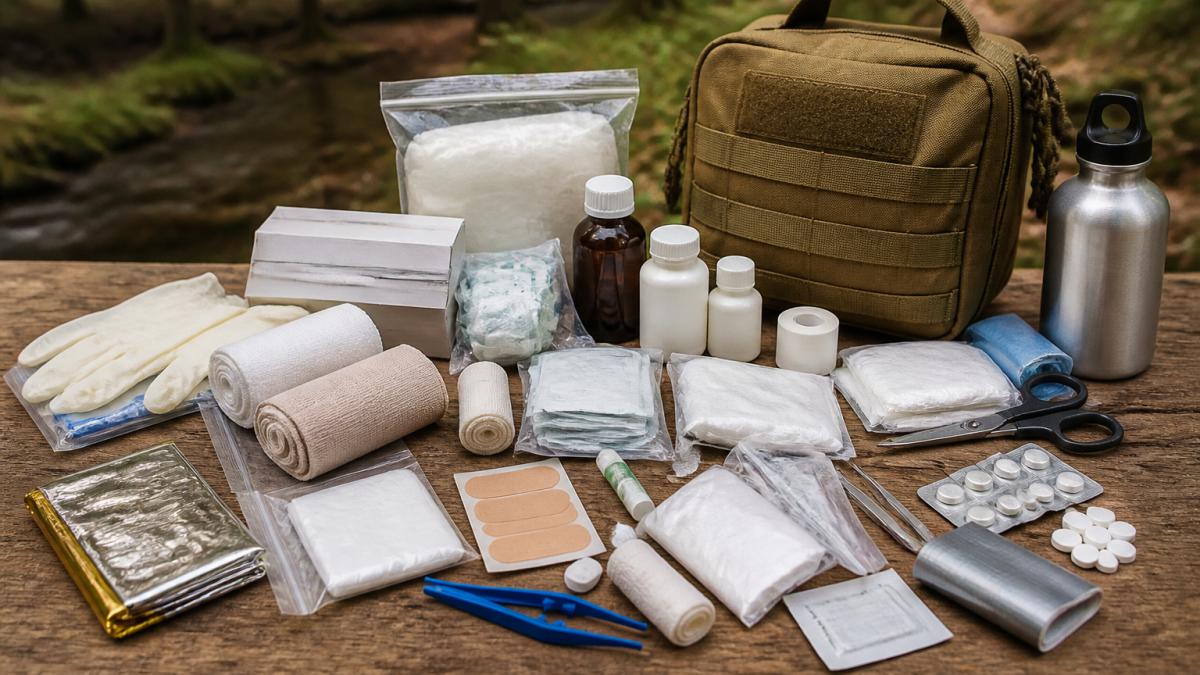
The essential medical supplies for off grid survival fall into five categories: wound care, bleeding control, protection, tools, and comfort items. Build each deliberately rather than buying one generic box.
Wound Care and Bleeding Control
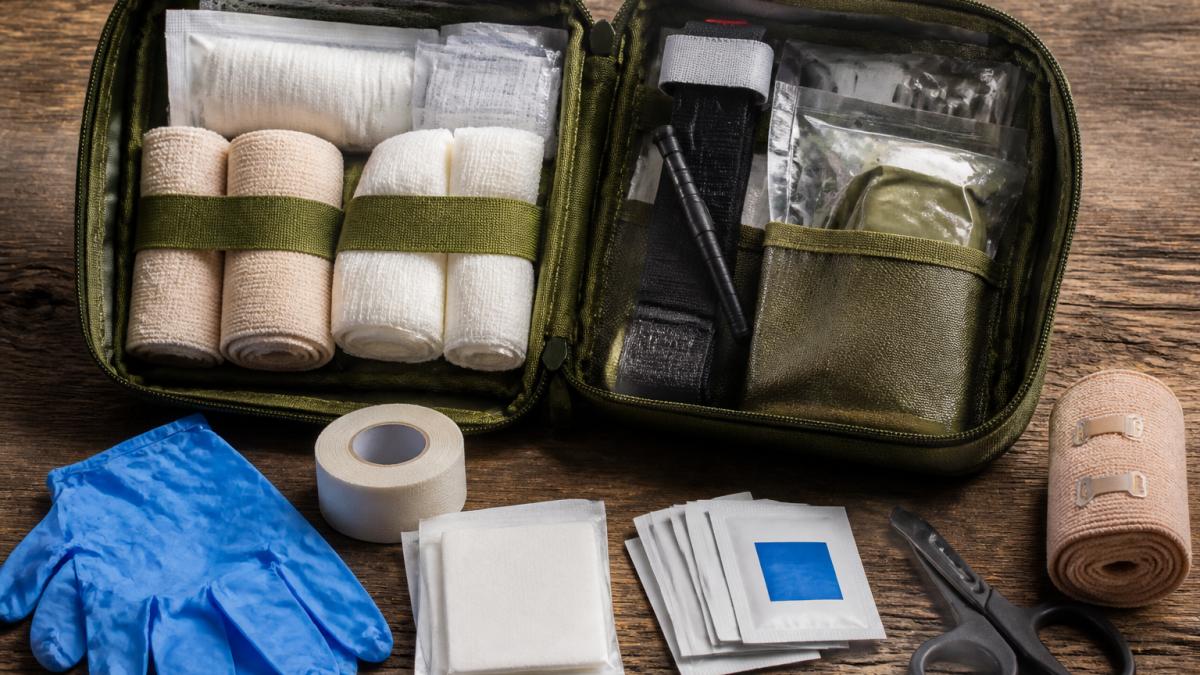
Wound care is where most kits fall short. You need enough sterile gauze, dressings, and bandages to change a dressing daily for a week, not once.
- Sterile gauze pads in several sizes for cleaning and covering
- Rolled gauze and conforming bandages to hold dressings in place
- Medical tape and zinc oxide tape for securing and for blister care
For bleeding control, carry a commercial tourniquet and pressure dressing. Improvised options work in a pinch, but purpose-built gear is faster and more reliable.
Protection, Tools, and Comfort Items
Protection and comfort items are what let you keep working safely.
- Non-latex medical gloves, several pairs, to protect both you and the patient
- A CPR face shield for rescue breathing
- Scissors, a lighter, and flint and steel for cutting and sterilizing
Building an Off-Grid First Aid Kit That Fits Your Household
An off-grid first aid kit should match your household, not a generic checklist.
Then organize by module: labeled pouches for wound care, medications, tools, and trauma let you grab what you need without emptying the whole bag.
Finally, scale to duration. A weekend kit and a six-month kit are different projects, so decide your planning horizon and multiply accordingly.
Your Survival Medical Kit Checklist: Quantities That Scale
Most checklists tell you what to pack, not how much or how to recalculate when your household changes. Off grid, quantity is the whole game: a weekend kit is not a winter kit.
The method is simple: estimate your realistic isolation window, multiply by the number of people, then add a buffer. Remote households commonly stock for double the expected period, because the failure mode is running out on day nine when the road is still washed out.
Step 1: Set Your Duration
Pick a planning horizon based on your situation, not a generic number:
- Weekend or short trip: 3 days of supplies, plus a trauma module.
- Seasonal cabin or remote work rotation: 30 days.
- Full-time off-grid homestead: 90 days minimum, with a rotation schedule.
Step 2: Multiply by People
Count everyone on site, including guests and children. Children need smaller doses but more dressing changes and adhesive bandages; older adults may need the same wound-care volume plus a larger medication reserve.
Step 3: Use a Quantity Table
The table below is a starting point for a single adult. Multiply the per-person column by your household size, then apply your duration multiplier.
| Supply | Per Person, 1 Week | Per Person, 1 Month | Per Person, 3 Months | Notes |
|---|---|---|---|---|
| Sterile gauze pads (4x4) | 10-15 | 40-60 | 120-180 | Wound care drives this number |
| Rolled gauze | 2-3 rolls | 8-12 rolls | 24-36 rolls | Secures dressings |
| Medical tape | 1 roll | 3-4 rolls | 10-12 rolls | Adhesive dries out; buy extra |
| Non-latex gloves | 4-6 pairs | 20-30 pairs | 60-90 pairs | Replace after every patient contact |
| Antiseptic wipes | 10 | 40 | 120 | Single-use |
| Adhesive bandages | 20 | 80 | 240 | Assorted sizes |
| Ibuprofen (200 mg) | 1 bottle | 2-3 bottles | 6-8 bottles | Check expiration |
| Acetaminophen (500 mg) | 1 bottle | 2 bottles | 4-6 bottles | Alternate with ibuprofen |
| Oral rehydration salts | 4 packets | 16 packets | 48 packets | Critical for GI illness |
| Trauma tourniquet | 1 | 1 | 2 | One per kit module |
| Hemostatic dressing | 1 | 2 | 4 | Single-use |
| Trauma shears | 1 | 1 | 2 | One per module |
| Thermometer | 1 | 1 | 1 | Non-contact or digital |
Step 4: Adjust for Your Real Risks
Adjust upward for:
- Outdoor work or livestock handling: more wound care, more gloves, more tape.
- Young children: more adhesive bandages, child-dose medications, and fever management.
- Chronic conditions: prescription continuity dominates the plan; see the medication section.
Treat every number as a floor, not a ceiling, and recalculate once a year as your family, health, and location change.
Emergency Medications for a Survival Kit
Emergency medications for a survival kit cover everyday relief and prescription continuity. Most kits handle the first and forget the second.
Over-the-counter options to include:
- Ibuprofen for pain and inflammation
- Acetaminophen as an alternative pain reliever
- Antihistamines for allergic reactions
Prescription medications deserve equal attention. If anyone takes daily medication, work with their prescriber to keep a rotating supply, stored cool and dry and rotated before expiry.
Long-Term Medical Supply Storage and Rotation
Off-grid storage is harsher than a bathroom cabinet. Temperature swings, humidity, dust, and pests attack at once, and the failure is silent: gauze stays white while its sterility expires, tape looks fine while its adhesive dries, and a medication bottle keeps its label long after the drug degrades.
Storage and rotation keep a kit usable. Without them, you are storing the appearance of supplies, not supplies.
What Actually Degrades, and Why
Different supplies fail for different reasons; knowing the mechanism tells you what to inspect:
- Sterile gauze and dressings: the sterile barrier fails when packaging is compromised by moisture, abrasion, or heat. Once the seal is broken or the package is damp, treat the item as non-sterile.
- Medical tape and adhesive bandages: the adhesive oxidizes and dries. Heat accelerates this. Tape that no longer sticks is a wound-care failure waiting to happen.
- Medications: heat, moisture, and light degrade active ingredients. Tablets may crumble, capsules may stick together, and liquids may separate. A medication that looks fine can still be less potent than its label claims.
Storage Conditions That Actually Work
Aim for a stable environment, not a perfect one:
- Temperature: keep supplies in the coolest stable space you have. Avoid attics, vehicles, and uninsulated sheds.
- Moisture: use a sealed plastic bin with a gasketed lid. Add a desiccant pack and replace it on your rotation schedule.
- Light: store in opaque bins or cabinets. UV is the enemy of gloves, tape, and packaging.
A Rotation System You Will Actually Follow
Rotation fails when it depends on memory. Build it into the calendar instead:
- Label every bin with the date it was sealed and the next inspection date.
- Inspect every six months. Open the kit, check expiration dates, and pull anything expiring within the next six months.
- Use before you lose. Move near-expiry supplies into your everyday first aid kit or use them for training. Nothing is wasted if it is used before it expires.
- Replace what you used. Restock immediately, not eventually.
- Verify the powered items. Test batteries, headlamps, and any electronic thermometer.
- Check the seals. Squeeze sterile packaging gently. If it hisses or feels soft, the seal is compromised.
Inspection Criteria: What to Pull
When you open the kit, pull anything that shows these signs:
- Sterile packaging that is torn, damp, or puffy
- Tape that has lost its tack or is discolored
- Gloves that are brittle, sticky, or discolored
Off-Grid-Specific Considerations
Remote storage adds problems a suburban cabinet never sees:
- Rodents and insects are constant pressure. Sealed, hard-sided bins are not optional.
- Temperature swings between day and night accelerate adhesive and medication degradation. Insulate the storage area if you can.
- No pharmacy run means you cannot replace a failed item quickly. Overstock the items that degrade fastest: tape, gloves, and adhesive bandages.
A kit is only as good as its last inspection. Put the date on the calendar, and treat rotation as part of the kit, not an afterthought.
Power-Independent Tools, Sanitation, and Training
Power-independent tools and sanitation keep a kit functional when the grid is down; a kit that depends on electricity fails in the scenario you prepared for.
Choose manual tools: a battery-free light source, a manual water-filtration pump, and a hand-crank or solar charger.
Training matters as much as gear. American Red Cross first aid and CPR training programs teach the skills that turn supplies into outcomes.
Conclusion: Build, Store, and Practice Before You Need It
The hardest part of off grid medical planning is that you cannot practice on a real emergency.
At SHTF Prepper Club, we built our approach around that reality. Our expert-vetted gear and comprehensive preparedness guides help families assemble the right supplies without guesswork.
Get started with SHTF Prepper Club and build a medical kit your family can actually rely on.
Frequently Asked Questions
What medical supplies should I have for off-grid survival?
At minimum, pack wound care items (sterile gauze, bandages, medical tape, antiseptic wipes), bleeding control tools (tourniquet, trauma dressings), non-latex medical gloves, a CPR face shield, over-the-counter medications like ibuprofen, blister care supplies such as moleskin and zinc oxide tape, and splinting materials. Add scissors, a knife, and a lighter. Your off grid medical kit should also include any prescription medications your household relies on, plus a written list of dosages and allergies.
What should be in an off-grid first aid kit?
An off grid first aid kit covers immediate care for remote-area injuries: sterile gauze, roller bandages, medical tape, antiseptic wipes, alcohol wipes, non-latex gloves, a CPR face shield, a tourniquet, trauma dressings, moleskin for blister care, and splinting supplies. Include scissors, a knife, a lighter, and quick calories for blood-sugar support. Store everything in labeled compartments so you can find items fast, and keep a printed checklist inside the lid for restocking.
What medications should I include in an emergency kit?
Emergency medications for a survival kit typically include pain relief (ibuprofen or acetaminophen), antihistamines, anti-diarrheal medication, oral rehydration salts, and any prescription drugs your household needs. Keep at least a 30-day supply of prescriptions when possible. Store medications in a cool, dry place away from moisture, and rotate them before expiration. Ask your doctor about extending prescription supplies for emergency use and keep a written medication list with dosages.
How should I store medical supplies for long-term emergencies?
Long-term medical supply storage requires a cool, dark, dry location. Use sealed, waterproof containers with labeled compartments and add desiccant packs to control moisture. Keep supplies off concrete floors and away from temperature swings. Rotate stock by checking expiration dates twice a year and using older items first. For power-independent needs, store manual tools like scissors, a knife, and a hand-crank or battery-free option rather than relying on electric devices.
How much first aid equipment should a family keep at home?
Scale supplies to household size and the duration you are preparing for. A family of four preparing for two weeks needs more gauze, bandages, and medications than a solo prepper. As a baseline, plan for at least two full wound-care changes per person plus extra gloves, dressings, and tape. Add a dedicated trauma kit for serious bleeding control. Review your survival medical kit checklist each season and restock anything used during practice or minor incidents.