
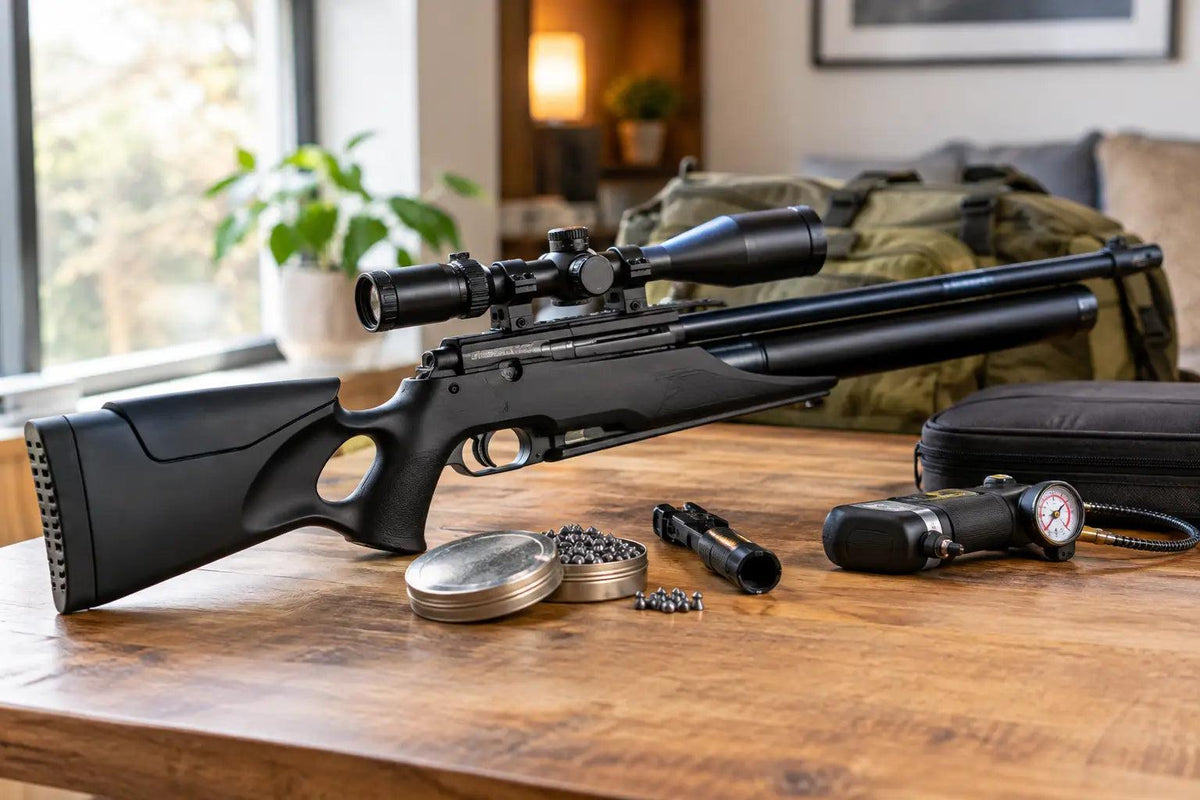
A pellet tin in a drawer is not a preparedness plan. If you keep a pre-charged pneumatic airgun for lawful target practice, property management, or permitted pest control, the right pcp airgun supplies determine whether it is usable, safe, and responsibly stored when you need it.
PCP means pre-charged pneumatic. These airguns use compressed air held in a built-in cylinder or removable bottle. That design can offer consistent performance and a calm shooting experience, but it also creates a practical dependency: without a safe way to fill, inspect, store, and maintain the system, the airgun is simply gear waiting on another piece of gear.
For family readiness, start with the basics. Build a small, organized system around the airgun you already own, your local laws, and the specific lawful purpose it serves. Do not buy equipment because it looks impressive. Buy what keeps your equipment safe, reliable, and appropriate for your household.
Start With the Air Source
Compressed air is the first supply to plan for. PCP airguns are designed for a specific maximum fill pressure, often far higher than an ordinary shop compressor can provide. Filling beyond that rating can damage equipment and create a serious safety hazard. The number printed in the manual and on the cylinder is the number that matters.
A hand pump is the least complicated entry point. It does not require electricity, which can make it useful during an extended power outage, and it takes little storage space. The trade-off is effort. Filling a larger air reservoir can be physically demanding, especially for someone with joint pain, limited mobility, or a busy household trying to get out the door.
A dedicated high-pressure compressor is more convenient for frequent use. It can make routine practice far more realistic because refilling is less of a chore. It also requires a clean, dry operating area, proper cooling, power, and routine attention. Some models need oil while others are oil-free, so follow the manufacturer’s service requirements rather than applying one rule to every compressor.
A certified high-pressure air tank is another option. It is quiet and fast at home, and it can serve as a reserve when power is unavailable. Tanks must be inspected and tested on the required schedule. They are not a set-it-and-forget-it purchase. Protect the valve from impact, keep the tank secured during transport, and use only fittings rated for the pressures involved.
Whichever route you choose, include a moisture-control solution specified for your filling system. Moisture inside an air reservoir can lead to corrosion over time. Clean air and dry air are not optional details for PCP equipment.
PCP Airgun Supplies That Belong Together
A reliable setup has a few connected parts. Treat them as one system, not a pile of accessories.
First, keep the correct fill probe, quick-connect fitting, or adapter for your particular model. Similar-looking fittings are not always compatible. Store small connectors in a labeled case, because losing one inexpensive part can sideline the entire airgun.
Second, keep pellets that match the caliber and type recommended by the airgun maker. Pellet selection is not just about buying the heaviest tin or the most expensive option. Different airguns can prefer different pellet shapes and weights. Purchase a modest variety, then test them carefully at a safe, legal range or on private property where shooting is permitted. Once you find a pellet that groups consistently, store enough of that same type for regular practice and your lawful intended use.
Third, use a purpose-built pellet trap or backstop that is rated for the airgun’s energy level. This is one area where cutting corners is not worth it. A backyard target placed in front of a fence, shed, or stack of scrap wood may not reliably stop a pellet. A proper backstop should contain the pellet and sit where a missed shot cannot travel toward people, pets, neighboring homes, roads, or property beyond your control.
Finally, keep eye protection for every shooter and observer near the shooting area. Hearing protection may also be appropriate, depending on the airgun and environment. Safe practice is a household habit, not an accessory added after something goes wrong.
Choose Maintenance Gear Before You Need It
PCP airguns need less frequent cleaning than many people assume, but they do need thoughtful care. Over-cleaning a barrel with the wrong tools or solvents can cause more trouble than leaving it alone. The owner’s manual should guide your schedule and materials.
A sensible maintenance kit includes caliber-correct cleaning supplies, approved lubricant or silicone grease for seals where the manufacturer calls for it, spare O-rings for common service points, and clean lint-free cloths. Keep the original manual in a waterproof document pouch or save a local copy with your home records. During a storm, a dead phone battery is a poor time to discover that the maintenance instructions were only bookmarked online.
Inspect the airgun before use. Look for damaged hoses, worn O-rings, loose hardware, dirt around the fill port, and any sign of air leaking. Never use petroleum-based lubricants unless the manufacturer expressly approves them. High-pressure air equipment is not the place for guesswork.
If an airgun is losing air rapidly, has a damaged cylinder, or behaves differently after a drop, stop using it and have a qualified service provider inspect it. Readiness means knowing when not to improvise.
Store It Like a Serious Household Tool
An airgun should be inaccessible to children and unauthorized visitors. Store it unloaded, in a locked cabinet or safe, with pellets and fill equipment secured separately when practical. The goal is simple: adults who are trained and authorized can access it, while curious hands cannot.
Storage conditions matter, too. Avoid leaving PCP equipment in a hot vehicle, damp shed, or garage corner where it can be knocked over. Extreme heat can affect stored pressure, and moisture is hard on metal components and air-system connections. A climate-controlled interior closet or secure room is generally a better fit than an outbuilding.
Make the rules clear before anyone handles it. Muzzle awareness, a safe backstop, finger off the trigger until ready to shoot, and the assumption that every airgun is loaded should be non-negotiable. If older children will participate in supervised target practice, start with safety expectations and adult control, not marksmanship goals.
Plan for Power Outages and Evacuations
A PCP airgun is not an essential evacuation item for most families. During a wildfire, hurricane evacuation, or fast-moving local emergency, prioritize people, pets, medications, identification, water, communication, and shelter. If you choose to transport an airgun lawfully, unload it, secure it in a locked case, keep it out of view, and confirm the rules for every place you may travel through.
At home during an outage, do not treat airgun use as a substitute for a broader preparedness plan. Water storage, food, lighting, backup power, first aid, and a way to communicate with family will help in far more situations. An airgun can be one carefully managed tool within a household plan, especially for rural properties with legitimate pest concerns. It should not become the center of that plan.
That perspective keeps spending sensible. A $200 starter setup may be enough for a family that practices occasionally and has a clear local use. A larger air tank or compressor may make sense for a rural household that uses the equipment regularly. The right choice depends on frequency, physical ability, storage space, local access to fills, and the responsibilities you are willing to maintain.
A Simple Readiness Check Each Season
Every few months, take ten minutes to check the airgun system. Confirm that pellets are dry and labeled, fittings are present, the fill method is in good condition, and your backstop remains safe. Review storage access and make sure everyone in the home understands the rules.
This is the same approach SHTF Prepper Club encourages across preparedness categories: choose useful equipment, keep it maintained, and make sure it works for the people who actually live in your home. A well-organized shelf and a calm safety plan will serve your family better than a closet full of neglected gear.