
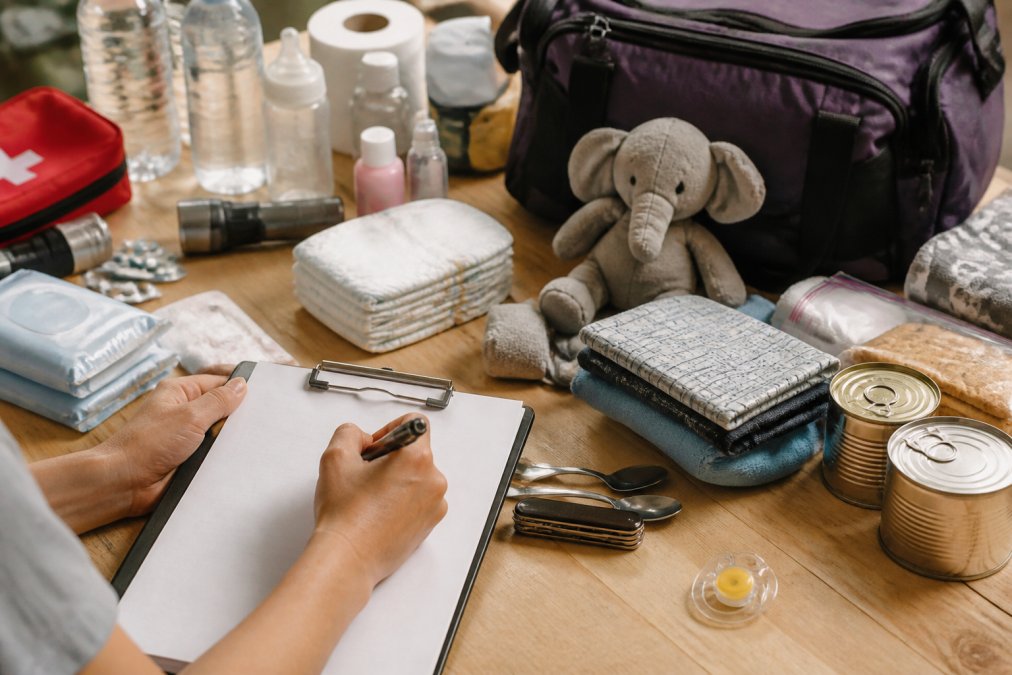
Table of Contents
- Building Your 72-Hour Emergency Preparedness Checklist for Infants
- Infant Emergency Feeding Plan: Formula, Breast Milk, and Water Storage
- Emergency First Aid Kit for Babies: What to Pack
- Diapering, Hygiene, and Sanitation Supplies
- Safe Sleep and Portable Bedding for Evacuations
- Clothing, Comfort Objects, and Age-Specific Needs
- Documentation, Medical Records, and Communication
- Evacuation vs. Shelter-in-Place Strategies for Families
- Frequently Asked Questions
Last Updated: September 19, 2026
Building Your 72-Hour Emergency Preparedness Checklist for Infants
An emergency preparedness checklist for infants looks different from a standard adult kit, because a baby's survival needs change by the month. This guide from SHTF Prepper Club covers every category that matters, from feeding and diapering to safe sleep and medical records. Start with the 72-hour kit, the baseline every household should have ready to grab and go, just with smaller, more specific items.
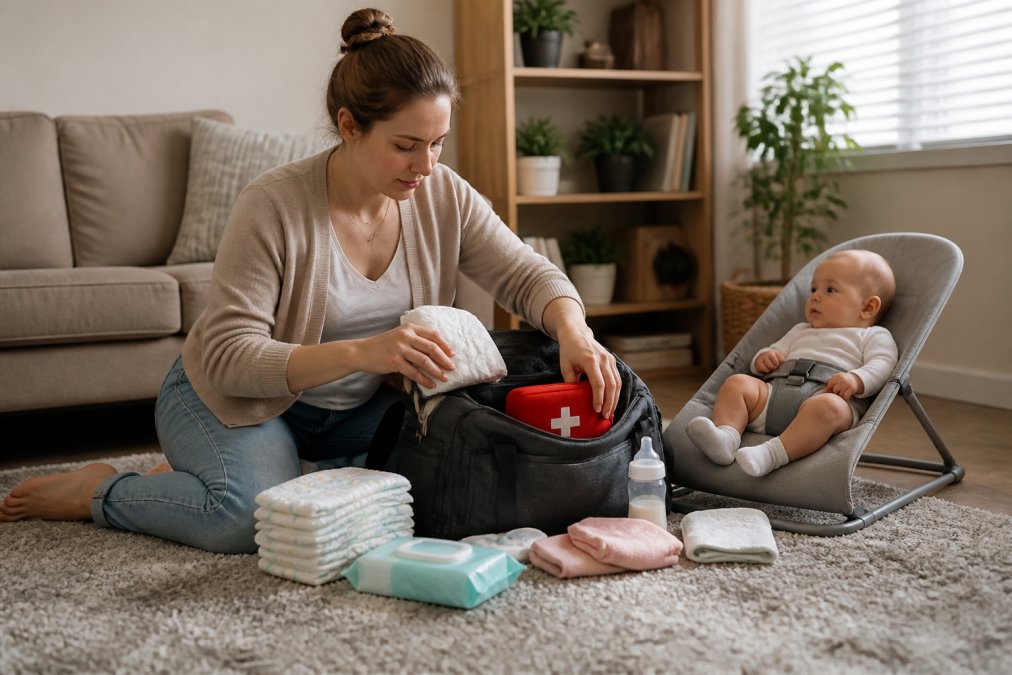
Here's the core list to build around:
- Infant feeding supplies (formula, bottles, or breast milk storage)
- Diapering and hygiene essentials
- A baby-specific first aid kit
- Safe sleep and portable bedding
- Clothing and comfort items
- Documentation and medical records
- Water and sanitation supplies
- A communication and power plan
Infant Emergency Feeding Plan: Formula, Breast Milk, and Water Storage
An infant emergency feeding plan should cover at least three days of nutrition, plus the water to prepare it. The hard part isn't buying formula, it's knowing how much, in what form, and how to keep it safe when the power is out.
How Much Formula to Store by Age
A common rule is roughly 2.5 ounces of prepared formula per pound of body weight per day, but your pediatrician's guidance overrides any general number. Useful ranges for a 72-hour kit:
- Newborn to 3 months: about 16 to 24 ounces of prepared formula per day, so plan 48 to 72 ounces total
- 3 to 6 months: about 24 to 32 ounces per day, so plan 72 to 96 ounces total
- 6 to 12 months: about 24 to 32 ounces per day plus solids, so plan 72 to 96 ounces of formula plus shelf-stable purees
How to Store Baby Formula for Emergencies
Store formula in its original sealed container, cool, dry, and out of direct sunlight. Rotate before the expiration date, and never mix with untreated water. Practical rules:
- Keep ready-to-feed bottles for the first 24 hours, when clean water may be scarce
- Store powdered formula as backup, since it lasts longer unopened
- Pack a manual hand pump if you're breastfeeding, so you're not dependent on electricity
- Include disposable bottles and nipples to avoid washing with questionable water
- Once a RTF bottle is opened, use it within the time frame on the label, usually one hour at room temperature, longer if refrigerated
Water Math for Formula Preparation
Water is the part parents underestimate. The CDC guidance on emergency water storage recommends storing at least one gallon per person per day for drinking and sanitation, and formula preparation adds to that total. Powdered formula is typically mixed one scoop per two fluid ounces of water, so a baby drinking 24 ounces a day needs about 12 ounces of clean water just for mixing, on top of what you drink and use for hygiene. Round up.
Breast Milk Without Power
If you're breastfeeding directly, you're in the strongest position, no water, no mixing, no storage. If you're pumping, plan for the fridge and freezer to fail. A full freezer holds temperature roughly 48 hours if kept closed; a half-full one about 24. A cooler with frozen gel packs buys another day or two. Freshly pumped milk is good at room temperature about four hours, in a cooler with ice packs about 24 hours, and in a refrigerator up to four days.
Write your baby's daily ounce target on a sticky note inside the formula bin. In a stressful evacuation, you won't want to do the math from memory, and a number on the lid removes one decision from a very bad day.
The feeding plan that works in a disaster is the one with the fewest steps. Ready-to-feed first, powder as backup, water pre-measured, and a written ounce target so you're not calculating under pressure.
Emergency First Aid Kit for Babies: What to Pack
An emergency first aid kit for babies needs infant-specific dosing tools, not adult versions scaled down. A baby's airway, skin, and medication tolerances differ, and the wrong tool can do more harm than good. Build yours around:
- A digital thermometer (rectal for infants under three months)
- Infant nasal aspirator
- Infant-safe pain and fever medication, with a dosing syringe
- Adhesive bandages and sterile gauze
- Saline drops for congestion
- Diaper rash cream
- A bulb syringe and tweezers
- A current list of your pediatrician's contact information
Diapering, Hygiene, and Sanitation Supplies
Diapering and hygiene supplies are where a baby kit gets bulky, so plan for quantity without overpacking: two to three days of diapers, wipes, and a way to manage waste when plumbing fails. Pack:
- Disposable diapers in the current size, plus one size up
- Baby wipes in sealed packs
- Diaper rash cream
- Hand sanitizer and unscented soap
- Sealable plastic bags for soiled items
- A changing pad you can wipe clean
Post-Disaster Sanitation for Cloth Diapers
If you use cloth diapers, a disaster changes your routine. Without running water or a washing machine, you need a sealed wet bag, a bucket system for pre-rinsing, and a way to disinfect once water is available. Many families keep a small stash of disposables for emergencies, even if they use cloth day to day.
Disposable diapers earn their place in an emergency kit even for cloth-diapering families. When water and waste systems are disrupted, disposables reduce the sanitation burden at exactly the moment you can least afford it.
Safe Sleep and Portable Bedding for Evacuations
Safe sleep rules don't relax during an emergency. A portable crib, bassinet, or play yard with a firm, flat surface is the safest option and belongs in your kit if you're evacuating.
Pack:
- A portable crib or play yard with a firm mattress
- Fitted sheets for that specific mattress
- A wearable blanket or sleep sack instead of loose blankets
- A room thermometer to monitor temperature
Clothing, Comfort Objects, and Age-Specific Needs
Clothing and comfort items should match your baby's current size and developmental stage. A kit assembled for a newborn won't fit a toddler, and needs shift quickly in the first two years.
Pack layers you can adjust:
- Two to three full outfits in the current size
- A warm layer and a hat
- Socks and soft shoes
- A comfort object like a favorite blanket or stuffed toy
- Pacifiers if your baby uses them
Documentation, Medical Records, and Communication
Documentation and communication supplies protect your baby's health history and keep you reachable when networks fail. In a shelter or hospital, records on hand speed up care and prevent dangerous gaps.
Keep these in a waterproof pouch:
- Copies of vaccination records
- A list of medications, allergies, and medical conditions
- Insurance cards and identification
- Emergency contact list, printed on paper
- A recent photo of your child
Evacuation vs. Shelter-in-Place Strategies for Families
Evacuation and sheltering in place call for different preparations, and the right choice depends on the threat. For families with infants, every option has a baby-shaped constraint: you can't carry a full stockpile, reason with a crying newborn, or leave a crawling baby unsupervised while you pack.
The Infant-Specific Decision Framework
Most guides tell you to follow official orders. That's correct, but it skips the 2 a.m. moment when you're deciding whether to wake a sleeping baby. Use these triggers to decide before that moment arrives:
- Evacuate now if authorities issue an order, if you smell gas or see smoke, if your home has no safe sleep surface, or if your baby has a medical condition that needs power (nebulizer, refrigerated medication, feeding pump).
- Shelter in place if roads are already gridlocked, if the threat is wind or debris rather than flood or fire, or if your baby is sick and travel would make it worse.
- Hybrid if you have hours of warning: stage the go-bag by the door, fill the bathtub for flushing water, and decide at the last safe moment.
What Changes When You Have a Baby
For evacuation, keep a go-bag by the door sized so one adult can carry the baby and bag together. A wearable carrier plus a backpack works best, strollers are useless on stairs, in mud, or in a crowd. With two adults, one carries the baby and the other the bag and older children.
Here's a quick comparison to guide your planning:
| Scenario | Priority | Kit Style | Key Constraint |
|---|---|---|---|
| Evacuation | Portability | Go-bag, one bag | Must carry baby and bag together |
| Shelter-in-place | Supply depth | Home stockpile | Storage space and rotation |
| Extended outage | Water and power | Hybrid kit | Formula prep and safe sleep |
| Medical-need baby | Power and refrigeration | Hybrid plus backup power | Medication and equipment continuity |
The Decision You'll Actually Make
The decision usually comes down to time and safety. If you have hours and the threat is contained, sheltering in place is simpler. If authorities issue an evacuation order, go, and take the bag you built for that moment.
Practice one evacuation drill with your baby, even if it's just walking out the front door, loading the car, and driving around the block. The first time you do it should not be the real thing.
The right choice between evacuating and sheltering in place is the one you've already rehearsed. Decide your triggers in advance, write them down, and let the card make the call so you can focus on your baby.
Frequently Asked Questions
What are the 5 P's of emergency preparedness?
The 5 P's are People, Prescriptions, Papers, Personal needs, and Priceless items. For infants, this means planning for your baby's specific needs: formula or breast milk, pediatric prescriptions, vaccination records, diapers and wipes, and a comfort object like a favorite blanket. Keep these in a grab-and-go bag so you can evacuate quickly. Review and update the bag every six months as your baby grows.
How much formula and water should I store for an infant?
Store at least a 72-hour supply. A newborn drinks about 2 to 3 ounces every 2 to 3 hours, so plan for roughly 24 to 36 ounces of formula per day. For water, use bottled or purified water for mixing. The CDC recommends boiling water for one minute if you must use tap water during a boil-water advisory. Store ready-to-feed formula if possible to avoid mixing.
How do I keep a baby safe during a power outage or evacuation?
During a power outage, dress your baby in layers and use blankets to maintain warmth. Never use candles or generators indoors. For evacuation, have a portable crib or bassinet ready. Keep a battery-powered radio and charged phone for alerts. If you must leave, bring your emergency bag with feeding supplies, diapers, and medications. Follow local evacuation orders and check in with your pediatrician afterward.
What should I include on my baby preparedness checklist?
Your checklist should cover feeding (formula, bottles, water), diapering (diapers, wipes, rash cream), first aid (thermometer, nasal aspirator, bandages), safe sleep (portable crib, bedding), clothing, documentation (medical records, emergency contacts), and comfort items. Add sanitation supplies like hand sanitizer and trash bags. Store everything in a waterproof container and keep it accessible. Rotate perishable items every few months.