
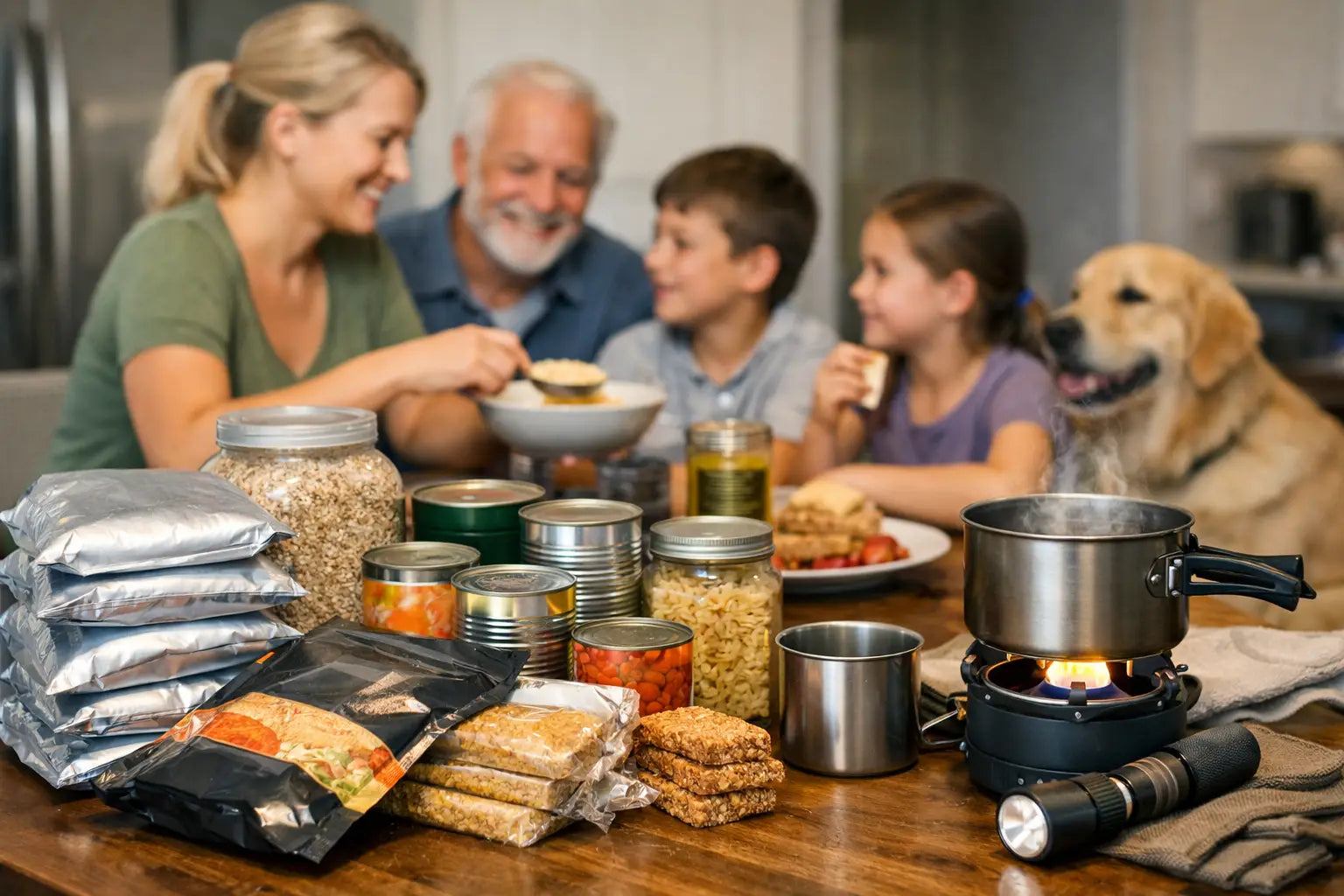
When the power has been out for 18 hours and your kitchen is turning into a guessing game, food stops being a theory. The best emergency food for families is food your household will actually eat, can safely prepare under stress, and can store without turning your garage into a science experiment.
That sounds obvious, but it is where a lot of families get stuck. They buy for shelf life alone, or price alone, or the fantasy version of an emergency where everyone cheerfully eats lentils by candlelight. Real life is messier. Kids get picky, adults get tired, and cooking options may be limited. A good family food plan has to work on an ordinary bad week, not just in a movie.
What makes the best emergency food for families?
Start with one question: could your family comfortably live on this for at least three days, and preferably two weeks or longer, without a lot of extra effort? If the answer is no, it is not a strong emergency food choice no matter how impressive the packaging looks.
For most households, the best emergency food balances five things: shelf life, calories, ease of preparation, familiar taste, and storage efficiency. Miss one of those and the system gets shaky. Food that lasts 25 years but requires lots of water and fuel may be great for long-term storage, but less useful in a short outage. On the other hand, pantry food your family already likes is perfect for short disruptions, but it will not cover your long-term readiness by itself.
That is why families usually do best with layers instead of one single solution.
The three food layers every family should build
The most practical setup starts with your everyday pantry, adds ready-to-eat backup food, and finishes with long-shelf-life emergency meals. Each layer solves a different problem.
Layer 1: Pantry food for the first 3 to 7 days
Your regular pantry is your first line of defense. Canned soup, pasta, peanut butter, oats, cereal, shelf-stable milk, rice, canned chicken, canned beans, applesauce, crackers, and boxed mac and cheese all have a place here. If you rotate these foods into normal life, nothing gets wasted.
This is also the easiest place to make your plan more family-friendly. If your kids eat ravioli, store extra ravioli. If someone in the house hates tuna, do not buy a case of tuna just because it is cheap. Familiar food lowers stress, and that matters more than people think during an emergency.
The trade-off is shelf life and storage density. Pantry foods are excellent for short events, but they take up more room and need more active rotation.
Layer 2: Ready-to-eat food for no-power, no-cook days
Some emergencies make cooking difficult or unrealistic. Hurricanes, wildfire evacuations, and storm outages can leave you without power, gas, or emotional bandwidth. This is where ready-to-eat food earns its keep.
Think protein bars, meal bars, nut butter packets, canned meals with pull tops, dried fruit, trail mix, jerky, crackers, fruit cups, and shelf-stable shakes. These are not glamorous, but they buy time. They also work well in evacuation bags, cars, and guest rooms for grandparents who keep supplies on hand for visiting grandkids.
The downside is cost per calorie. Ready-to-eat food is convenient, but usually more expensive than bulk staples or freeze-dried meals. It is best treated as a bridge, not your entire food strategy.
Layer 3: Long-shelf-life meals for real staying power
If you want coverage beyond a week or two, this is where you start building depth. Freeze-dried and dehydrated emergency food can store for years, often decades, while taking up less space than a deep pantry. For many households, this is the backbone of a serious family preparedness plan.
The best options here are simple: breakfasts your kids will recognize, hearty dinners, fruits and vegetables, and protein options that do not leave you relying on carbs alone. A bucket full of random entrées is less useful than a thoughtful mix of meals, ingredients, and sides.
This is also where quality matters. Some long-term food tastes like punishment. Some is surprisingly good. Families should pay attention to serving realism, total calories, and how much water is needed to prepare meals. Better packaging and better ingredients cost more, but they often reduce waste and regret.
Best types of emergency food for families
A family-ready food supply usually includes more than one category. Each one solves a specific problem.
Freeze-dried meals
These are often the easiest long-term choice for busy families. They are lightweight, store well, and usually only need hot water. Good options include soups, pasta dishes, rice bowls, scrambled eggs, and simple breakfast skillets. They work especially well for homeowners who want serious backup without committing to bulk ingredient storage right away.
Their weakness is water dependence. If your water storage is thin, a giant freeze-dried stash is not a complete plan.
Bulk staples
Rice, oats, pasta, flour, beans, sugar, salt, and powdered milk are still some of the most cost-effective ways to store calories. They stretch budgets and support longer disruptions. For larger households, they can lower the average cost of your food reserve in a big way.
But bulk staples ask more from you. They need decent packaging, some cooking ability, and a basic plan for using them. They are ideal for families who cook at home already. They are less ideal for a household that orders takeout four nights a week and has never pressure-canned or stored wheat.
Canned proteins and meals
This category is underrated. Canned chicken, tuna, chili, stew, spam, beans, ravioli, and soup are practical, familiar, and easy to use. In a short-term emergency, they may be the most comforting food in the house.
They are heavier and take more room than freeze-dried options, but they offer immediate usefulness with very little preparation.
Shelf-stable kid-friendly foods
If you have children or grandchildren, plan for morale as much as nutrition. Instant oatmeal, applesauce pouches, pudding cups, cereal, pancake mix, fruit snacks, and shelf-stable milk can make hard days easier. No, these should not form the entire plan. Yes, they absolutely belong in it.
Adults often build food storage around calories and forget that kids under stress may eat less, refuse unfamiliar meals, or need quick snacks more often.
How much should a family store?
A helpful starting point is two weeks of food your family can eat without shopping. That covers a wide range of realistic disruptions, from winter storms to regional shortages. After that, many families expand toward 30 days, then 90 days, then longer if it fits their budget and storage space.
Do the math by people, not by buckets. A family of five with two teenagers needs a very different calorie plan than two retired adults who are preparing for occasional grandkid visits. Pets count too.
As a rough rule, adults may need around 1,800 to 2,400 calories a day in a home-based emergency, sometimes more depending on heat, stress, and physical work. Children vary widely by age. The safest move is to estimate conservatively and round up.
How to choose food your family will really use
The smartest emergency food plan is honest. Start with allergies, medical needs, and texture issues. Then think about equipment. If the power is out, can you boil water? If not, how much of your stored food can be eaten cold or with minimal prep?
Next, think in routines. What does breakfast look like in your house when things are normal? What dinner will your family accept when everyone is tired? Build around those answers. A calm, repeatable meal plan beats a heroic pile of random food every time.
This is also where it helps to buy a little, test a little, and scale slowly. One of the best things a family can do is try an emergency meal on an ordinary night. You learn fast what is worth storing and what is not.
Storage mistakes families make
The biggest mistake is buying too much of one thing. Thirty days of rice is not thirty days of meals. The second mistake is ignoring water. Food storage without water storage is only half a plan.
Another common problem is storing food where temperature swings are hard on packaging and shelf life. Garages, sheds, and attics may seem convenient, but they are often the worst places unless conditions are controlled. Cool, dry, and dark still wins.
The last mistake is treating emergency food like a one-time purchase. Family readiness works better as a system you revisit. Rotate what needs rotating. Replace what got used. Adjust when your kids outgrow certain foods or your household changes.
A smart family approach to emergency food
For most households, the sweet spot looks like this: a well-stocked pantry for the first week, several days of ready-to-eat food for outages or evacuations, and a deeper reserve of long-shelf-life meals and staple ingredients for anything that lasts longer. That blend gives you convenience now and resilience later.
At SHTF Prepper Club, that is the approach we trust most for everyday families. Not fear-based buying. Not fantasy scenarios. Just practical food security that holds up when the stores are empty, the roads are blocked, or the power stays out longer than anyone promised.
You do not need to build a year of food storage this weekend. Just make sure the next disruption does not catch your family hungry, tired, and wishing you had started sooner.